-

27
Aug
Fuel Surcharge Logistics: Impact on Freight Rates | APT
How Fuel Surcharges Affect International Freight Rates
Fuel is one of the major operating costs in transportation. Changes in fuel prices can therefore influence the cost of moving cargo by air, sea, road, and other transport modes.
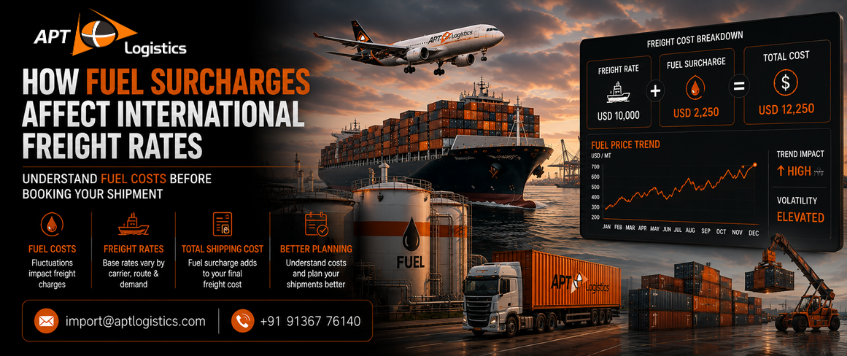
A fuel surcharge logistics component may be added to the basic freight rate to help carriers manage fluctuations in fuel-related operating costs. Understanding this component can help importers and exporters compare quotations more accurately and avoid unexpected increases in their logistics budgets.
What Is a Fuel Surcharge?
A fuel surcharge is an additional charge applied to transportation costs to account for changes in fuel prices.
It may be calculated differently depending on:
- Transport mode.
- Carrier.
- Route.
- Fuel price movements.
- Contract terms.
- Shipment characteristics.
The surcharge may be shown separately or incorporated into a broader freight rate.
How Fuel Surcharges Affect Freight Costs
When fuel prices increase, transportation costs can also come under upward pressure.
For businesses, this may result in:
- Higher air freight costs.
- Increased ocean freight charges.
- Higher trucking expenses.
- Changes in overall landed cost.
- Reduced accuracy of older freight quotations.
This is why freight rates should always be checked for their validity period and applicable surcharges.
Air Freight vs Sea Freight
Fuel-related charges can affect both air and ocean transportation, but their structure can differ.
Air Freight
Airlines may apply fuel-related surcharges based on their pricing structure and market conditions.
These can have a noticeable impact on time-sensitive or high-frequency shipments.
Sea Freight
Ocean carriers may include fuel-related components within their freight structure or apply separate surcharges depending on the service and trade lane.
Businesses should review the complete quotation rather than comparing only the base ocean freight.
How Businesses Can Manage Fuel Surcharge Changes
- Check Rate Validity – Confirm how long the quoted rate remains valid.
- Ask for a Complete Breakdown – Understand whether fuel-related charges are included or separate.
- Plan Shipments Early – Advance planning can reduce exposure to last-minute rate changes.
- Compare Multiple Options – Evaluate carriers and routing based on the total freight cost.
- Review Regularly – For frequent shipments, monitor changes in freight and fuel-related charges.
APT Logistics Insight ⭐
A low base freight rate does not always mean the lowest overall shipping cost. Businesses should compare base freight + fuel surcharge + local charges + destination costs to understand the actual logistics expense.
APT Logistics helps importers and exporters evaluate freight quotations and select practical air and sea freight solutions based on cost, transit time, and shipment requirements.
Conclusion
Fuel surcharge logistics is an important factor when evaluating international freight costs. Changes in fuel prices can influence air freight, sea freight, and inland transportation expenses.
By reviewing surcharge structures, checking quotation validity, comparing total costs, and planning shipments in advance, businesses can improve freight budgeting and reduce unexpected logistics expenses.
FAQ
What is a fuel surcharge in logistics?
A fuel surcharge is an additional transportation charge designed to account for fluctuations in fuel-related operating costs.
Does fuel surcharge affect air freight?
Yes. Airlines may apply fuel-related surcharges depending on their pricing structure and market conditions.
Does fuel surcharge affect sea freight?
Yes. Ocean freight pricing can include fuel-related components or separate surcharges depending on the carrier and trade route.
How can businesses control fuel-related freight costs?
Businesses can compare complete freight quotations, plan shipments in advance, review rate validity, and evaluate alternative carriers and routes.
Need Help? Chat with us!
Start a Conversation
Hi! Click one of our members below to chat on WhatsApp