-

09
Oct
Import Delivery Order India: Process, Documents & Charges
What Is an Import Delivery Order in India?
The import delivery order India process is an important step in releasing imported cargo from a shipping line or its authorized agent. A Delivery Order (DO) is an authorization or release document that allows the consignee or its authorized representative to proceed with cargo collection, subject to applicable customs, carrier and terminal requirements.
For shipments arriving at Indian ports such as Nhava Sheva, Mundra, Chennai or Kolkata, obtaining the DO is a key part of import coordination.
However, receiving the Delivery Order does not automatically mean the cargo is ready for collection. Customs clearance, port or terminal release and other applicable formalities must also be completed.
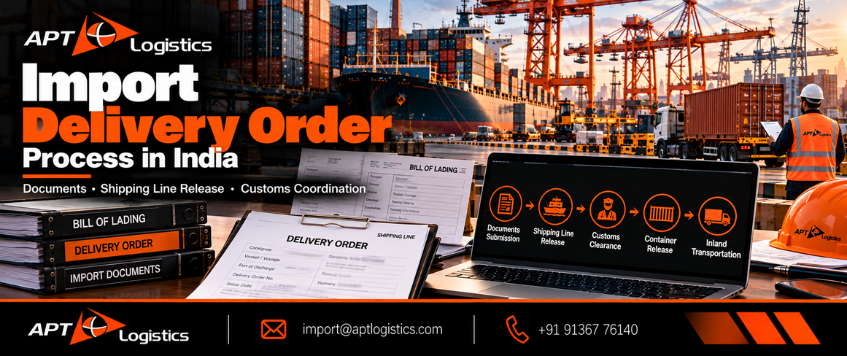
How Does the Import Delivery Order Process Work?
1. Vessel Arrives at the Destination Port
Once the vessel arrives, the shipping line or its local agent processes the shipment for import documentation and release.
The importer should coordinate with its customs broker and freight forwarder to prepare the required documents and check the shipment’s arrival status.
2. Submit the Required Documents
The documents required for a Delivery Order vary by carrier, shipment type and port. Common requirements include:
-
Bill of Lading or applicable release confirmation
-
Commercial Invoice
-
Packing List
-
Importer details and authorization documents
-
Proof of payment, where applicable
-
Other documents requested by the shipping line
For an original negotiable Bill of Lading, the carrier’s original-document surrender requirements must be met. Sea Waybill and surrendered B/L shipments may follow different procedures.
3. Pay Applicable Shipping Line Charges
Before issuing the DO, the shipping line may require payment of applicable freight, destination charges, documentation fees and other outstanding amounts.
Importers should request a detailed charge breakdown and verify which charges are included in the agreed freight quotation.
Important: DO charges are separate from customs duty and may also be separate from terminal handling, port storage, demurrage, detention and customs broker fees.
4. Shipping Line Issues the Delivery Order
After the documentation and payment requirements are satisfied, the shipping line or authorized agent issues the Delivery Order according to its procedures.
The importer or customs broker should verify the shipment details and any validity conditions stated on the DO.
5. Complete Customs Clearance
The importer or its customs broker completes the applicable Indian import customs formalities, including filing the Bill of Entry and payment of assessed duties where required.
Customs clearance is a separate process from obtaining the DO. Both must be coordinated to avoid unnecessary delays.
6. Arrange Port Release and Transportation
Once the applicable shipping line, customs and terminal requirements are fulfilled, the importer can arrange cargo collection.
For containerized shipments, this may involve terminal release, transport arrangements, container movement and delivery to the importer’s warehouse.
Documents Required for an Import Delivery Order
Document Purpose Bill of Lading Identifies the shipment and establishes the relevant carriage documentation Commercial Invoice Provides transaction and goods-value details Packing List Specifies packages, quantities and packing details Importer Authorization Confirms authority to act for the consignee, where required Payment Confirmation Demonstrates settlement of applicable charges Customs Documents Supports the separate customs clearance process The shipping line may request additional documents depending on the shipment and its release policy.
Common Reasons for Delivery Order Delays
The import delivery order India process can be delayed because of:
-
Missing or incorrect shipping documents.
-
Pending freight or destination charges.
-
Original Bill of Lading not surrendered when required.
-
Mismatched consignee or importer details.
-
Delayed communication with the shipping line.
-
Unclear authorization or KYC requirements.
-
Late coordination between the customs broker and freight forwarder.
To reduce delays, importers should start checking documents and outstanding payments before vessel arrival wherever possible.
How to Avoid Additional Import Charges
Delays in cargo release can contribute to avoidable expenses. Importers should:
-
Track vessel arrival and shipment milestones.
-
Obtain the shipping line’s DO requirements in advance.
-
Arrange freight and local-charge payments promptly.
-
Coordinate DO processing with customs clearance.
-
Monitor free time and applicable demurrage or detention terms.
-
Arrange transport and warehouse availability before cargo release.
Remember that demurrage, detention and port storage are different charges, and their applicability depends on the carrier’s terms, terminal rules and shipment circumstances.
How APT Logistics Supports Import Delivery Order Processing
At APT Logistics, our team coordinates with shipping lines, customs brokers, overseas agents and transport providers to support the import release process.
We help manage documentation, shipping line communication, DO coordination, customs clearance and inland transportation according to the shipment’s requirements.
Our focus is to help importers maintain clear visibility of pending formalities and reduce avoidable delays between vessel arrival and final delivery.
Conclusion
The import delivery order India process connects shipping line documentation with customs clearance and final cargo release. Obtaining the DO is an essential step, but importers must also complete the applicable customs and terminal formalities before collecting their cargo.
Preparing documents early, settling charges promptly and coordinating all stakeholders can help make import delivery more efficient.
APT Logistics — Reliable Import, Customs Clearance and Freight Forwarding Solutions Across India.
Frequently Asked Questions
1. Who issues the Import Delivery Order in India?
The shipping line or its authorized local agent generally issues the DO after the required documentation and payment conditions are met.
2. Is a Delivery Order required for every import shipment?
The release procedure depends on the carrier, transport document and shipment type. Importers should confirm the applicable requirements with the shipping line or authorized agent.
3. What is the difference between a Delivery Order and a Bill of Entry?
A Delivery Order relates to the carrier’s cargo-release process. A Bill of Entry is an import customs declaration filed with Indian Customs.
4. Are DO charges and customs duty the same?
No. DO charges are carrier or agent-related charges, while customs duty is assessed under applicable customs rules. Other port, terminal and logistics charges may also apply.
5. Can an importer obtain the DO before customs clearance?
The sequence can vary by carrier and shipment. DO processing and customs clearance can often be coordinated in parallel, but cargo collection remains subject to all applicable release requirements.
-
Need Help? Chat with us!
Start a Conversation
Hi! Click one of our members below to chat on WhatsApp