-

06
Oct
Cross Stuffing Container: Process, Benefits & Uses
What Is Cross Stuffing in Container Logistics?
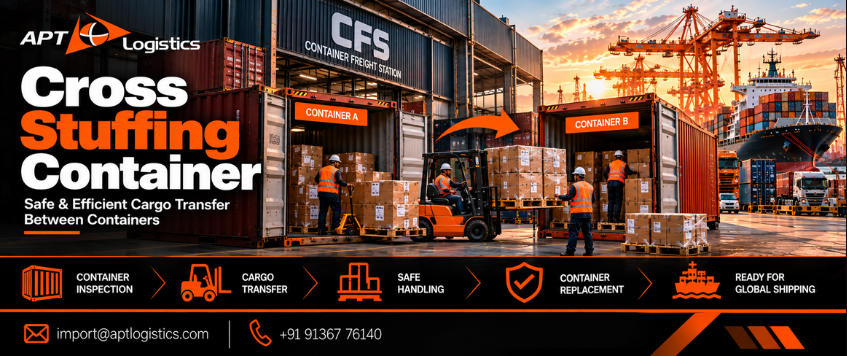
Cross stuffing container operations involve transferring cargo from one shipping container into another container during the transportation process.
Unlike normal container unloading, where cargo is removed for final delivery, cross stuffing is generally performed when the cargo needs to continue moving in a different container due to operational, routing, equipment or logistics requirements.
This process can be useful in international shipping when the original container cannot continue to the final destination or when cargo needs to be transferred to another transportation arrangement.
How Does Cross Stuffing Work?
The process generally involves several controlled steps.
1. Original Container Arrives
The container carrying the cargo reaches a designated port, CFS, warehouse or logistics facility where the transfer is planned.
2. Cargo Is Unloaded
The cargo is carefully removed from the original container and checked against the relevant shipment documentation.
Proper handling is important to minimize the risk of cargo damage during the transfer.
3. New Container Is Prepared
The replacement container is inspected to ensure it is suitable for the cargo.
The cargo is then loaded and properly arranged inside the new container.
4. Cargo Is Secured
Depending on the cargo type, appropriate blocking, bracing, lashing or other securing methods may be required.
The objective is to ensure that the cargo remains stable during the next stage of transportation.
5. New Container Is Sealed
After stuffing is completed, the replacement container is sealed and the new container and seal details are recorded.
The relevant documentation is then updated according to the applicable procedures.
Why Is Cross Stuffing Used?
There are several operational situations where cross stuffing container services can be useful.
1. Change of Container Equipment
Sometimes the original container may need to be replaced because of equipment availability, damage or operational restrictions.
2. Transshipment Operations
Cargo moving through an intermediate location may need to be transferred into another container for onward transportation.
3. Destination or Routing Requirements
A change in routing or transportation arrangement can sometimes require cargo to be transferred into another container.
4. Container Damage
If the original container is damaged and cannot safely continue the journey, cargo may need to be transferred to suitable replacement equipment.
5. Customs or Port Operations
In certain situations, customs, port or terminal procedures may require cargo to be handled at a designated facility before onward movement.
Cross Stuffing vs Transloading
These terms are sometimes used interchangeably, but there can be a practical distinction.
Cross stuffing generally refers specifically to transferring cargo from one container into another container.
Transloading is a broader term that can include transferring cargo between different modes of transportation—for example, from a container to a truck, warehouse or another transport unit.
The exact terminology can vary between ports, logistics providers and trade lanes.
What Should Be Checked Before Cross Stuffing?
Before starting a cross stuffing container operation, logistics teams should verify:
- Container condition and suitability.
- Cargo quantity and condition.
- Customs and port permissions.
- New container number.
- New seal number.
- Cargo securing requirements.
- Updated shipping documentation.
- Insurance and liability considerations.
- Destination and onward transportation requirements.
Proper documentation is particularly important because the container number and seal number may change during the operation.
How APT Logistics Manages Cross Stuffing
At APT Logistics, our team coordinates container handling, CFS operations, cargo transfer, documentation and onward transportation when cross stuffing is required.
We assess the cargo, container condition and operational requirements before arranging the transfer. Our focus is to ensure that the cargo is safely handled and that the relevant shipment information is properly updated.
For import, export and transshipment cargo, effective coordination between the shipping line, CFS, customs team, transporter and consignee is essential.
Conclusion
A cross stuffing container operation allows cargo to be transferred from one container to another when operational, routing, equipment or handling requirements make it necessary.
When properly planned, cross stuffing can help maintain cargo movement, replace unsuitable containers and support complex international logistics operations.
However, the process requires careful cargo handling, container inspection, documentation control and coordination with the relevant authorities and logistics partners.
APT Logistics — Reliable Container Handling & End-to-End Freight Solutions.
FAQs
What is cross stuffing in shipping?
Cross stuffing is the process of transferring cargo from one shipping container into another container, usually to facilitate continued transportation.
Why is cross stuffing required?
It may be required due to container damage, equipment changes, transshipment requirements, routing changes or specific port and logistics procedures.
Where is cross stuffing performed?
Cross stuffing may be performed at a CFS, warehouse, terminal or another authorized logistics facility, depending on the shipment and applicable procedures.
Does the container number change after cross stuffing?
Yes. Since the cargo is transferred into a different container, the new container number and seal number must be properly recorded and reflected in applicable documentation.
Is cross stuffing the same as transloading?
Not exactly. Cross stuffing specifically refers to transferring cargo between containers, while transloading is a broader term covering transfers between different transportation units or modes.
Need Help? Chat with us!
Start a Conversation
Hi! Click one of our members below to chat on WhatsApp