-

13
Nov
Shipping Route Optimization: How Routes Affect Freight Costs
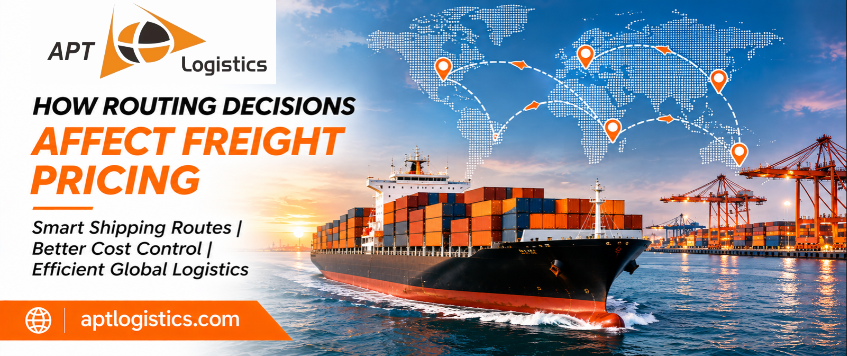
How Routing Decisions Affect International Freight Pricing
International freight pricing depends on more than just the weight or volume of cargo. The transportation route selected for a shipment can significantly influence freight costs, transit time, fuel consumption, handling charges, and overall delivery efficiency.
For importers and exporters, shipping route optimization plays an important role in controlling logistics expenses while maintaining reliable delivery schedules.
A shipment moving between the same origin and destination may have different freight costs depending on the selected airline, shipping line, transit hub, port, airport, and transportation mode.
Understanding how routing decisions affect freight pricing helps businesses select suitable shipping solutions and manage international logistics more effectively.
1. What Is Shipping Route Optimization?
Shipping route optimization is the process of selecting the most suitable transportation route for moving cargo from its origin to its destination.
The objective is not always to choose the shortest route. Instead, businesses evaluate multiple factors, including:
-
Total freight cost.
-
Transit time.
-
Carrier availability.
-
Port and airport connectivity.
-
Cargo handling requirements.
-
Customs and regulatory procedures.
-
Risk of delays and disruptions.
-
Reliability of connecting services.
For example, an exporter shipping cargo from Mumbai to Europe may have different options depending on the destination, including direct vessel services, transshipment routes, or alternative Indian gateway ports.
The most suitable option depends on the cargo requirements and the overall logistics cost.
2. Direct Routes vs Transshipment Routes
One of the most important routing decisions is whether to choose a direct service or a transshipment service.
Direct Shipping Routes
A direct service moves cargo between the origin and destination without transferring it through an intermediate port or airport.
Advantages:
-
Fewer cargo transfers.
-
Generally simpler shipment coordination.
-
Reduced exposure to missed connections.
-
Potentially shorter transit times.
However, direct services may have higher freight rates or limited sailing and flight availability.
Transshipment Shipping Routes
Transshipment involves transferring cargo from one vessel or aircraft to another at an intermediate port or airport.
Advantages:
-
Access to more destinations.
-
Potentially competitive freight rates.
-
More carrier and routing options.
-
Greater flexibility where direct services are unavailable.
However, additional handling and connection schedules can increase transit time and the risk of delays.
The lowest freight quotation is not necessarily the most economical option if the additional transit time creates higher inventory or operational costs.
3. How Route Distance Affects Freight Pricing
Distance is an important factor in international transportation costs.
Longer routes may involve additional fuel consumption, operating expenses, and transit time. In ocean freight, route distance can also influence vessel deployment and voyage planning.
In air freight, the routing structure, available connections, aircraft capacity, and airline network influence the final rate.
However, freight pricing is not calculated purely on distance.
For example, a longer route with high cargo demand and frequent carrier services may sometimes be more competitive than a shorter route with limited capacity.
Therefore, businesses should compare actual freight quotations rather than selecting routes based only on geographical distance.
4. Port and Airport Selection Can Change Total Logistics Costs
Choosing the right origin and destination gateway can significantly affect the overall shipping budget.
For Indian exporters, possible gateways may include:
-
Nhava Sheva (JNPT), Maharashtra.
-
Mundra Port, Gujarat.
-
Chennai Port, Tamil Nadu.
-
Cochin Port, Kerala.
-
Mumbai Airport (BOM).
-
Delhi Airport (DEL).
-
Bengaluru Airport (BLR).
The choice depends on the shipper’s location, cargo readiness, carrier services, equipment availability, and final destination.
A port offering lower ocean freight may not necessarily provide the lowest total cost if inland transportation, handling, or additional transit expenses are higher.
A complete route comparison should consider:
-
Factory-to-port transportation.
-
Origin terminal handling.
-
Ocean or air freight.
-
Transshipment charges, where applicable.
-
Destination handling.
-
Customs clearance.
-
Final delivery transportation.
5. Fuel Costs, Transit Time and Carrier Availability
Routing decisions are also influenced by operating costs and available transportation capacity.
Fuel costs: Longer or disrupted routes can increase fuel consumption and influence fuel-related surcharges.
Carrier availability: Routes with more frequent vessel sailings or airline connections may offer better booking flexibility.
Transit time: Faster routes may involve premium freight rates, while economical services may require additional transit time.
Equipment availability: Special equipment such as Open Top containers, Flat Racks, and High Cube containers may not be equally available across all ports.
These factors can change the freight quotation even when the shipment’s origin, destination, and cargo specifications remain unchanged.
6. How Geopolitical Events and Route Disruptions Affect Freight Costs
International shipping routes can change due to geopolitical developments, security concerns, weather conditions, and operational disruptions.
When vessels avoid certain maritime routes, they may need to travel longer distances or use alternative ports and connections.
Such changes can result in:
-
Increased fuel consumption.
-
Longer transit times.
-
Higher freight rates.
-
Additional insurance-related costs.
-
Vessel schedule changes.
-
Reduced available capacity on alternative routes.
Similarly, airline route restrictions or airspace closures can affect air freight capacity and pricing.
For businesses shipping internationally, maintaining alternative routing options can help reduce the impact of unexpected disruptions.
7. Multimodal Transportation and Cost Optimization
Sometimes, combining different transportation modes can provide a better balance between freight costs and delivery time.
Multimodal transportation may involve a combination of:
-
Road transportation.
-
Rail transportation.
-
Sea freight.
-
Air freight.
For example, cargo collected from a manufacturing facility in India may be transported by road to an inland container depot, moved by rail or road to a seaport, and then shipped internationally by sea.
For urgent cargo, businesses may consider air freight instead of ocean freight when the value of faster delivery justifies the additional transportation cost.
The correct combination depends on cargo dimensions, delivery requirements, route infrastructure, and total landed logistics costs.
8. How Businesses Can Optimise International Shipping Routes
Importers and exporters can improve freight cost management by following a structured route evaluation process.
Compare multiple routing options: Request quotations for direct and transshipment services wherever available.
Evaluate total logistics costs: Include inland transportation, origin charges, freight, destination charges, and final delivery expenses.
Consider transit time requirements: Select services based on actual delivery deadlines rather than freight rates alone.
Check carrier reliability: Review sailing frequency, flight connections, schedule consistency, and cargo handling capabilities.
Maintain alternative routes: Identify backup ports, airports, shipping lines, and airlines for important shipments.
Plan shipments in advance: Early planning provides more flexibility in selecting economical transportation options.
9. How APT Logistics Supports Shipping Route Optimization
At APT Logistics, we understand that selecting the right route is essential for managing international freight costs and delivery schedules.
Our team coordinates with shipping lines, airlines, overseas agents, and transportation partners to identify suitable routing options based on cargo requirements.
Our logistics services include:
-
International air freight and sea freight.
-
FCL and LCL shipment arrangements.
-
Alternative port and routing coordination.
-
Inland transportation from factories and warehouses.
-
Customs clearance coordination.
-
Project cargo and specialised equipment handling.
-
Door-to-door logistics solutions.
Whether it is a standard container shipment, urgent air cargo, or specialised project cargo, we focus on evaluating practical transportation options that balance cost, transit time, and operational requirements.
Conclusion
Shipping route optimization is an important part of international freight cost management. Direct services, transshipment options, port selection, carrier availability, fuel expenses, and geopolitical developments can all influence the final freight quotation.
Choosing a route based only on the lowest ocean or air freight rate may lead to higher overall logistics expenses if inland transportation, handling, delays, or destination charges are overlooked.
By comparing complete logistics costs and maintaining alternative routing options, businesses can make better shipping decisions.
APT Logistics supports importers and exporters with coordinated air freight, sea freight, customs clearance, and transportation solutions to help manage international cargo movements efficiently.
3. Frequently Asked Questions (FAQs)
Q1. What is shipping route optimization?
Shipping route optimization is the process of selecting the most suitable transportation route based on freight cost, transit time, carrier availability, cargo requirements, and delivery commitments.
Q2. Does a shorter shipping route always cost less?
No. Freight pricing also depends on carrier availability, cargo demand, port charges, fuel costs, service frequency, and operational conditions.
Q3. What is the difference between direct shipping and transshipment?
Direct shipping moves cargo from origin to destination without an intermediate transfer. Transshipment involves transferring cargo at an intermediate port or airport before reaching the final destination.
Q4. How does port selection affect freight costs?
Port selection influences inland transportation, terminal handling, carrier availability, equipment positioning, and overall transit time. A lower ocean freight rate may not always result in a lower total logistics cost.
Q5. Can alternative shipping routes reduce freight expenses?
Yes. Depending on cargo requirements and available services, alternative ports, airports, carriers, or transportation modes may offer more competitive overall logistics costs.
Q6. How do geopolitical events affect international shipping routes?
Geopolitical disruptions may force carriers to avoid certain routes, increase voyage distances, change schedules, and adjust freight rates due to additional operating costs and capacity constraints.
Q7. How can a freight forwarder help optimise shipping routes?
A freight forwarder can compare carrier services, evaluate alternative gateways, coordinate multimodal transportation, and assess total logistics costs to identify suitable routing options.
APT Logistics – Contact Details
For air freight, sea freight, sales, documentation, and import requirements, contact our respective teams:
Department Email Contact Number Air Freight docs@aptlogistics.com +91 79776 10560 Sea Freight ocean@aptlogistics.com +91 99200 20978 Sales sales.desk@aptlogistics.com / sea@aptlogistics.com +91 7700 914 388 Documentation cs1@aptlogistics.com +91 91367 76040 Import cs02@aptlogistics.com +91 9321740903 -
Need Help? Chat with us!
Start a Conversation
Hi! Click one of our members below to chat on WhatsApp