-

13
Nov
Customs Exam Shipment Delays: Impact on Delivery Commitments
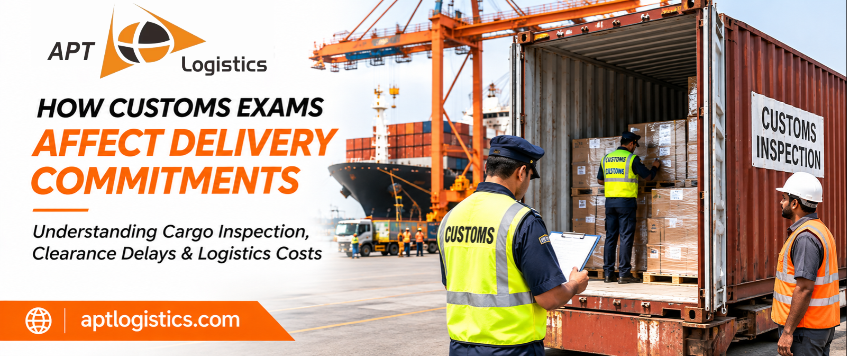
How Customs Exams Affect Delivery Commitments
Customs exam shipment delays occur when imported or exported cargo is selected for document verification, scanning, physical examination, sampling, or other regulatory checks. These examinations are part of customs procedures and help authorities verify shipment details, assess compliance, and prevent misdeclaration or restricted goods movement.
International shipments involve several stages, including cargo pickup, transportation, customs documentation, examination, clearance, and final delivery. Even when cargo arrives on schedule, a customs examination can affect the planned delivery timeline.
For importers and exporters, an unexpected customs examination can disrupt delivery commitments, production schedules, inventory planning, and customer relationships.
1. What Is a Customs Examination?
A customs examination is an inspection carried out by customs authorities to verify whether the declared shipment details match the actual cargo and comply with applicable regulations.
Depending on the shipment, customs authorities may conduct:
-
Document Examination: Verification of invoices, packing lists, shipping bills, Bills of Entry, licences, and other supporting documents.
-
X-Ray or Scanning: Non-intrusive inspection of cargo or containers.
-
Physical Examination: Opening packages or containers to inspect the actual goods.
-
Sampling and Testing: Collection of samples for laboratory testing or regulatory verification, where required.
-
Specialised Examination: Additional checks for specific commodities, valuation, classification, origin, or regulatory compliance.
The type and extent of examination depend on customs risk assessment, applicable regulations, commodity requirements, and the instructions issued by customs authorities.
2. Why Do Customs Examinations Cause Shipment Delays?
A customs examination may require additional coordination beyond the normal clearance process.
Some common reasons include:
Cargo Opening and Repacking
Physical examination may require containers or packages to be opened. After inspection, cargo may need to be repacked, resealed, or rearranged before delivery.
Additional Document Verification
If customs authorities request supporting documents or clarification, clearance may remain pending until the required information is submitted and verified.
Examination Appointment Availability
Physical inspection depends on the availability of examination facilities, customs personnel, terminal arrangements, and handling equipment.
Sampling and Laboratory Testing
Certain products may require samples to be collected and tested before clearance. The time required depends on the commodity and the relevant regulatory authority.
Discrepancies in Cargo Declaration
Differences between declared and actual quantity, description, classification, value, or packaging may lead to further verification and clarification.
3. How Customs Exam Shipment Delays Affect Delivery Commitments
Customs examination can affect more than the clearance date. It may also impact the entire logistics schedule.
Delayed cargo release: Goods cannot be delivered until the required customs examination and clearance formalities are completed.
Missed delivery appointments: Consignees may need to reschedule warehouse receiving slots or factory delivery arrangements.
Production interruptions: Manufacturers relying on imported raw materials or machinery components may experience production delays.
Inventory shortages: Retailers and distributors may face stock availability problems if imported cargo does not arrive as planned.
Customer dissatisfaction: Delayed deliveries can affect contractual commitments, customer confidence, and business relationships.
For time-sensitive cargo, even a short examination delay can create significant operational challenges.
4. Additional Costs Associated With Customs Examination
Apart from delivery delays, customs examination may result in additional logistics expenses, depending on the location, examination instructions, and service provider tariff.
Common charges may include:
-
Container movement to the examination area.
-
Ground rent or terminal storage.
-
Container detention, where applicable.
-
Cargo handling and labour charges.
-
Unstuffing and restuffing charges.
-
Repacking and resealing expenses.
-
Sampling and testing charges, where applicable.
-
Additional transportation or warehouse handling.
Importers and exporters should check the applicable free time, terminal tariff, carrier conditions, and examination-related charges to understand their potential financial exposure.
5. How Importers and Exporters Can Reduce Customs Examination Delays
Customs examinations cannot always be avoided. However, proper preparation can help reduce unnecessary delays.
Maintain Accurate Documentation
Ensure commercial invoices, packing lists, shipping instructions, product descriptions, quantities, and declared values are consistent.
Use Correct HS Codes
Correct classification helps ensure that applicable customs duties, restrictions, and regulatory requirements are identified accurately.
Provide Supporting Documents
Keep relevant certificates, licences, technical specifications, test reports, and product information ready whenever applicable.
Ensure Proper Cargo Packing and Labelling
Packages should be clearly labelled, properly packed, and consistent with the declared shipment details.
Coordinate With Your Customs Broker
Maintain communication with your customs broker or freight forwarder to respond quickly to examination instructions and document queries.
Plan Realistic Delivery Timelines
Avoid promising fixed delivery dates without considering customs processing, potential examination, terminal operations, and inland transportation.
6. The Role of a Freight Forwarder During Customs Examination
A freight forwarder plays an important coordination role when cargo is selected for customs examination.
An experienced logistics partner can help with:
-
Coordinating with the customs broker and relevant authorities.
-
Arranging cargo movement to the examination area.
-
Following up on inspection status.
-
Coordinating handling, unstuffing, and repacking.
-
Communicating revised delivery timelines.
-
Coordinating transportation after customs release.
-
Keeping importers and exporters informed about additional costs and operational requirements.
While a freight forwarder cannot control customs examination decisions or guarantee clearance timelines, effective coordination can help minimise avoidable operational delays.
7. How APT Logistics Supports Importers and Exporters
At APT Logistics, we understand that customs examination can affect delivery schedules and create uncertainty for businesses involved in international trade.
Our team supports importers and exporters through coordinated logistics services, including:
-
Import and export customs clearance coordination.
-
Air freight and sea freight arrangements.
-
Cargo examination and handling coordination.
-
Port and airport transportation arrangements.
-
Documentation coordination.
-
Inland transportation and final delivery.
-
Shipment status updates and operational follow-ups.
We work with customers, customs brokers, transporters, and other service partners to coordinate shipment activities and manage changing delivery requirements.
Conclusion
Customs examination is an important part of international trade compliance, but it can affect cargo release, transportation schedules, and delivery commitments.
Understanding the reasons behind customs exam shipment delays, maintaining accurate documentation, and planning realistic delivery timelines can help businesses reduce operational uncertainty and additional logistics expenses.
APT Logistics supports businesses with freight forwarding, customs clearance coordination, cargo handling, and inland transportation solutions to help manage import and export shipments efficiently.
3. Frequently Asked Questions (FAQs)
Q1. What causes customs examination of a shipment?
Customs examination may be initiated due to risk assessment, document discrepancies, commodity-specific requirements, random checks, valuation concerns, classification verification, or regulatory requirements.
Q2. How long does a customs examination take?
There is no fixed timeline. It depends on the type of examination, cargo category, document availability, examination facility, sampling requirements, and instructions from customs authorities.
Q3. Can customs examination delay final cargo delivery?
Yes. Cargo generally cannot be released for delivery until the required examination and customs clearance formalities are completed.
Q4. Who pays for customs examination charges?
Charges depend on the examination location, applicable terminal or service provider tariffs, handling arrangements, and contractual terms. The importer or exporter may bear relevant costs depending on the shipment arrangement.
Q5. Can a freight forwarder speed up customs examination?
A freight forwarder cannot override customs procedures or guarantee faster inspection. However, it can coordinate documentation, cargo handling, examination arrangements, and follow-ups to reduce avoidable delays.
Q6. How can importers avoid customs examination delays?
Importers should ensure accurate declarations, correct HS codes, complete supporting documents, proper packaging, and timely responses to customs queries. Examination itself cannot always be avoided.
Q7. Does customs examination apply to both imports and exports?
Yes. Customs authorities may examine both import and export cargo depending on applicable laws, risk assessment, commodity requirements, and regulatory instructions.
APT Logistics – Contact Details
For air freight, sea freight, sales, documentation, and import requirements, contact our respective teams:
Department Email Contact Number Air Freight docs@aptlogistics.com +91 79776 10560 Sea Freight ocean@aptlogistics.com +91 99200 20978 Sales sales.desk@aptlogistics.com / sea@aptlogistics.com +91 7700 914 388 Documentation cs1@aptlogistics.com +91 91367 76040 Import cs02@aptlogistics.com +91 9321740903 -
Need Help? Chat with us!
Start a Conversation
Hi! Click one of our members below to chat on WhatsApp