-

16
May
Top Strategies for Container Stuffing Optimization | Complete Logistics Guide
Top Strategies for Container Stuffing Optimization | A Complete Logistics Guide
Efficient container stuffing plays a major role in reducing logistics costs, maximizing cargo safety, and improving shipping efficiency. Poor loading practices can lead to cargo damage, wasted container space, customs issues, and higher transportation expenses.
In international logistics, optimizing how cargo is packed inside containers is essential for smooth and cost-effective cargo movement.
This guide explains the top strategies businesses can use for better container utilization and safer freight transportation.
What is Container Stuffing?
Container stuffing refers to the process of loading cargo into shipping containers for transportation via sea, rail, or road.
The objective is to:
- Maximize available space
- Ensure cargo stability
- Reduce freight cost per shipment
- Prevent cargo damage during transit
Efficient stuffing techniques are especially important for export shipments, LCL cargo, heavy machinery, and fragile goods.
Why Container Stuffing Optimization Matters
Improper loading can create major logistics problems, including:
- Cargo shifting during transit
- Damaged goods
- Wasted container space
- Increased freight cost
- Customs inspection delays
Optimized container loading improves both operational efficiency and shipment safety.
Top Strategies for Container Stuffing Optimization
1. Proper Cargo Planning 📦
Before loading begins, businesses should analyze:
- Cargo dimensions
- Weight distribution
- Packaging type
- Fragility level
- Loading sequence
Pre-planning helps maximize container utilization and avoid imbalance.
2. Use the Right Container Type 🚢
Different cargo requires different container solutions.
Examples include:
Container Type Best Used For GP Container Standard cargo Open Top Oversized machinery Flat Rack Heavy equipment Reefer Temperature-sensitive cargo High Cube Extra height cargo Selecting the correct equipment improves loading efficiency and cargo safety.
3. Optimize Weight Distribution ⚖️
Uneven weight placement can create:
- Container imbalance
- Cargo collapse
- Transportation risk
Heavy cargo should be evenly distributed to maintain stability during handling and transit.
4. Maximize Space Utilization
Efficient loading reduces unused space inside containers.
Common optimization methods include:
- Stackable packaging
- Vertical space utilization
- Pallet optimization
- Mixed cargo arrangement
Better space utilization reduces freight cost per unit.
5. Secure Cargo Properly 🔒
Cargo movement during transit is one of the biggest causes of shipment damage.
Proper securing methods include:
- Lashing
- Blocking and bracing
- Wooden supports
- Choking arrangements
- Airbags for stabilization
This is especially important for ODC and heavy cargo shipments.
6. Follow Loading Sequence Strategy
Cargo should be loaded based on:
- Delivery priority
- Weight category
- Accessibility requirements
Improper sequence planning increases unloading difficulty and handling time.
7. Ensure Packaging Quality 📄
Weak packaging increases damage risk during stuffing and transit.
Businesses should use:
- Export-quality cartons
- Industrial pallets
- Moisture-resistant wrapping
- Shock protection materials
Good packaging improves shipment durability.
8. Consider Customs Inspection Access
Poor stuffing arrangements can complicate customs inspections.
Cargo should be organized so authorities can access goods without damaging the entire load structure.
9. Use Professional Stuffing Supervision 👷
Professional supervision ensures:
- Correct weight balance
- Safety compliance
- Proper securing
- Accurate container utilization
This significantly reduces operational risk.
10. Leverage Technology & Load Planning Software
Modern logistics companies use container planning software to:
- Optimize loading patterns
- Improve space calculation
- Reduce wasted capacity
- Enhance operational accuracy
Technology-driven planning improves efficiency and cost control.
Common Container Stuffing Mistakes
- Overloading containers
- Uneven weight distribution
- Poor cargo securing
- Ignoring moisture protection
- Wasting vertical space
Avoiding these mistakes improves shipment reliability and reduces claims.
How APT Logistics Helps
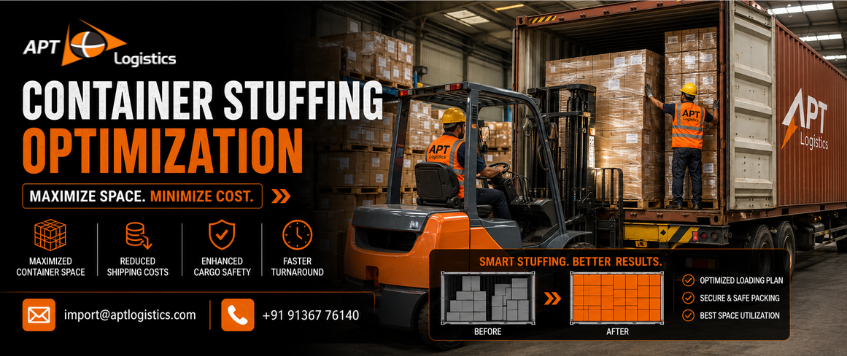
APT Logistics provides professional container stuffing solutions including:
- Cargo planning and optimization
- ODC and heavy cargo handling
- Container selection support
- Secure lashing and blocking
- Export packing solutions
- End-to-end freight coordination
We help businesses maximize container efficiency while ensuring cargo safety.
Benefits of Optimized Container Stuffing
Efficient loading helps businesses:
- Reduce freight cost
- Improve cargo protection
- Maximize container capacity
- Minimize shipment delays
- Improve supply chain efficiency
Proper container utilization directly improves profitability in international trade.
Conclusion
Efficient container stuffing is essential for safe, cost-effective, and optimized international shipping. Proper planning, weight distribution, cargo securing, and professional supervision can significantly improve logistics performance.
With APT Logistics, businesses gain expert support for secure cargo loading and optimized container utilization worldwide.
Need Help? Chat with us!
Start a Conversation
Hi! Click one of our members below to chat on WhatsApp