-

03
Nov
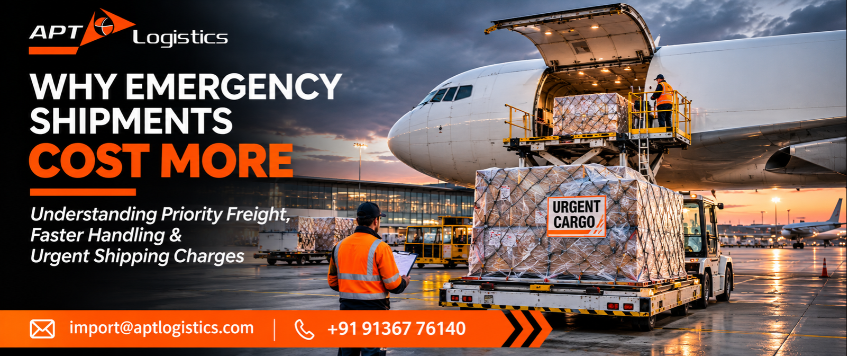
Urgent Shipping Charges: Why Emergency Shipments Cost More
Why Emergency Shipments Cost More in Logistics
In international trade, shipment delays can affect production schedules, inventory availability, customer commitments, and business operations. When cargo needs to reach its destination urgently, businesses often choose priority air freight, expedited transportation, or other time-critical logistics solutions. However, these services usually involve higher urgent shipping charges than standard freight arrangements.
Emergency shipments require logistics providers to arrange faster transportation, secure limited cargo capacity, coordinate multiple service partners, and manage tighter deadlines. Understanding the reasons behind these additional costs helps importers and exporters make better shipping decisions.
1. Limited Cargo Space and Priority Bookings
One of the biggest reasons emergency shipments cost more is limited transportation capacity.
Airlines and shipping operators allocate cargo space based on available capacity, schedules, and commercial priorities. When a shipment needs immediate dispatch, a logistics provider may have to secure the remaining space at a higher rate.
Last-minute bookings can also involve:
-
Higher spot freight rates.
-
Priority space allocation.
-
Limited airline or carrier options.
-
Additional costs for alternative routing.
During peak seasons or periods of high demand, securing immediate cargo space can become particularly expensive.
2. Faster Transportation Means Higher Freight Costs
Standard shipments are generally planned around economical schedules. Emergency shipments, on the other hand, may require faster transit options.
For example, an exporter may choose direct air freight instead of a connecting service to reduce transit time. Similarly, an urgent domestic movement may require dedicated vehicles rather than consolidated transportation.
These options can increase costs because they involve:
-
Direct or faster transportation routes.
-
Dedicated vehicles or priority cargo space.
-
Reduced opportunities for cargo consolidation.
-
Premium freight arrangements.
The faster the required delivery, the fewer economical transportation options may be available.
3. Additional Handling and Operational Coordination
Emergency shipments often require logistics teams to work within compressed timelines.
Documentation, cargo readiness, pickup, packaging, customs coordination, and airline or carrier booking may all need to be completed simultaneously.
This can involve:
-
After-hours operational support.
-
Priority cargo processing.
-
Additional manpower and coordination.
-
Faster warehouse movement.
-
Special pickup and delivery arrangements.
These operational requirements can contribute to higher urgent shipping charges.
4. Expedited Customs Clearance and Documentation
Customs clearance is another important factor in time-critical shipments.
Incorrect documentation, missing certificates, or discrepancies in shipment details can create delays. When cargo is urgent, the logistics team must coordinate documentation and clearance activities as early as possible.
Depending on the shipment and applicable customs procedures, additional coordination may be needed for:
-
Commercial invoices and packing lists.
-
Shipping bills or Bills of Entry.
-
Product-specific licences and certificates.
-
Dangerous Goods documentation, where applicable.
-
Customs examination and regulatory requirements.
It is important to understand that paying for urgent transportation does not guarantee faster customs clearance. Customs processing remains subject to regulatory requirements and examination procedures.
5. Dedicated Pickup and Last-Mile Delivery
Emergency shipments may not fit into regular transportation schedules.
A business may need cargo collected immediately from a factory, warehouse, or supplier and delivered directly to an airport, port, or consignee location.
This can require dedicated vehicles, special pickup arrangements, or direct delivery instead of standard route-based transportation.
As a result, transportation costs may increase due to:
-
Dedicated truck deployment.
-
Short-notice vehicle arrangements.
-
Additional loading and unloading coordination.
-
Direct delivery requirements.
-
Extended operating hours.
6. Weekend, Holiday, and After-Hours Operations
An urgent shipment arriving on a weekend or public holiday may require additional coordination with transporters, warehouses, handling agents, and other service providers.
Depending on local operating arrangements, additional charges may apply for overtime, special handling, or services outside normal working hours.
These charges are not universal and should be checked with the respective service provider before confirming the shipment.
7. How Businesses Can Reduce Emergency Shipping Costs
Although emergency shipments cannot always be avoided, better planning can reduce the frequency and financial impact of urgent freight movements.
Businesses can consider the following measures:
Maintain safety stock: Keep sufficient inventory of critical raw materials and essential spare parts.
Plan shipments in advance: Share cargo readiness dates and expected shipment volumes with your logistics partner early.
Prepare documents beforehand: Ensure invoices, packing lists, licences, and other required documents are ready before cargo dispatch.
Compare transportation options: Evaluate direct and connecting air freight, consolidated services, and alternative routing based on the delivery deadline.
Work with an experienced freight forwarder: A reliable logistics partner can identify available routes, coordinate capacity, and provide cost-effective alternatives.
Monitor shipment progress: Early visibility into cargo movement helps businesses identify potential delays before they become emergencies.
Conclusion
Emergency shipments are often more expensive because they require immediate capacity, faster transportation, priority handling, and additional operational coordination. While higher urgent shipping charges may be unavoidable in certain situations, proper inventory planning, documentation readiness, and early communication can help businesses control logistics costs.
At APT Logistics, we coordinate air freight, sea freight, customs clearance, and transportation solutions to support businesses with both planned and time-critical cargo movements. Our focus is to identify practical shipping options that balance delivery deadlines, service requirements, and overall freight costs.
3. Frequently Asked Questions (FAQs)
Q1. Why are urgent shipping charges higher than standard freight rates?
Urgent shipping charges are generally higher because emergency shipments may require last-minute bookings, limited cargo capacity, priority handling, dedicated transportation, and faster routing.
Q2. Is emergency air freight more expensive than regular air freight?
It can be. Emergency air freight may involve premium space bookings, direct routing, and priority handling, depending on airline capacity and shipment requirements.
Q3. Can urgent shipments be delivered within 24 hours?
Some shipments may qualify for delivery within 24 hours, depending on origin, destination, flight availability, customs procedures, cargo readiness, and final-mile arrangements. It cannot be guaranteed for every route.
Q4. How can importers reduce emergency freight costs?
Importers can reduce costs through advance planning, safety stock management, early documentation preparation, shipment consolidation, and comparing available transportation options.
Q5. Does urgent shipping guarantee faster customs clearance?
No. Urgent shipping can reduce transportation time, but customs clearance remains subject to applicable regulations, documentation, inspections, and government procedures.
-
Need Help? Chat with us!
Start a Conversation
Hi! Click one of our members below to chat on WhatsApp