-

02
Nov
Logistics Contingency Planning: Why Exporters Need It
Why Exporters Need Backup Logistics Planning
International exports rarely follow a perfectly predictable schedule. Vessel cancellations, airline capacity shortages, port congestion, container unavailability, customs delays, and unexpected geopolitical developments can disrupt even carefully planned shipments.
This is why logistics contingency planning is essential for exporters. Having a backup logistics arrangement allows businesses to respond quickly when their original shipping plan fails, reducing the risk of missed vessel connections, additional costs, and delayed customer deliveries.
For Indian exporters serving international markets, backup planning should be part of every shipment strategy rather than something considered only after a disruption occurs.
What Is Logistics Contingency Planning?
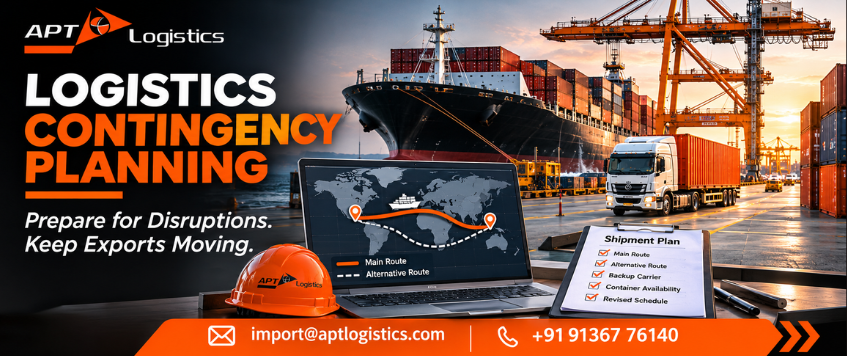
Logistics contingency planning is the process of preparing alternative arrangements for transportation, cargo handling, documentation, and delivery when the original logistics plan becomes unavailable or unsuitable.
For example, an exporter may have a confirmed sea freight booking from Nhava Sheva to Europe. If the vessel is cancelled or the schedule changes significantly, the exporter may need to consider another shipping line, an alternative sailing, or a different routing.
A well-prepared backup plan helps businesses make these decisions without unnecessary confusion or delays.
6 Reasons Why Exporters Need Backup Logistics Planning
1. Vessel Cancellations and Blank Sailings
Shipping lines may cancel scheduled sailings because of capacity adjustments, operational issues, or changes in network planning.
Without an alternative carrier or sailing option, exporters may miss delivery commitments and face additional storage or inventory costs.
Backup solution: Identify alternative shipping lines and sailing schedules before the cargo is ready.
2. Sudden Increase in Freight Rates
Freight rates can change due to seasonal demand, fuel costs, capacity constraints, and geopolitical disruptions. A quotation available when the shipment was planned may no longer be valid when the cargo is ready.
Backup solution: Compare alternative carriers, monitor rate validity, and maintain a realistic freight budget for possible rate changes.
3. Container and Equipment Shortages
Exporters may experience difficulty obtaining the required container type, particularly during peak periods or when specialised equipment is needed.
A shortage of 20-foot, 40-foot, high-cube, open-top, or flat-rack containers can affect cargo stuffing and vessel schedules.
Backup solution: Forecast equipment requirements early and identify alternative depots or suitable equipment arrangements.
4. Port Congestion and Customs Delays
Congestion at ports and delays in customs processing can affect cargo acceptance, examination, documentation, and vessel cut-offs.
Backup solution: Prepare export documents in advance, monitor customs status, and maintain alternative transport and delivery arrangements where operationally feasible.
5. Geopolitical Events and Route Disruptions
International conflicts, security concerns, and changes in maritime routing can affect vessel schedules, transit times, and freight costs.
Backup solution: Discuss alternative ports, transshipment options, carriers, and multimodal transportation possibilities with your freight forwarder.
6. Inland Transportation and Warehouse Disruptions
Truck shortages, vehicle breakdowns, warehouse capacity issues, and loading delays can prevent cargo from reaching the port on schedule.
Backup solution: Maintain alternative transporter contacts, confirm loading arrangements early, and establish backup warehouse or cargo-handling options where necessary.
How Exporters Can Build an Effective Logistics Contingency Plan
A practical backup logistics strategy should include the following steps:
-
Identify shipment risks: Review the routes, cargo types, ports, carriers, and delivery commitments that are most vulnerable to disruption.
-
Maintain alternative carrier options: Identify suitable shipping lines and airlines for important trade lanes.
-
Evaluate alternative routes: Consider different ports, transshipment hubs, and transport modes when commercially and operationally suitable.
-
Prepare documents in advance: Keep invoices, packing lists, shipping instructions, permits, and other required export documents ready.
-
Maintain transport flexibility: Keep alternative trucking and cargo-handling arrangements available.
-
Establish communication procedures: Decide who will coordinate with the shipper, carrier, customs broker, consignee, and freight forwarder when disruption occurs.
-
Review the backup plan regularly: Update carrier contacts, freight rates, routing options, and operational procedures as market conditions change.
Real Example: When an Alternative Shipping Plan Becomes Important
Consider an Indian exporter shipping industrial machinery to Europe.
The cargo is packed and ready, but the originally booked vessel is rolled to a later sailing because of a schedule disruption. The buyer has a fixed delivery requirement, and waiting for the next available vessel could affect the customer’s project timeline.
With a backup logistics plan, the exporter can immediately evaluate:
-
Alternative shipping lines with earlier departures.
-
Other suitable Indian port options.
-
Different transshipment routes.
-
Air freight for critical or urgently required components.
-
Partial shipment options, if commercially practical.
The final decision depends on cargo dimensions, weight, destination, available capacity, budget, and delivery priority.
The key advantage is that the exporter has options instead of starting the planning process after the disruption occurs.
How APT Logistics Helps Exporters Prepare for Disruptions
At APT Logistics, we coordinate international air freight, sea freight, customs clearance, inland transportation, and specialised cargo handling.
Our team helps exporters evaluate available shipping options, review alternative routing possibilities, coordinate container requirements, and manage shipment documentation.
Whether it involves a vessel schedule change, equipment shortage, urgent cargo movement, or unexpected operational delay, having alternative arrangements can help businesses respond more effectively.
Conclusion
Logistics contingency planning is an important part of reliable export operations. Shipping disruptions cannot always be prevented, but their impact can be reduced through advance preparation and alternative logistics arrangements.
For Indian exporters, maintaining backup carriers, alternative routes, equipment options, and transport arrangements can help protect delivery commitments and manage unexpected freight expenses.
A strong logistics strategy does not depend on one shipping route or one carrier. It prepares businesses for what happens when the original plan changes.
Frequently asked questions
1. What is logistics contingency planning in export shipping?
It is the preparation of alternative transportation, carrier, routing, documentation, and cargo-handling arrangements to manage unexpected shipment disruptions.
2. Why do exporters need a backup shipping plan?
A backup plan helps exporters respond to vessel cancellations, port congestion, container shortages, freight-rate changes, and other operational disruptions.
3. What should an export logistics backup plan include?
It should include alternative shipping lines, possible routes, transporters, container arrangements, documentation procedures, emergency contacts, and a contingency budget.
4. Can exporters change shipping lines after booking?
Depending on the booking status and carrier terms, a change may be possible. Cancellation charges, documentation amendments, equipment arrangements, and new booking availability must be checked.
5. Is air freight a suitable backup for delayed sea shipments?
Air freight can be considered for urgent, high-value, or critical components. However, cost, cargo dimensions, weight, airline capacity, and handling requirements must be evaluated.
6. How often should exporters review their logistics contingency plans?
Review them periodically and whenever there are significant changes in shipping routes, carrier availability, trade conditions, cargo requirements, or customer delivery commitments.
-
Need Help? Chat with us!
Start a Conversation
Hi! Click one of our members below to chat on WhatsApp