-

04
Nov
Cargo Rebooking Delays: How They Affect International Deliveries
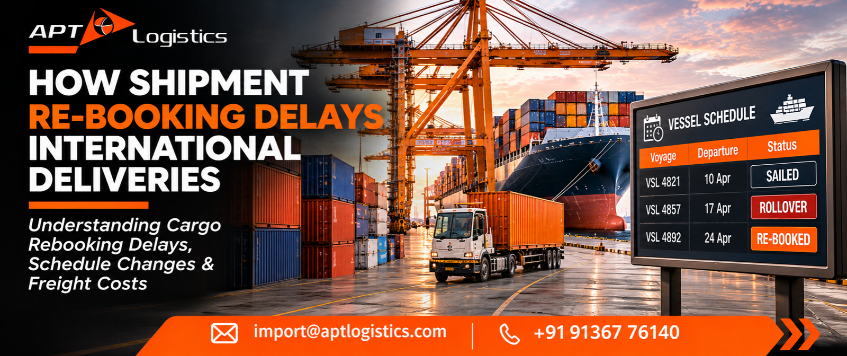
How Shipment Re-Booking Delays International Deliveries
International shipments depend on coordinated schedules involving exporters, freight forwarders, airlines, shipping lines, customs authorities, ports, and destination agents. When an original cargo booking is cancelled, postponed, or changed, the shipment may need to be booked again.
These cargo rebooking delays can affect delivery commitments, increase transportation costs, disrupt inventory planning, and create additional operational challenges for importers and exporters.
Re-booking may appear to be a simple change in the shipping schedule, but it often involves securing fresh cargo space, revising documentation, coordinating transportation, and confirming new departure arrangements.
1. Why Does Shipment Re-Booking Happen?
Several operational and commercial factors can result in an existing cargo booking being changed or cancelled.
Common reasons include:
-
Space unavailability: Airlines or shipping lines may not be able to accommodate cargo on the originally confirmed departure.
-
Vessel rollover: Cargo may be moved to a later vessel due to capacity constraints or operational priorities.
-
Flight cancellation: Airline schedule changes or operational disruptions may require a fresh air freight booking.
-
Cargo not ready: The shipper may fail to deliver cargo within the agreed cut-off time.
-
Documentation issues: Missing or incorrect shipping documents can prevent cargo acceptance or dispatch.
-
Route disruption: Weather, geopolitical developments, port congestion, or other operational issues may affect the original schedule.
The reason for re-booking determines how much additional time and coordination may be required.
2. How Cargo Rebooking Delays Affect Delivery Schedules
The most immediate impact is the loss of the originally planned departure schedule.
When cargo is moved to another flight or vessel, the revised departure may not be available immediately. The shipment may have to wait for the next suitable connection or sailing.
This can lead to:
-
Delayed arrival at the destination.
-
Missed connecting flights or vessel connections.
-
Changes in estimated time of arrival (ETA).
-
Delayed delivery to the consignee.
-
Disruption to production and inventory schedules.
For time-sensitive cargo, even a short booking delay can create significant commercial consequences.
3. Limited Space on the Next Available Departure
Re-booking does not automatically guarantee space on the next flight or vessel.
Airlines and shipping lines operate according to available capacity, equipment, route demand, and operational schedules. During peak seasons, high-demand periods, or capacity disruptions, the next available departure may already be fully booked.
In such situations, freight forwarders may need to:
-
Check alternative airline or shipping line options.
-
Explore different departure dates.
-
Consider alternative routing.
-
Request priority space, subject to availability.
-
Evaluate other suitable ports or airports.
These alternatives may reduce transit time but can also increase the overall freight cost.
4. Additional Costs Caused by Shipment Re-Booking
Cargo rebooking delays can create costs beyond the original freight quotation.
Depending on the circumstances and the carrier’s terms, additional charges may include:
-
Re-booking or amendment charges.
-
Storage and warehouse handling.
-
Additional trucking or pickup arrangements.
-
Cancellation or no-show charges.
-
Documentation amendment fees.
-
Additional terminal or port-related costs, where applicable.
For ocean freight, a vessel rollover may also affect container planning, cut-off arrangements, and the expected arrival date.
Importers and exporters should request a revised cost breakdown before approving a new booking.
5. Documentation and Coordination Challenges
A booking change may require several parties to update their operational records.
For example, a change in vessel, flight, departure date, or routing may require revised booking confirmations and updated shipping instructions. Depending on the shipment stage, other documents or declarations may also need amendment.
Coordination may involve:
-
Shipper and consignee.
-
Freight forwarder.
-
Airline or shipping line.
-
Customs broker.
-
Transporter.
-
Origin and destination handling agents.
If updated information is not communicated promptly, the shipment may face further delays even after new cargo space has been secured.
6. How Importers and Exporters Can Minimise Re-Booking Delays
Although some disruptions are outside a shipper’s control, proper planning can reduce the likelihood and impact of re-booking.
Confirm cargo readiness early: Ensure cargo is packed, labelled, and ready before the carrier’s cut-off.
Submit accurate documentation: Check invoices, packing lists, shipping instructions, and other required documents before booking confirmation.
Book space in advance: Early booking can improve the chances of securing suitable capacity, especially during peak periods.
Maintain alternative carrier options: Identify backup airlines, shipping lines, and routing possibilities for critical shipments.
Monitor shipment milestones: Track booking confirmation, cargo acceptance, gate-in, departure, and arrival updates.
Communicate changes immediately: Inform all stakeholders as soon as a booking change or cancellation is received.
7. The Role of a Freight Forwarder in Managing Re-Booking
An experienced freight forwarder helps coordinate the process when an original booking cannot be maintained.
This includes checking alternative schedules, communicating with carriers, coordinating cargo readiness, reviewing documentation requirements, and arranging revised transportation plans.
For international shipments, timely communication between origin and destination teams is particularly important. It helps importers and exporters understand revised ETAs, possible additional costs, and the available alternatives.
Conclusion
Shipment re-booking can disrupt international deliveries by affecting cargo space availability, departure schedules, documentation, and transportation arrangements. Cargo rebooking delays can also lead to additional costs and uncertainty for businesses relying on timely imports and exports.
Advance planning, accurate documentation, early booking, and alternative carrier arrangements can help reduce these disruptions.
At APT Logistics, we coordinate air freight, sea freight, customs clearance, and inland transportation solutions to help importers and exporters manage changing shipping schedules. Our team focuses on identifying practical alternatives and keeping customers informed when shipment plans change.
3. Frequently Asked Questions (FAQs)
Q1. What are cargo rebooking delays?
Cargo rebooking delays occur when an existing shipment booking is cancelled, postponed, or changed and the cargo must be assigned a new flight, vessel, or departure schedule.
Q2. Why do shipping lines roll over containers to another vessel?
Common reasons include vessel capacity constraints, operational changes, port congestion, schedule disruptions, and equipment availability.
Q3. Does re-booking increase international shipping costs?
It can. Depending on the carrier’s terms and the reason for the change, additional costs may include amendment fees, storage, handling, cancellation charges, or revised transportation costs.
Q4. How can exporters avoid shipment re-booking?
Exporters should confirm cargo readiness, complete documentation early, meet carrier cut-offs, book space in advance, and maintain communication with their freight forwarder.
Q5. Can cargo be transferred to another airline or shipping line after re-booking?
Yes, subject to space availability, cargo acceptance requirements, routing feasibility, documentation, and any applicable cancellation or amendment charges.
-
Need Help? Chat with us!
Start a Conversation
Hi! Click one of our members below to chat on WhatsApp