-

29
Oct
IGM vs EGM: Key Differences in Indian Customs
IGM vs EGM: Understanding India’s Cargo Manifest Process
In international shipping, accurate cargo manifest information is essential for customs compliance and smooth cargo movement. Understanding IGM vs EGM helps importers, exporters, and freight forwarders identify how cargo information is reported to Indian Customs and why errors or delays can affect shipment clearance.
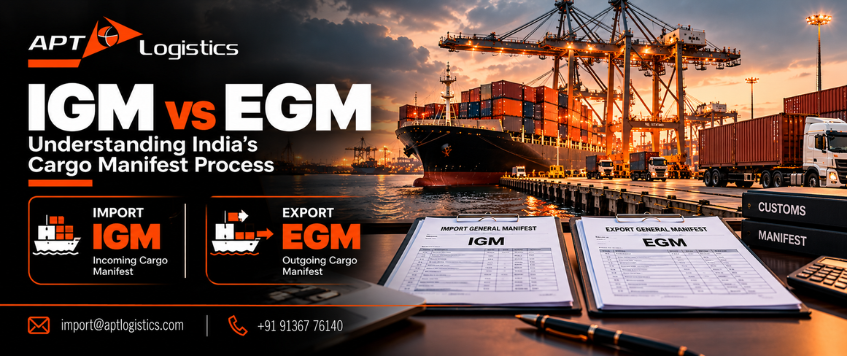
IGM stands for Import General Manifest, while EGM stands for Export General Manifest. Traditionally, these terms describe cargo information submitted for incoming and outgoing shipments. India’s sea-cargo reporting framework has also moved towards electronic Arrival Manifest and Departure Manifest procedures under the Sea Cargo Manifest and Transshipment Regulations (SCMTR). The applicable terminology and filing process depend on the transport mode and current customs system.
CBIC+1
What Is an Import General Manifest (IGM)?
An Import General Manifest (IGM) traditionally records details of cargo arriving in India by sea, air, or other applicable transport modes. It is submitted by the carrier or the responsible transport operator, or its authorised agent, to the customs authorities.
The manifest helps customs identify the incoming cargo and connect it with the relevant transport and import documentation.
Key information may include:
-
Vessel or flight details and arrival information
-
Importer or consignee details
-
Bill of Lading or Air Waybill references
-
Cargo description and package details
-
Declared weight and other shipment particulars
Why it matters: Import documentation must correspond with the cargo information reported to customs. Discrepancies can lead to additional checks, amendments, or delays in the import clearance process.
Mumbai Customs Zone – III+1
What Is an Export General Manifest (EGM)?
An Export General Manifest (EGM) traditionally records cargo loaded for export and reported to customs by the carrier or its authorised agent.
It connects the export cargo reported by the transport operator with the relevant export documentation, including the Shipping Bill and transport details.
Key information may include:
-
Vessel or flight details
-
Shipping Bill references
-
Bill of Lading or Air Waybill information, as applicable
-
Container and cargo particulars
-
Details of cargo actually carried on the departing conveyance
Why it matters: Export manifest discrepancies or filing delays can require follow-up with the carrier, customs broker, or customs authorities. They may also affect the processing of export-related claims or benefits where the relevant records are required.
Cochin Customs+1
IGM vs EGM: Key Differences
Particulars IGM EGM Full form Import General Manifest Export General Manifest Purpose Reports incoming cargo Reports cargo exported from India Direction Import Export Traditionally filed by Carrier or authorised agent Carrier or authorised agent Related documents Bill of Lading, Air Waybill, Bill of Entry Shipping Bill, Bill of Lading, Air Waybill Operational importance Supports identification and import clearance of arriving cargo Supports export reporting and reconciliation of cargo loaded Note: For sea cargo, the SCMTR framework uses Arrival Manifest and Departure Manifest terminology. The exact filing requirements should be verified for the relevant port, transport mode, and customs system.
ICEGate+1
How Does the Cargo Manifest Process Work?
Import process
-
The carrier or authorised agent submits the applicable arrival cargo manifest information.
-
Customs receives and processes the cargo details.
-
The importer or customs broker prepares the Bill of Entry and completes the required clearance formalities.
-
Manifest discrepancies, if any, are resolved through the applicable amendment process.
Export process
-
The exporter files the Shipping Bill and completes the required export formalities.
-
Customs processes the export declaration and grants the applicable clearance, including Let Export Order where required.
-
The carrier loads the cleared cargo onto the departing conveyance.
-
The carrier or authorised agent submits the applicable departure or export manifest.
-
Relevant shipping and customs records are reconciled, and discrepancies are followed up where necessary.
The exact sequence and electronic filing requirements can differ by transport mode and applicable customs procedures.
Common IGM and EGM Errors to Avoid
Incorrect or inconsistent shipment information can cause unnecessary follow-up. Common issues include:
-
Incorrect consignee details: The importer or consignee name does not match the supporting documents.
-
Bill of Lading or Air Waybill discrepancies: Transport document references do not match the manifest.
-
Incorrect package count or cargo weight: Declared particulars differ from the shipment records.
-
Container number errors: The container details are incorrectly reported or not updated.
-
Delayed filing: Manifest information is not submitted within the applicable timeline.
-
Unresolved amendments: Corrections are identified but not completed through the required customs process.
If an error is discovered, contact the carrier or authorised agent and customs broker promptly. Any amendment must follow the applicable customs requirements and approval process.
How APT Logistics Supports Import and Export Documentation
At APT Logistics, we coordinate international freight forwarding, customs clearance, shipping documentation, and cargo movement. Our team works with carriers, agents, and customs brokers to help keep shipment details consistent and address documentation discrepancies promptly.
Accurate documentation and timely communication can reduce avoidable follow-ups and support smoother import and export operations.
Conclusion
Understanding IGM vs EGM helps businesses recognise the difference between incoming and outgoing cargo reporting in Indian customs procedures. Import manifests support the identification of arriving cargo, while export manifests record cargo reported for departure.
For smoother international shipping, importers and exporters should ensure that transport details, cargo particulars, and customs declarations are accurate and that the applicable manifest filing requirements are met.
Frequently asked questions
1. What is the full form of IGM in shipping?
IGM stands for Import General Manifest, traditionally used for reporting incoming cargo details to customs.
2. What is the full form of EGM in export?
EGM stands for Export General Manifest, traditionally used for reporting export cargo carried on a departing vessel or aircraft.
3. Who files IGM and EGM?
Traditionally, the carrier or its authorised agent is responsible for filing the relevant manifest. Current sea-cargo requirements may use Arrival Manifest and Departure Manifest procedures under SCMTR.
4. Can an IGM or EGM be amended?
Corrections may be possible under the applicable customs procedures. The responsible carrier or authorised agent should coordinate the amendment with customs and provide supporting documents where required.
5. Does EGM affect export incentives or refunds?
Manifest discrepancies may affect export-record reconciliation and the processing of certain export-related claims or benefits. The effect depends on the specific scheme and circumstances.
6. Are IGM and EGM still the terms used for all sea shipments in India?
Not universally. India’s sea-cargo reporting framework has transitioned towards Arrival Manifest and Departure Manifest procedures under SCMTR. Businesses should confirm the current filing process applicable to their port and shipment.
-
Need Help? Chat with us!
Start a Conversation
Hi! Click one of our members below to chat on WhatsApp