-

13
Oct
Container Stuffing Checklist for Exporters | APT Logistics
Why Is a Container Stuffing Checklist Important?
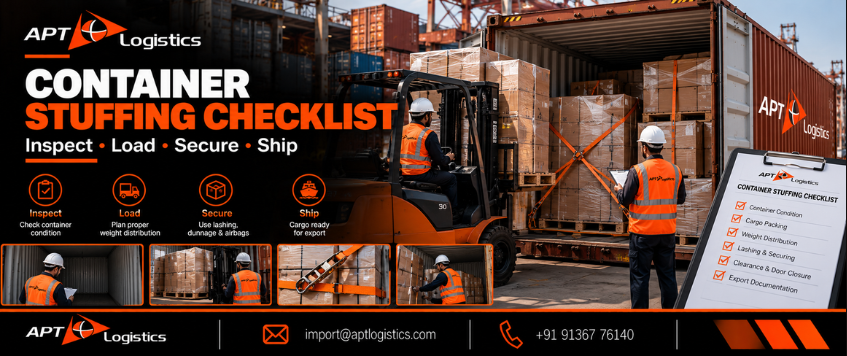
A container stuffing checklist helps exporters verify that cargo is loaded safely, secured correctly and prepared for international transportation.
Improper stuffing can lead to cargo damage, container imbalance, shifting during transit, weight discrepancies and delays at ports. Missing documentation or incorrect seal details can also create complications during customs clearance and shipment processing.
Whether you export industrial machinery, garments, cartons, pallets or general commercial goods, following a structured loading procedure can reduce avoidable risks.
Container Stuffing Checklist: Before Loading
Before cargo is loaded, the container and shipment details should be inspected carefully.
1. Inspect the Empty Container
Check the following points:
-
Container number matches the booking and release documents.
-
Container is clean, dry and free from unpleasant odours.
-
Floor, walls, doors and roof show no significant damage.
-
No visible holes, cracks or signs of water ingress.
-
Door locking mechanisms are functioning correctly.
-
Container is suitable for the type and weight of cargo.
For sensitive cargo, additional cleanliness, moisture or suitability checks may be necessary.
2. Verify Cargo and Packing Details
Confirm the following before stuffing:
-
Cargo description matches the shipping documents.
-
Package count and marks are verified.
-
Packaging is strong enough for the planned journey.
-
Cargo dimensions and gross weight are accurate.
-
Damaged or wet packages are identified before loading.
-
Special handling instructions are communicated to the loading team.
3. Confirm Container Capacity and Weight
Check the container’s permitted payload and applicable transport limits. Ensure the planned cargo weight complies with container, road transport, terminal and route requirements.
For applicable packed export containers, the Verified Gross Mass (VGM) must be determined and submitted in accordance with SOLAS requirements before loading onto a vessel.
Container Stuffing Checklist: During Loading
4. Distribute Cargo Weight Properly
Cargo should be distributed to maintain balance and avoid excessive concentrated loads on the container floor.
Heavy items should be positioned according to the loading plan, with attention to axle limits, floor-loading capacity and the container’s structural limitations.
5. Secure the Cargo
Use suitable securing materials such as:
-
Lashing straps
-
Dunnage and blocking
-
Bracing materials
-
Anti-slip materials
-
Pallets and suitable restraints
The securing method should account for cargo weight, dimensions, centre of gravity and expected movement during transportation.
6. Protect Cargo From Moisture and Damage
Use suitable packaging and protective materials based on the cargo’s requirements. Avoid loading wet cargo or packaging into a container without assessing the risk of moisture damage.
For machinery and sensitive goods, appropriate corrosion protection, cushioning and securing may be necessary.
7. Follow a Loading Plan
Load cargo in a planned sequence to maximize space without compromising safe weight distribution or cargo stability.
Keep required identification labels visible where practical and avoid leaving unsecured gaps that could allow cargo to shift.
Container Stuffing Checklist: After Loading
Before closing the container, verify these final details:
-
All packages have been loaded and counted.
-
Cargo is secured and no obvious movement hazards remain.
-
Package marks and shipment details are recorded.
-
Final container and seal numbers are documented.
-
Photographs of the loaded cargo and closed container are retained.
-
The VGM is calculated and submitted where required.
-
Shipping Instructions and other applicable documents reflect the correct details.
-
The container is dispatched according to the planned schedule.
Photographs taken before the doors are closed can be especially useful if cargo condition or loading arrangements are questioned later.
Common Container Stuffing Mistakes to Avoid
Exporters should avoid:
-
Using damaged or unsuitable containers.
-
Incorrectly declaring cargo weight or package quantity.
-
Concentrating heavy cargo in one area.
-
Using inadequate lashing or blocking.
-
Ignoring moisture and packaging risks.
-
Recording the wrong container or seal number.
-
Missing VGM submission deadlines.
-
Failing to retain loading records and photographs.
These mistakes can create cargo damage, safety issues, documentation discrepancies and unexpected costs.
How APT Logistics Supports Export Container Stuffing
At APT Logistics, we coordinate container loading and export logistics requirements for general cargo, industrial goods and specialized shipments.
Our team can assist with container planning, stuffing coordination, cargo securing arrangements, documentation, customs clearance and onward transportation, depending on the shipment’s requirements.
A properly planned container stuffing checklist helps exporters maintain better control over loading quality and prepare cargo for a smoother international shipping process.
Conclusion
A container stuffing checklist is a simple but valuable tool for reducing cargo damage, loading errors and export documentation problems.
By inspecting the container, verifying cargo details, distributing weight correctly, securing the load and recording final shipment information, exporters can improve safety and operational reliability.
APT Logistics — Reliable Container Loading and Export Freight Solutions from India to Global Markets.
Frequently Asked Questions
1. What should exporters check before container stuffing?
Inspect the container condition, verify cargo dimensions and weight, confirm packaging suitability and ensure the loading plan meets applicable requirements.
2. Why is cargo lashing important?
Lashing and securing help prevent cargo from shifting during handling and transportation, reducing the risk of damage and unsafe weight movement.
3. Is VGM required for export containers?
For packed containers subject to SOLAS requirements, Verified Gross Mass must be determined and provided to the carrier and terminal as required before the container is loaded onto the vessel.
4. Why should exporters photograph container stuffing?
Photographs provide a record of container condition, cargo arrangement, securing and seal application. They can support internal quality checks and help investigate disputes.
5. Who is responsible for container stuffing?
Responsibility depends on the sales contract, shipping arrangement and who performs or supervises the loading. Exporters should clearly establish operational responsibilities with their logistics partners.
-
Need Help? Chat with us!
Start a Conversation
Hi! Click one of our members below to chat on WhatsApp