-

28
Oct
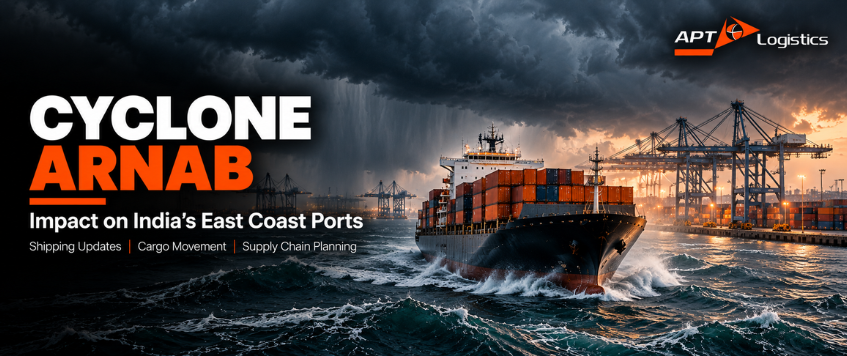
Cyclone Arnab: Impact on India’s East Coast Ports and Shipping
Introduction
Imagine your export cargo is packed, the documents are ready and the shipment is booked for its scheduled vessel. Just when everything seems on track, severe weather develops near the port. Suddenly, your cargo collection, loading schedule and delivery commitments may all need to be reviewed.
This is the kind of uncertainty businesses face when cyclones affect coastal shipping operations.
On 28 October 2026, Cyclone Arnab brought attention to the risks facing India’s east coast, particularly for businesses that depend on predictable vessel schedules and smooth cargo movement. For importers and exporters, the concern is not limited to whether a port remains operational. Weather can also affect vessel arrivals, terminal activities, road transportation and connecting shipments.
In this article, APT Logistics explains what businesses should monitor and how they can prepare for potential shipping delays.
Cyclone Arnab: What Do the Latest Reports Say?
The India Meteorological Department (IMD) issued coastal weather information on 28 October 2026 covering conditions associated with Cyclone Arnab and several ports along India’s east coast.
The reported weather conditions raised concerns about maritime safety and possible restrictions on port-related activities in affected areas, including the Visakhapatnam and Kakinada regions.
However, it is important to distinguish between a weather warning and a confirmed operational shutdown. A port danger signal indicates a weather-related risk; it does not automatically mean that all cargo handling, vessel movements or terminal operations have stopped.
The actual situation may differ from one port or terminal to another. Shippers should therefore check the latest notices from the relevant port authority, terminal operator and shipping line before making decisions about cargo dispatch.
Sources for this update: India Meteorological Department, coastal weather bulletins dated 28 October 2026; Reuters reporting on Cyclone Arnab and its impact on India’s east coast.
How Could Cyclone Arnab Affect Shipping and Cargo Movement?
1. Vessel schedules may change
When strong winds and rough seas create unsafe conditions, vessel movements and berthing arrangements may be adjusted. Depending on the severity of local conditions, a vessel could arrive later than planned, wait for clearance to enter port or operate on a revised schedule.
For exporters, this could mean a missed sailing or a longer wait before cargo is loaded. Importers may need to revise delivery plans if their inbound vessel arrives later than expected.
What should you do? Ask your freight forwarder or shipping line for the latest estimated time of arrival (ETA), estimated time of departure (ETD) and any revised booking instructions. Do not rely solely on the original schedule.
2. Container loading and cargo handling may face delays
Port operations depend on safe working conditions. Severe weather can lead to restrictions on crane movements, container handling and other terminal activities where required by local safety instructions.
If operations are interrupted, export containers may not be loaded according to the original plan. Import containers may also take longer to discharge or become available for delivery.
Exporters should confirm their container gate-in deadlines and cargo cut-off times. Importers should monitor discharge updates and coordinate with their customs brokers before arranging container collection.
3. Road transportation could become another challenge
Even if a port or terminal continues operating, getting cargo to and from the facility may become difficult when heavy rain, flooding or road restrictions affect the surrounding area.
For example, a container moving from a factory to an east-coast port could face delays if the planned route becomes inaccessible. Similarly, a truck scheduled to collect an import container may need to wait if local road conditions are unsafe.
Before dispatching a vehicle, confirm road accessibility, collection timings and any restrictions with the transporter. Avoid sending vehicles into affected areas without checking the latest conditions.
4. Air freight and connecting shipments also need attention
Weather-related disruption is not limited to ocean freight. Heavy rain and strong winds may affect airport operations, flight schedules and road transport serving air cargo terminals.
Businesses moving urgent spare parts, industrial components, pharmaceuticals or other time-sensitive goods should verify flight status and cargo acceptance directly with their airline or logistics provider.
If an air or sea shipment involves multiple transport legs, check whether a delay at one point could affect the onward connection.
Five Practical Steps for Importers and Exporters
When severe weather threatens shipping schedules, a few timely actions can help businesses avoid unnecessary confusion and reduce preventable costs.
1. Check official updates before dispatching cargo. Review port notices, carrier advisories and local weather alerts before arranging factory pickup or container movement.
2. Keep your shipping documents ready. Ensure commercial invoices, packing lists, shipping instructions and customs documentation are complete. This allows your team to respond quickly when operations resume.
3. Communicate early with your customers and suppliers. If the schedule changes, share the latest confirmed information instead of waiting until the original delivery date has passed.
4. Review storage and container deadlines. Ask the shipping line about applicable free time and whether any weather-related relief has been announced. Demurrage, detention and storage charges are governed by the relevant terms and policies, so do not assume they will automatically be waived.
5. Keep alternative arrangements under review. Depending on cargo type, urgency, availability and cost, an alternative sailing, routing or transport arrangement may be worth considering. Any change should be confirmed with the carrier and relevant service providers before implementation.
How APT Logistics Can Help During Shipping Disruptions
Unexpected weather events can make logistics planning difficult, especially when a business has customer delivery commitments, production schedules or cargo that requires specialised handling.
Working with a freight forwarder helps bring the different parts of the shipment together. This includes coordinating with shipping lines, monitoring schedule changes, following up on documentation, communicating with transporters and reviewing practical alternatives when available.
APT Logistics supports importers and exporters with:
- Sea freight: FCL, LCL and consolidation services.
- Air freight: Solutions for general cargo and time-sensitive shipments.
- Customs clearance: Documentation coordination and clearance support.
- Inland transportation: Cargo movement between ports, ICDs, warehouses and factories.
- Specialised cargo: Project cargo, open-top containers, flat racks and out-of-gauge shipments.
Our priority is to help customers make informed decisions using the latest available shipment information, while keeping costs, timing and operational requirements in view.
Conclusion: Plan Ahead When Weather Affects Shipping
Cyclone Arnab is a reminder that international shipping schedules can be affected by factors beyond a shipper’s control. Weather conditions may influence vessel movements, cargo handling and inland transportation, but the extent of any disruption depends on the location and the latest operating instructions.
For businesses moving cargo through India’s east coast, the best approach is to verify port status, communicate with logistics partners and remain flexible when reviewing shipment plans.
A little preparation can make it easier to respond when schedules change. Rather than assuming that every shipment will be delayed, businesses should work with confirmed updates and assess each shipment individually.
Need Help With Your Shipment?
APT Logistics provides freight forwarding and end-to-end logistics support for businesses importing and exporting from India.
Whether you need sea freight, air freight, customs clearance, inland transportation or specialised cargo handling, our team can help you review your shipment requirements and available options.
Contact APT Logistics
Email: import@aptlogistics.com
Phone: +91 91367 76140
Website: https://aptlogistics.com/Disclaimer: This article is an informational industry update dated 28 October 2026. Weather conditions, port operating status and carrier schedules can change. Confirm the latest information with official authorities, terminal operators and shipping lines before making shipment or commercial decisions.
Need Help? Chat with us!
Start a Conversation
Hi! Click one of our members below to chat on WhatsApp