-

03
Sep
Predictive Logistics Technology to Reduce Delays
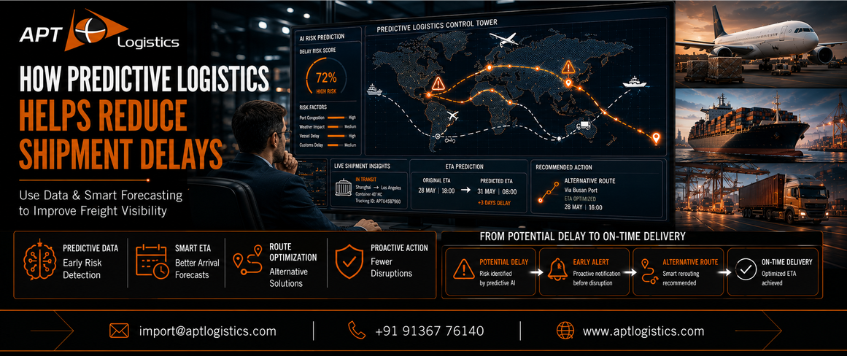
How Predictive Logistics Helps Reduce Shipment Delays
Predictive logistics technology is changing how businesses manage international shipments. Instead of reacting after a delay occurs, logistics teams can use shipment data, historical patterns, carrier information, and operational signals to identify potential problems earlier.
This can help businesses improve ETA planning, select better routes, and respond proactively to possible disruptions.
What Is Predictive Logistics Technology?
Predictive logistics uses data and analytics to identify potential transportation risks before they significantly affect a shipment.
It can analyze factors such as:
- Historical transit times.
- Vessel and flight schedules.
- Port congestion.
- Weather conditions.
- Transshipment patterns.
- Carrier performance.
- Route disruptions.
- Previous shipment data.
The objective is to provide better visibility into what could happen next.
How Predictive Logistics Reduces Delays
1. Early Delay Detection
Predictive systems can identify warning signs such as port congestion, schedule changes, or missed connections before they become major problems.
2. Better ETA Forecasting
Instead of relying only on the original carrier ETA, businesses can use available operational data to develop a more realistic arrival expectation.
3. Smarter Route Selection
Potentially problematic routes can be evaluated against alternative carriers, ports, or transportation modes.
4. Proactive Customer Communication
When a delay appears likely, logistics teams can inform customers earlier and help them adjust warehouse, production, or delivery plans.
5. Improved Inventory Planning
More accurate shipment forecasts can help businesses manage stock levels and prepare for possible changes in cargo arrival.
Predictive Logistics for Air & Sea Freight
Air Freight
Predictive tools can help monitor:
- Flight schedules.
- Connections.
- Airport congestion.
- Capacity availability.
- Estimated arrival times.
Sea Freight
They can help monitor:
- Vessel schedules.
- Port congestion.
- Transshipment connections.
- Route changes.
- Vessel ETAs.
Benefits for Businesses
Using predictive logistics can help businesses:
- Reduce unexpected shipment disruptions.
- Improve delivery planning.
- Increase supply-chain visibility.
- Prepare alternative routing.
- Improve inventory decisions.
- Communicate proactively with customers.
- Reduce the operational impact of delays.
APT Logistics Insight ⭐
Predictive technology does not eliminate every logistics disruption. Its real value is early visibility.
When potential risks are identified before they affect the final delivery, businesses have more time to consider alternative routes, adjust inventory plans, reschedule deliveries, or communicate with customers.
APT Logistics combines shipment monitoring, operational coordination, and proactive logistics planning to help businesses manage changing transportation conditions.
Conclusion
Predictive logistics technology helps businesses move from reactive freight management toward proactive supply-chain planning. By analyzing shipment data, schedules, congestion, and other operational signals, businesses can identify potential delays earlier and make better logistics decisions.
For time-sensitive cargo, combining predictive insights with experienced freight management can improve visibility, planning, and delivery reliability.
FAQ
What is predictive logistics technology?
It uses data, analytics, and predictive models to identify potential logistics risks and forecast shipment movements or delays.
Can predictive logistics prevent all shipment delays?
No. It cannot eliminate unexpected disruptions, but it can provide earlier warnings and help businesses respond more effectively.
Does predictive logistics work for sea freight?
Yes. It can help analyze vessel schedules, port congestion, transshipment, route changes, and ETA risks.
How does predictive logistics improve customer service?
Earlier visibility allows logistics teams to provide proactive updates and help customers prepare for potential changes in delivery schedules.
Need Help? Chat with us!
Start a Conversation
Hi! Click one of our members below to chat on WhatsApp