-

19
Sep
Consignee Detail Errors: How Exporters Can Avoid Shipping Delays
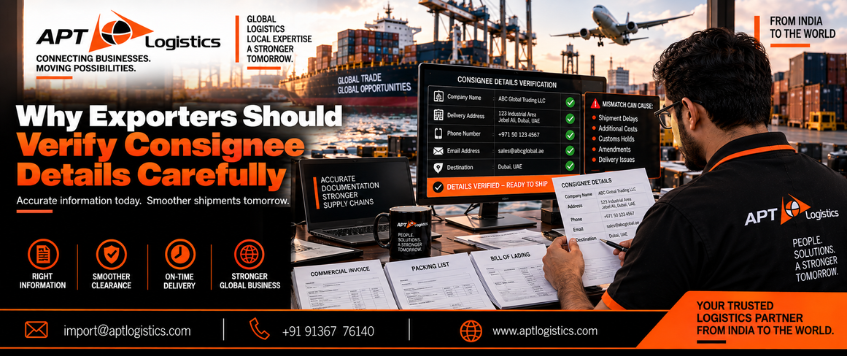
Why Exporters Should Verify Consignee Details Carefully
Consignee detail errors can affect documentation, customs processing, carrier records and final delivery. That is why exporters should verify consignee information carefully before cargo is booked and documents are finalized.
International shipments involve multiple documents, systems and logistics partners. One small mistake in the consignee’s name, address or contact information can create unnecessary complications later in the shipment.
What Are Consignee Details?
The consignee is generally the party designated to receive the shipment. Depending on the transaction and shipping arrangement, the relevant information may include:
- Legal company name
- Complete delivery address
- Contact person
- Telephone number
- Email address
- Tax or registration details, where applicable
- Destination customs information
The exact information required can vary depending on the destination country, commodity and mode of transport.
1. Incorrect Company Name
A spelling mistake, abbreviation or outdated company name can create discrepancies between the commercial invoice, packing list, Bill of Lading or Air Waybill and customs records.
Before shipment, exporters should confirm the consignee’s correct legal name with the buyer.
2. Wrong or Incomplete Address
A partial or incorrect address can make final delivery difficult, particularly when the destination has multiple branches or warehouses.
For door-to-door shipments, the complete delivery address should be confirmed before transportation is arranged.
3. Incorrect Contact Information
A missing telephone number or incorrect email address can make it difficult for the destination agent, customs broker or delivery team to contact the consignee.
This can delay document collection, customs coordination or final delivery.
4. Mismatch Across Shipping Documents
Consignee information should be checked across all relevant documents.
For example:
Commercial Invoice ↔ Packing List ↔ BL/AWB ↔ Customs Documents
Material differences may lead to additional clarification or document amendment requirements.
5. Destination Customs Requirements
Some destinations require specific consignee information for customs or import processing.
The importer may need to provide tax identification, registration or other local information depending on the country and shipment.
Confirming these requirements before cargo departure can reduce avoidable delays.
Simple Consignee Verification Checklist
Before releasing an export shipment, exporters should verify:
- Legal consignee name
- Complete delivery address
- Country and postal code
- Contact person
- Telephone number
- Email address
- Importer/customs identification, where applicable
- Consistency across shipping documents
- Destination customs requirements
How APT Logistics Helps
APT Logistics works with exporters to coordinate shipping documentation and destination requirements as part of the freight forwarding process.
For international shipments, our team can help review shipment information and coordinate with overseas agents and customers when clarification is required.
Early verification is particularly useful for time-sensitive shipments, where correcting documentation after cargo departure may create unnecessary delays.
Conclusion
Consignee detail errors may appear minor, but incorrect names, addresses or contact information can create problems across the shipping and customs process.
A simple verification before cargo departure can help reduce document amendments, customs queries and delivery delays.
APT Logistics supports exporters with freight forwarding, documentation coordination, customs clearance and international logistics solutions from origin to destination.
Need Help? Chat with us!
Start a Conversation
Hi! Click one of our members below to chat on WhatsApp