-

04
Sep
Avoid Port Storage Charges | Tips for Importers
How Importers Can Avoid Port Storage Charges
For importers, unexpected port storage charges can quickly increase the total cost of a shipment. Containers that remain inside a terminal beyond the permitted free period may attract additional charges.
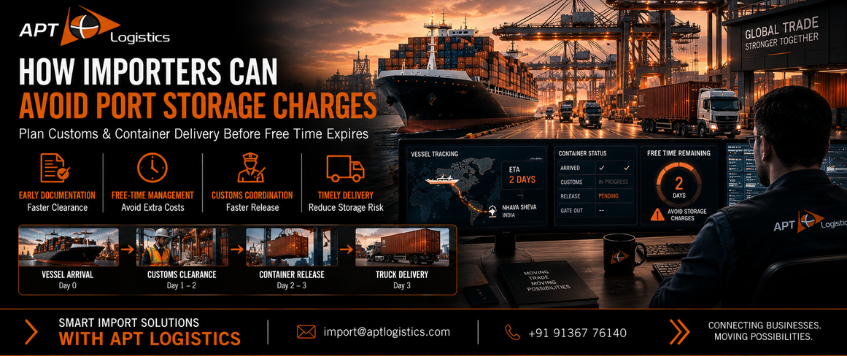
Knowing how to avoid port storage charges starts with preparing documents early, monitoring vessel arrivals, and coordinating customs clearance and transportation before the container becomes available.
What Causes Port Storage Charges?
Storage charges generally arise when a container remains at the terminal beyond the applicable free period.
Common reasons include:
- Delayed customs clearance.
- Missing documentation.
- Import approvals taking longer than expected.
- Delayed payment of applicable charges.
- Trucking or delivery coordination problems.
- Port congestion.
- Unexpected shipment arrival changes.
5 Ways to Avoid Port Storage Charges
1. Prepare Documents Before Arrival
Complete important import documentation before the vessel arrives.
This can help reduce unnecessary clearance delays.
2. Monitor the Vessel ETA
Don’t wait until the container reaches the port to start planning.
Track:
Vessel ETA → Container Discharge → Customs Clearance → Release → Delivery
3. Understand Free Time
Importers should know exactly how much free time is available for their shipment.
Check:
- Storage free time.
- Demurrage free time.
- Detention free time.
- Applicable terminal conditions.
4. Coordinate Customs Early
Any missing documentation or regulatory requirement can delay cargo release.
Advance coordination with the customs broker can help identify potential issues earlier.
5. Arrange Trucking in Advance
Once the container is released, transportation should be ready.
Pre-planning trucks and delivery appointments can reduce unnecessary terminal dwell time.
Storage vs Demurrage vs Detention
These charges are often confused.
Storage: Generally relates to keeping the container/cargo at the terminal beyond the permitted free period.
Demurrage: Commonly refers to charges for exceeding the permitted container time within the terminal.
Detention: Commonly relates to keeping the carrier’s container outside the terminal beyond the allowed free period.
The exact definitions and free-time terms can vary by carrier and location, so importers should always check the applicable tariff or service terms.
APT Logistics Insight ⭐
The best way to avoid port storage charges is to start planning before the vessel arrives.
When documentation, customs clearance, container release, and trucking are coordinated in advance, importers have a much better chance of collecting cargo within the available free period.
APT Logistics supports ocean freight, customs clearance, container tracking, inland transportation, and door-to-door delivery to help businesses manage their import shipments efficiently.
Conclusion
Port storage charges are often preventable with better preparation and coordination. Importers should monitor vessel ETAs, prepare documentation early, understand free-time conditions, coordinate customs clearance, and arrange transportation in advance.
A proactive approach can help businesses avoid port storage charges and maintain better control over their overall import logistics costs.
FAQ
How can importers avoid port storage charges?
Prepare documents early, monitor vessel arrivals, coordinate customs clearance in advance, understand free-time limits, and arrange trucking before cargo release.
What causes port storage charges?
Common causes include delayed customs clearance, missing documents, delayed payments, transportation problems, and containers remaining at the terminal beyond the free period.
Are storage, demurrage, and detention the same?
No. They generally apply to different stages or circumstances of container use. The exact definitions depend on the carrier and terminal.
Can a freight forwarder help reduce storage costs?
Yes. A freight forwarder can coordinate vessel tracking, customs clearance, container release, and inland transportation to help minimize avoidable delays.
Need Help? Chat with us!
Start a Conversation
Hi! Click one of our members below to chat on WhatsApp