-

28
Aug
What Hidden Shipping Charges Importers Often Miss in Logistics
What Hidden Shipping Charges Importers Often Miss in Logistics
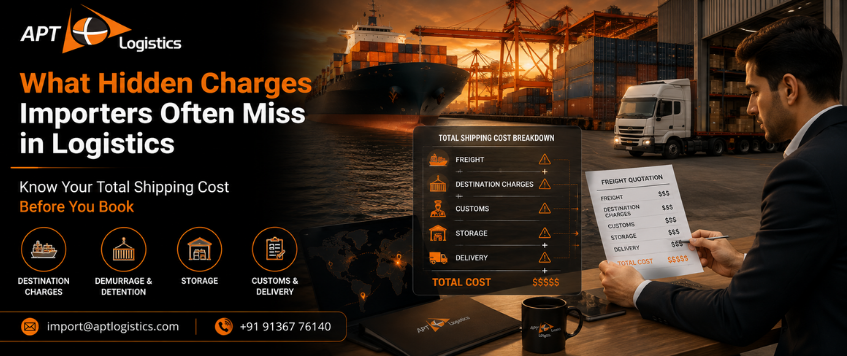
Getting a competitive freight quotation is important, but the lowest quoted freight rate does not always mean the lowest overall shipping cost.
Importers can sometimes face additional charges during transportation, customs clearance, port handling, and final delivery. Understanding these hidden shipping charges before booking can help businesses calculate their actual landed cost more accurately.
Common Hidden Shipping Charges
1. Destination Handling Charges
These may include charges for handling cargo after it reaches the destination port or terminal.
Always check whether destination handling is included in the quoted rate.
2. Documentation Charges
Shipping lines, agents, or logistics providers may apply charges for:
- Bill of Lading documentation.
- Delivery orders.
- Documentation processing.
- Amendments.
3. Demurrage & Detention
If containers remain at the terminal or outside the permitted free period, additional charges can apply.
Importers should understand:
Free Time → Demurrage → Detention
before arranging their shipment.
4. Port & Terminal Charges
Depending on the shipment and destination, importers may encounter:
- Terminal handling charges.
- Port fees.
- Container handling.
- Examination charges.
- Other terminal-related costs.
5. Customs Clearance Costs
Customs clearance may involve charges beyond the basic customs duty, depending on the shipment and services required.
6. Storage Charges
If cargo cannot be cleared or collected within the available free period, storage charges can quickly increase the total logistics cost.
7. Delivery & Trucking Charges
The final delivery quotation may not always include every requirement.
Additional costs can arise from:
- Waiting time.
- Special delivery appointments.
- Remote locations.
- Extra handling.
- Additional mileage.
How to Avoid Unexpected Shipping Costs
Importers can reduce the risk of hidden shipping charges by:
- Asking for an all-in quotation wherever possible.
- Checking exactly what is included and excluded.
- Confirming destination charges before shipment departure.
- Understanding demurrage and detention free time.
- Preparing customs documents in advance.
- Planning delivery before cargo arrival.
- Comparing the total landed logistics cost, not just the freight rate.
APT Logistics Insight ⭐
When comparing freight quotations, don’t simply ask:
“What is your freight rate?”
Ask:
“What will be my total logistics cost from origin to final delivery?”
A transparent quotation that clearly identifies freight, local charges, destination costs, customs, and delivery expenses can help importers budget more accurately and avoid unpleasant surprises.
APT Logistics helps businesses plan air and sea freight, customs clearance, destination handling, inland transportation, and door-to-door delivery with greater cost visibility.
Conclusion
Hidden shipping charges can significantly increase the final cost of an import shipment. Destination handling, documentation, demurrage, detention, storage, customs, and inland delivery are among the costs businesses should evaluate before booking.
A clear quotation and proactive shipment planning can help importers control their logistics budget and make better freight decisions.
FAQ
What are hidden shipping charges?
They are additional logistics costs that may not be immediately visible in the basic freight rate, such as destination handling, storage, documentation, demurrage, or delivery charges.
How can importers avoid unexpected charges?
Request a detailed quotation, confirm inclusions and exclusions, understand free time, and plan customs clearance and final delivery in advance.
Are demurrage and detention the same?
No. They generally relate to different stages of container use and should be checked carefully with the relevant shipping line or service provider.
Does APT Logistics provide transparent freight quotations?
APT Logistics can provide detailed freight solutions covering applicable transportation, handling, customs, and delivery requirements so businesses can better understand their overall logistics costs.
Need Help? Chat with us!
Start a Conversation
Hi! Click one of our members below to chat on WhatsApp