-

16
Jun
Why Businesses Should Plan Shipments Around Holidays | APT Logistics
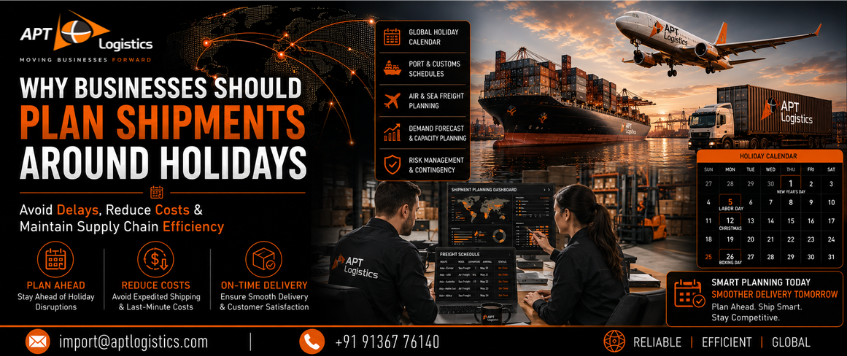
Why Businesses Should Plan Shipments Around Holidays
Businesses that plan shipments around holidays are often better positioned to avoid costly delays, capacity shortages, and unexpected freight expenses. Whether shipping domestically or internationally, public holidays can significantly impact transportation schedules, customs operations, warehousing activities, and cargo handling capacity.
While holidays may only last a few days, their impact on global supply chains can extend for weeks. Proper logistics planning helps businesses maintain inventory levels, meet customer expectations, and keep supply chains running smoothly.
How Holidays Affect Global Shipping
Many companies underestimate the effect holidays can have on freight movement.
Common disruptions include:
- ✔ Reduced carrier capacity
- ✔ Port congestion
- ✔ Limited customs operations
- ✔ Warehouse staffing shortages
- ✔ Delayed cargo handling
- ✔ Increased freight demand
As a result, shipments that normally move smoothly may experience significant delays if not planned in advance.
Major Global Holidays That Impact Logistics
Several international holidays regularly affect freight operations:
Chinese New Year
One of the most significant disruptions in global supply chains.
Effects include:
- Factory shutdowns
- Production delays
- Port congestion
- Container shortages
Golden Week (China)
A national holiday period that impacts manufacturing, trucking, and port activities.
Christmas & New Year
Global demand increases sharply before year-end, leading to:
- Higher freight rates
- Capacity constraints
- Delayed deliveries
National Holidays
Country-specific holidays can affect:
- Customs clearance
- Transportation schedules
- Port operations
- Warehousing services
Risks of Not Planning Shipments Around Holidays
Businesses that fail to prepare often face operational challenges.
1. Shipping Delays ⏳
Cargo may miss vessel departures, flight schedules, or delivery windows.
This can disrupt:
- ✔ Production schedules
- ✔ Customer commitments
- ✔ Inventory availability
2. Higher Freight Costs 💰
Freight rates often increase before major holiday periods due to rising demand and limited capacity.
Businesses may be forced to:
- ✔ Use premium services
- ✔ Pay peak season surcharges
- ✔ Switch to more expensive transport modes
3. Inventory Shortages 📦
Delayed shipments can lead to stockouts and lost sales opportunities.
For manufacturers, inventory shortages may interrupt production operations.
4. Increased Storage Charges
When cargo arrives during reduced operational periods, businesses may face:
- ✔ Port storage fees
- ✔ Warehouse charges
- ✔ Demurrage costs
- ✔ Container detention fees
Benefits of Holiday Shipping Planning
Businesses that proactively plan shipments around holidays gain several advantages.
Better Capacity Availability
Booking cargo space early improves access to:
- ✔ Preferred shipping schedules
- ✔ Better routing options
- ✔ Reliable transit times
Lower Freight Costs
Advanced planning often helps businesses secure:
- ✔ Competitive freight rates
- ✔ Reduced surcharge exposure
- ✔ More flexible shipping options
Improved Inventory Management
Businesses can maintain:
- ✔ Consistent stock levels
- ✔ Better demand forecasting
- ✔ Reduced supply chain disruptions
Greater Customer Satisfaction
Reliable delivery performance strengthens:
- ✔ Customer trust
- ✔ Business relationships
- ✔ Service reliability
Best Practices for Holiday Shipping Planning
Forecast Demand Early
Review seasonal sales trends and inventory requirements well in advance.
Book Freight Space Early
Carrier capacity becomes limited during peak periods.
Early bookings help secure space and better pricing.
Prepare Documentation in Advance
Customs and regulatory delays can become more common during holiday periods.
Ensure all documents are complete before cargo departure.
Communicate with Suppliers
Confirm:
- ✔ Production schedules
- ✔ Cargo readiness dates
- ✔ Holiday closures
- ✔ Delivery timelines
Monitor Global Holiday Calendars
Businesses involved in international trade should track holiday schedules across:
- Origin countries
- Transit hubs
- Destination markets
This helps identify potential bottlenecks before they occur.
Industries Most Affected by Holiday Shipping Delays
Holiday-related disruptions can affect nearly every sector, but some industries face greater risks:
- ✔ Retail and e-commerce
- ✔ Automotive manufacturing
- ✔ Electronics and technology
- ✔ Pharmaceuticals
- ✔ Industrial machinery
- ✔ Consumer goods
For these sectors, proactive freight planning is often critical.
APT Logistics Insight ⭐
Many supply chain disruptions occur not because of unexpected events, but because predictable events were not planned for. Holidays are among the most foreseeable factors affecting global logistics. Businesses that build holiday planning into their supply chain strategy often gain a significant competitive advantage through better inventory availability, lower logistics costs, and more reliable customer service.
How APT Logistics Helps Businesses Prepare
APT Logistics supports businesses with:
- ✔ Freight forecasting support
- ✔ Air and sea freight solutions
- ✔ Customs clearance coordination
- ✔ Shipment scheduling
- ✔ Capacity planning
- ✔ Real-time cargo tracking
- ✔ End-to-end logistics management
Our team helps businesses navigate seasonal demand fluctuations and holiday-related shipping challenges effectively.
Conclusion
Businesses that plan shipments around holidays can significantly reduce delays, avoid unnecessary costs, and maintain stronger supply chain performance. From securing freight capacity early to preparing documentation and coordinating with suppliers, proactive planning helps ensure cargo continues moving even during peak holiday periods.
With APT Logistics, businesses gain reliable logistics expertise and strategic freight planning support designed to keep shipments on schedule throughout the year.
Need Help? Chat with us!
Start a Conversation
Hi! Click one of our members below to chat on WhatsApp