-

12
Jun
How to Reduce Storage Charges with Proper Logistics Planning | APT Logistics
How to Reduce Storage Charges with Proper Logistics Planning
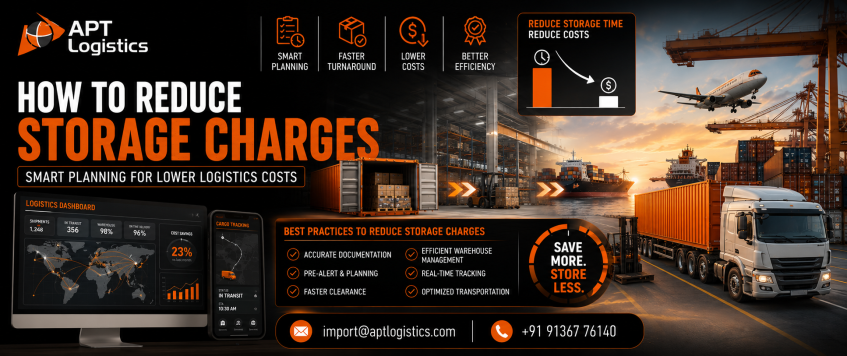
Businesses looking to reduce storage charges must focus on proactive planning, documentation readiness, and efficient supply chain coordination. A well-planned logistics strategy not only lowers costs but also improves cargo flow and operational efficiency.
For importers and exporters, storage charges can quickly become an unexpected logistics expense. Whether cargo is sitting at a port, airport, container freight station (CFS), or warehouse, delays in cargo movement often result in additional costs that directly impact profitability.
What Are Storage Charges?
Storage charges are fees applied when cargo remains at a warehouse, port terminal, airport cargo complex, or CFS beyond the allowed free period.
These charges may include:
- ✔ Port storage charges
- ✔ Airport storage fees
- ✔ Warehouse storage costs
- ✔ Container detention charges
- ✔ Demurrage costs
The longer cargo remains stationary, the higher the overall logistics cost.
Common Reasons for High Storage Charges
Many businesses incur storage fees due to avoidable operational delays.
Common causes include:
- ⚠️ Incomplete documentation
- ⚠️ Customs clearance delays
- ⚠️ Delayed cargo collection
- ⚠️ Poor inventory planning
- ⚠️ Lack of transport coordination
- ⚠️ Supplier communication issues
Identifying these bottlenecks is the first step toward reducing unnecessary costs.
Strategies to Reduce Storage Charges
1. Prepare Documentation Before Cargo Arrival 📄
One of the most effective ways to reduce storage charges is ensuring all shipping documents are ready before cargo arrives.
Important documents include:
- ✔ Commercial Invoice
- ✔ Packing List
- ✔ Bill of Lading
- ✔ Certificate of Origin
- ✔ Import permits (if applicable)
Early preparation helps avoid customs-related delays.
2. Use Pre-Clearance Customs Processing
Whenever possible, begin customs clearance procedures before the vessel or aircraft arrives.
Benefits include:
- ✔ Faster cargo release
- ✔ Reduced dwell time
- ✔ Lower storage costs
- ✔ Improved supply chain efficiency
Pre-clearance is especially valuable for time-sensitive shipments.
3. Plan Transportation in Advance 🚛
Many shipments incur storage charges simply because transportation is not arranged on time.
Businesses should:
- ✔ Schedule trucks before cargo arrival
- ✔ Confirm delivery appointments
- ✔ Coordinate warehouse receiving schedules
- ✔ Maintain transport backups
Efficient inland transport planning reduces cargo waiting time.
4. Improve Inventory Forecasting
Poor inventory planning often results in unnecessary storage expenses.
Better forecasting helps businesses:
- ✔ Avoid warehouse congestion
- ✔ Optimize stock levels
- ✔ Improve cargo turnover
- ✔ Reduce long-term storage requirements
5. Monitor Free Storage Periods ⏳
Every port, airport, and warehouse provides a limited free storage period.
Businesses should actively track:
- ✔ Free days allowed
- ✔ Cargo arrival dates
- ✔ Customs release timelines
- ✔ Container return deadlines
Missing these deadlines often leads to avoidable charges.
6. Choose the Right Logistics Partner
Experienced freight forwarders can help businesses identify potential delays before they become costly problems.
A professional logistics partner can assist with:
- ✔ Documentation management
- ✔ Customs coordination
- ✔ Transport planning
- ✔ Cargo visibility
- ✔ Shipment monitoring
7. Use Real-Time Shipment Tracking 📡
Visibility is essential for effective supply chain planning.
Real-time tracking allows businesses to:
- ✔ Monitor cargo status
- ✔ Prepare resources in advance
- ✔ Reduce response times
- ✔ Prevent unexpected storage delays
8. Coordinate with Suppliers and Consignees
Strong communication between all parties helps prevent operational bottlenecks.
Ensure:
- ✔ Documentation is shared early
- ✔ Delivery schedules are confirmed
- ✔ Cargo readiness is verified
- ✔ Import requirements are understood
Proactive communication reduces delays across the supply chain.
Storage Charges vs Demurrage vs Detention
Many businesses confuse these logistics costs.
Charge Type Description Storage Charges Cargo remains in warehouse, airport, or terminal beyond free time Demurrage Container remains inside terminal beyond allowed free days Detention Container is retained outside terminal beyond free usage period Understanding these differences helps businesses manage logistics costs more effectively.
Benefits of Proper Logistics Planning
Businesses that invest in proactive planning can achieve:
- ✔ Lower storage costs
- ✔ Faster cargo movement
- ✔ Improved inventory control
- ✔ Reduced demurrage risks
- ✔ Better supply chain performance
- ✔ Increased profitability
APT Logistics Insight
Many companies focus heavily on freight rates while overlooking storage-related expenses. In reality, port storage, warehouse charges, demurrage, and detention costs can sometimes exceed freight savings. The most successful supply chains are designed to keep cargo moving, not waiting.
A proactive logistics strategy often delivers greater cost savings than simply negotiating lower transportation rates.
How APT Logistics Helps Reduce Storage Charges
APT Logistics supports businesses with:
- Pre-clearance documentation management
- Customs clearance coordination
- Real-time cargo tracking
- Inland transportation planning
- Warehouse solutions
- End-to-end logistics management
Our team helps businesses streamline cargo movement and minimize avoidable logistics expenses.
Conclusion
The ability to reduce storage charges depends largely on planning, coordination, and supply chain visibility. By preparing documentation early, managing customs efficiently, arranging transportation in advance, and working with experienced logistics partners, businesses can significantly lower warehousing and terminal-related costs.
With APT Logistics, businesses gain reliable logistics expertise that helps keep cargo moving efficiently while controlling operational expenses.
Need Help? Chat with us!
Start a Conversation
Hi! Click one of our members below to chat on WhatsApp