-

21
May
Cargo Misdeclaration in Customs | Risks, Penalties & Solutions
What Happens When Customs Declares Cargo as Misdeclared?
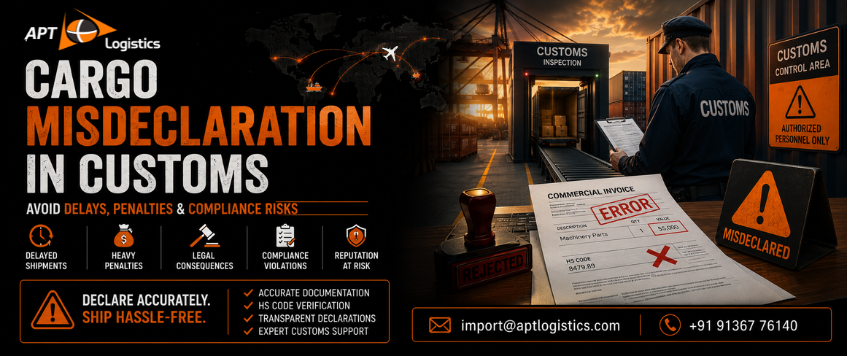
In international shipping, accurate cargo declaration is critical for smooth customs clearance and legal compliance. When customs authorities identify incorrect cargo information, the shipment may be classified under cargo misdeclaration customs violations.
Misdeclared cargo can result in shipment delays, heavy penalties, cargo holds, inspections, and even legal action. For importers, exporters, and freight forwarders, understanding the risks of incorrect declaration is essential for avoiding operational and financial losses.
What is Cargo Misdeclaration?
Cargo misdeclaration occurs when shipment information provided to customs authorities does not match the actual cargo being transported.
This may involve incorrect:
- Product descriptions
- HS codes
- Cargo weight or dimensions
- Cargo value
- Quantity details
- Dangerous goods classification
- Country of origin information
Customs authorities treat cargo accuracy seriously because declaration data directly impacts duties, taxes, safety, and trade compliance.
Common Reasons for Cargo Misdeclaration
1. Incorrect HS Code Usage 📄
Using the wrong HS code can lead to:
⚠️ Incorrect duty calculation
⚠️ Compliance issues
⚠️ Cargo inspectionMany businesses underestimate the importance of proper product classification.
2. Undervaluation of Cargo 💰
Some shipments are intentionally undervalued to reduce customs duties and taxes.
This is considered a serious customs violation and may result in penalties or cargo seizure.
3. Wrong Cargo Description
Generic or inaccurate product descriptions can trigger customs suspicion.
For example:
❌ “Machinery Parts”
✔ “Hydraulic Stone Crusher Components”Detailed descriptions improve compliance and reduce inspection risk.
4. Dangerous Goods Misdeclaration ⚠️
Failing to properly declare hazardous cargo is one of the most serious shipping violations.
Examples include:
- Chemicals
- Batteries
- Flammable liquids
- Aerosols
Improper DG declaration creates major safety risks during transport.
5. Weight & Quantity Mismatch
Differences between declared and actual cargo weight may result in:
🚫 Customs examination
🚫 Freight disputes
🚫 Vessel loading issuesAccurate packing and cargo measurement are essential.
What Happens When Customs Detects Misdeclared Cargo?
1. Cargo Hold & Inspection 🚢
The shipment may immediately be placed on customs hold for detailed examination.
This can significantly increase transit delays.
2. Customs Penalties & Fines 💸
Authorities may impose:
✔ Monetary fines
✔ Additional duties and taxes
✔ Administrative penaltiesThe severity depends on the nature of the violation.
3. Shipment Delays ⏳
Cargo inspections and investigations can delay delivery schedules by days or even weeks.
This impacts:
- Supply chains
- Customer commitments
- Inventory planning
4. Cargo Seizure or Confiscation
In serious cases involving fraud, restricted goods, or dangerous cargo, customs authorities may seize the shipment entirely.
5. Increased Future Scrutiny 🔍
Businesses with repeated customs issues may face:
✔ Higher inspection rates
✔ Compliance audits
✔ Delayed customs processingThis can impact long-term shipping efficiency.
Financial Impact of Cargo Misdeclaration
Misdeclared cargo can create major unexpected costs such as:
- Storage and demurrage charges
- Re-documentation expenses
- Port handling fees
- Penalty payments
- Legal and compliance costs
In some cases, logistics costs may exceed the value of the shipment itself.
How to Avoid Cargo Misdeclaration
Use Accurate Product Descriptions
Always provide detailed and correct cargo information.
Verify HS Codes
Proper classification reduces customs risk and duty disputes.
Maintain Correct Documentation 📑
Ensure consistency across:
✔ Commercial invoice
✔ Packing list
✔ Bill of lading
✔ Customs declaration
Declare Dangerous Goods Properly
Hazardous cargo must comply with international DG regulations.
Work with Experienced Freight Forwarders
Professional logistics support helps ensure customs compliance and accurate documentation.
How APT Logistics Helps
APT Logistics supports businesses with:
✔ Customs documentation verification
✔ HS code guidance
✔ Dangerous goods compliance support
✔ Freight documentation management
✔ Customs clearance coordination
✔ End-to-end logistics consultationWe help businesses reduce compliance risks and avoid costly customs issues.
Why Customs Compliance Matters
Strong compliance practices help businesses:
✔ Reduce shipment delays
✔ Avoid financial penalties
✔ Improve supply chain reliability
✔ Maintain smooth customs clearance
✔ Protect business reputationAccurate cargo declaration is essential for successful international trade.
Conclusion
Understanding the risks associated with cargo misdeclaration customs issues is essential for importers, exporters, and freight forwarders. Even small documentation errors can result in inspections, penalties, and major operational disruptions.
With APT Logistics, businesses gain professional logistics support, customs expertise, and accurate documentation management for smooth global cargo movement.
Need Help? Chat with us!
Start a Conversation
Hi! Click one of our members below to chat on WhatsApp