-

05
Aug
What Causes Transshipment Cargo Delays? | APT Logistics
What Causes Transshipment Cargo Delays?
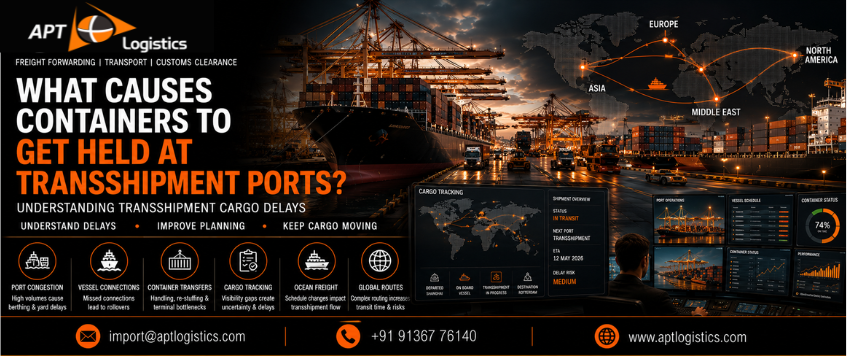
Transshipment cargo delays are one of the most common challenges in international ocean freight. While transshipment helps connect global trade routes efficiently, containers can sometimes remain at intermediate ports longer than expected, affecting delivery schedules, inventory planning, and customer commitments.
Understanding why these delays occur enables importers and exporters to plan more effectively, reduce supply chain risks, and make informed shipping decisions.
In this guide, we’ll explore the most common reasons containers get held at transshipment ports and how businesses can minimize these disruptions.
What Is a Transshipment Port?
A transshipment port is an intermediate port where containers are unloaded from one vessel and transferred to another before reaching the final destination.
Major global transshipment hubs include:
- Singapore
- Port Klang (Malaysia)
- Colombo (Sri Lanka)
- Jebel Ali (UAE)
- Salalah (Oman)
- Tanjung Pelepas (Malaysia)
These hubs help shipping lines optimize vessel schedules and global trade routes.
Why Do Transshipment Cargo Delays Occur?
Several operational and external factors can cause containers to remain at a transshipment port longer than planned.
1. Port Congestion
One of the leading causes of transshipment cargo delays is congestion at busy ports.
Congestion may result from:
- High cargo volumes.
- Vessel backlogs.
- Limited terminal capacity.
- Equipment shortages.
- Labor constraints.
Containers may wait several days before being loaded onto the connecting vessel.
2. Missed Vessel Connections
If the incoming vessel arrives later than scheduled, containers may miss their planned connecting vessel.
Common reasons include:
- Weather disruptions.
- Port delays at previous destinations.
- Mechanical issues.
- Route deviations.
Missing a connection often means waiting for the next available sailing.
3. Customs or Security Inspections
Although containers usually remain sealed during transshipment, customs or port authorities may conduct inspections.
Reasons include:
- Random security checks.
- Documentation discrepancies.
- Compliance verification.
- High-risk cargo screening.
These inspections may temporarily delay onward transportation.
4. Documentation Errors
Incorrect or incomplete shipping documents can interrupt cargo movement.
Common documentation issues include:
- Incorrect consignee details.
- Bill of Lading discrepancies.
- Missing shipping instructions.
- Incorrect cargo declarations.
- Customs documentation errors.
Accurate documentation reduces the risk of unnecessary delays.
5. Vessel Schedule Changes
Shipping lines regularly adjust vessel schedules due to operational requirements.
Schedule changes may result from:
- Route optimization.
- Blank sailings.
- Port omissions.
- Capacity adjustments.
- Fleet management decisions.
Containers may remain at the transshipment port until the revised sailing.
6. Adverse Weather Conditions
Severe weather can disrupt normal port operations.
Examples include:
- Cyclones.
- Typhoons.
- Heavy storms.
- Strong winds.
- Poor visibility.
Weather-related delays affect vessel arrivals, departures, and cargo handling operations.
7. Equipment Shortages
Efficient transshipment depends on the availability of:
- Cranes.
- Yard equipment.
- Trucks.
- Chassis.
- Container handling systems.
Equipment shortages may slow container movement within the terminal.
8. Peak Shipping Seasons
During high-demand periods, transshipment ports handle significantly higher cargo volumes.
Peak seasons often include:
- Holiday inventory buildup.
- Festival demand.
- Agricultural export seasons.
- Retail replenishment cycles.
Increased cargo volumes can extend container dwell times.
9. Geopolitical and Trade Disruptions
Global events can affect shipping schedules and transshipment operations.
Examples include:
- Regional conflicts.
- Trade restrictions.
- Canal disruptions.
- Labor strikes.
- Regulatory changes.
These events may force shipping lines to reroute cargo or revise schedules.
How Businesses Can Reduce Transshipment Cargo Delays
While some delays are unavoidable, businesses can minimize their impact through proactive planning.
Recommended strategies include:
- Choose reliable shipping lines with strong schedule performance.
- Allow buffer time for shipments with transshipment connections.
- Ensure shipping documentation is complete and accurate.
- Monitor shipment progress regularly.
- Work with an experienced freight forwarder.
- Consider direct services where available.
- Plan shipments before peak seasons.
Why Choosing the Right Freight Forwarder Matters
A professional freight forwarder can help businesses reduce the impact of transshipment cargo delays by:
- Selecting reliable carrier services.
- Monitoring vessel schedules.
- Providing real-time shipment updates.
- Managing documentation accurately.
- Coordinating with overseas partners.
- Offering alternative routing options when disruptions occur.
APT Logistics Insight ⭐
Not every shipment delay is caused by customs or vessel transit. In many cases, containers are held at transshipment ports because of missed vessel connections, congestion, or operational adjustments. Businesses that build realistic transit expectations and work with experienced freight forwarders can significantly reduce supply chain disruptions and improve delivery reliability.
How APT Logistics Supports Global Shipping
APT Logistics offers comprehensive international freight solutions, including:
- Air Freight Services
- Sea Freight (FCL & LCL)
- Customs Clearance
- Cargo Tracking
- Transshipment Planning
- Alternative Routing Solutions
- Warehousing
- Door-to-Door Delivery
- Project Cargo Management
Our experienced logistics professionals proactively monitor shipments and coordinate with global carrier networks to minimize delays.
Conclusion
Understanding the causes of transshipment cargo delays helps businesses make smarter logistics decisions and improve supply chain resilience. While factors such as port congestion, vessel schedule changes, and documentation issues cannot always be avoided, careful planning and experienced freight management can significantly reduce their impact.
With APT Logistics as your logistics partner, you gain access to reliable freight solutions, proactive shipment monitoring, and expert support to keep your cargo moving efficiently across international trade routes.
FAQ
What is a transshipment port?
A transshipment port is an intermediate port where containers are transferred from one vessel to another before reaching their final destination.
Why do containers get delayed at transshipment ports?
Common reasons include port congestion, missed vessel connections, documentation issues, customs inspections, equipment shortages, weather disruptions, and schedule changes.
Can transshipment delays be avoided?
While not all delays can be prevented, businesses can reduce risks through early planning, accurate documentation, and selecting reliable shipping services.
Does APT Logistics manage transshipment shipments?
Yes. APT Logistics provides complete ocean freight solutions, including transshipment planning, shipment monitoring, customs support, and alternative routing when required.
Need Help? Chat with us!
Start a Conversation
Hi! Click one of our members below to chat on WhatsApp