-

28
Apr
Ocean Shipping Surcharges Rise Amid Iran Conflict | Global Freight Impact
Ocean Shipping Surcharges Rise Amid Iran War: Impact on Global Trade
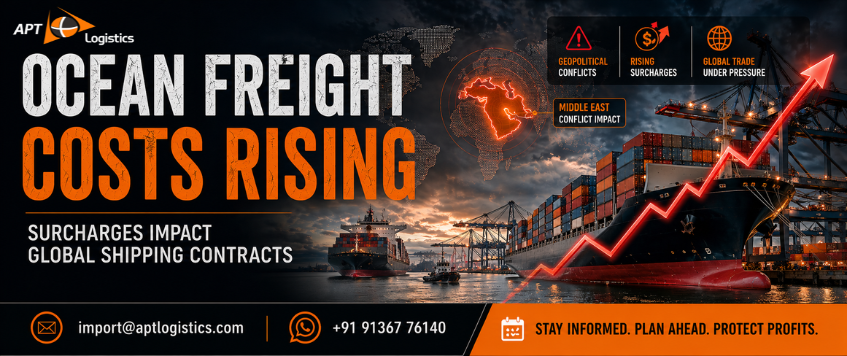
The ongoing Iran conflict is continuing to reshape global logistics, with ocean carriers introducing new surcharges that are now influencing shipping contracts worldwide. As geopolitical tensions disrupt key trade routes, businesses are facing increasing uncertainty in freight pricing and supply chain planning.
Why Ocean Surcharges Are Increasing
The primary driver behind rising ocean freight surcharges is the disruption in the Strait of Hormuz, one of the world’s most critical shipping corridors. The conflict has significantly impacted oil flows, pushing fuel prices higher and increasing operating costs for carriers.
Since fuel is a major component of shipping expenses, rising oil prices have forced carriers to introduce emergency surcharges, war risk premiums, and fuel adjustment fees.
Impact on Freight Contracts
The introduction of surcharges is complicating contract negotiations between shippers and carriers. Many long-term agreements are now under pressure due to:
- Volatile fuel costs
- Unpredictable routing conditions
- Increased insurance and risk premiums
Shippers are finding it difficult to lock in stable rates, while carriers are hesitant to commit to fixed pricing in such an uncertain environment.
Broader Supply Chain Effects
Although container volumes, especially at major U.S. ports, have not yet seen a drastic decline, the cost impact is already being felt across industries.
The Iran war has triggered a broader ripple effect across supply chains, including:
- Vessel rerouting and longer transit times
- Increased operational risks
- Higher logistics costs across modes
- Greater unpredictability in delivery schedules
With nearly 20% of global oil trade passing through the Strait of Hormuz, any disruption has far-reaching consequences beyond just shipping.
What This Means for Businesses
For importers and exporters, the current situation highlights the importance of flexible logistics strategies. Businesses should expect:
📈 Increased freight costs
⏳ Longer transit times
📦 Greater pricing uncertaintyCompanies that rely heavily on fixed-rate contracts may face challenges as carriers continue to adjust pricing structures in response to market conditions.
How APT Logistics Supports You
At APT Logistics, we help businesses navigate volatile market conditions with:
- Transparent cost breakdowns
- Flexible shipping solutions
- Route optimization strategies
- Real-time market updates
Our goal is to ensure your shipments remain efficient and cost-effective despite global disruptions.
Conclusion
The rise in ocean shipping surcharges driven by the Iran conflict is a clear sign of how geopolitical events can directly impact global trade. As fuel costs increase and supply chains face uncertainty, businesses must adapt quickly to changing market dynamics.
With the right logistics partner, companies can mitigate risks, control costs, and maintain supply chain stability even in challenging times.
Need Help? Chat with us!
Start a Conversation
Hi! Click one of our members below to chat on WhatsApp