-

09
May
How Incoterms Affect Pricing | Shipping Cost Explained
How Incoterms Affect Pricing | APT Logistics
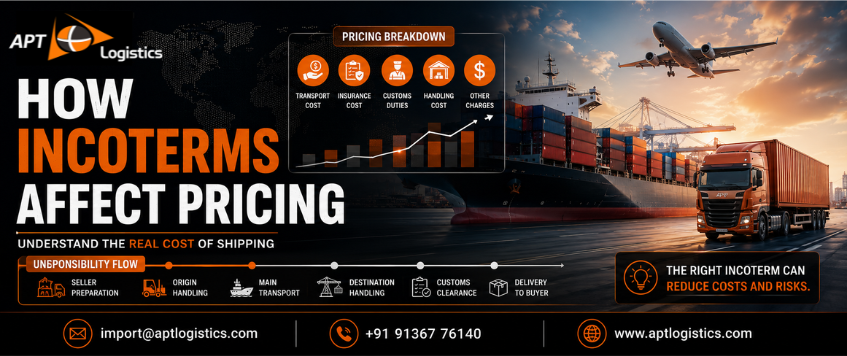
In international trade, shipping cost is influenced by much more than just freight rates. One of the biggest factors affecting total logistics expense is the choice of Incoterm. Understanding how Incoterms affect pricing is essential for accurate budgeting, cost control, and smoother global trade operations.
Different shipping terms define who pays for transportation, insurance, customs clearance, duties, and delivery. As responsibilities change, the overall pricing structure also changes.
What Are Incoterms?
Incoterms (International Commercial Terms) are globally accepted trade rules published by the International Chamber of Commerce (ICC). They define:
- Cost responsibility
- Risk transfer
- Customs obligations
- Transportation scope
Each term directly impacts the final landed cost of a shipment.
Why Incoterms Impact Pricing
Shipping terms determine which party pays for specific logistics activities.
These may include:
- Inland transportation
- Export clearance
- Ocean or air freight
- Insurance
- Import duties and taxes
- Destination delivery
The more responsibility a seller takes, the higher the quoted price is likely to be.
Pricing Impact by Different Incoterms
EXW (Ex Works) – Lowest Seller Pricing
Under EXW:
✔ Seller provides goods at their premises
✔ Buyer handles almost everything elseThis usually results in the lowest seller quotation, but buyers face additional costs such as:
- Pickup charges
- Export clearance
- Freight and insurance
- Import duties
While EXW may appear cheaper, the total landed cost can become significantly higher.
FOB (Free On Board) – Balanced Pricing
FOB includes:
- Inland transport to port
- Export customs clearance
- Vessel loading
The buyer pays:
- Ocean freight
- Insurance
- Import charges
FOB offers a balanced cost structure and is commonly used in sea freight.
CIF (Cost, Insurance & Freight) – Higher Freight-Inclusive Pricing
Under CIF:
- Seller pays freight charges
- Seller provides insurance
However, buyers still pay:
- Import duties
- Destination handling charges
- Final delivery costs
CIF provides convenience but may include freight markups from the seller.
DAP (Delivered At Place) – Destination Delivery Pricing
DAP pricing includes:
- Transportation to destination
- Export clearance
- Main freight charges
But buyers still manage:
- Import customs clearance
- Duties and taxes
This creates more predictable transportation cost while keeping import charges separate.
DDP (Delivered Duty Paid) – Highest Upfront Pricing
DDP includes almost everything:
- Freight
- Insurance
- Customs clearance
- Duties and taxes
- Final delivery
The upfront quote is usually higher, but buyers benefit from:
- Cost transparency
- Minimal logistics involvement
- Reduced operational complexity
Hidden Costs Businesses Often Ignore ⚠️
Many companies focus only on freight rates without considering additional expenses.
Common hidden charges include:
- Terminal handling charges
- Port storage fees
- Delivery order fees
- Customs inspection costs
- Insurance gaps
This is why evaluating total landed cost is more important than comparing only quoted prices.
How Risk Transfer Affects Cost
Risk transfer also impacts pricing strategy.
For example:
- FOB/CFR/CIF → Risk transfers at vessel loading
- FCA/CPT/CIP → Risk transfers at carrier handover
- DAP/DDP → Risk remains until destination
Terms with higher seller responsibility often include additional risk margins in pricing.
Choosing the Right Term for Cost Efficiency
The best option depends on:
- Logistics experience
- Shipment size
- Destination country regulations
- Cost visibility requirements
- Operational control preferences
Experienced importers often prefer FOB or FCA for better cost control, while new importers may choose DDP for convenience.
How APT Logistics Helps
APT Logistics helps businesses optimize shipping costs through:
- Incoterm consultation
- Freight cost analysis
- Transparent pricing breakdowns
- Customs and compliance support
- End-to-end logistics planning
We help businesses understand the real cost behind every shipping term.
Conclusion
Understanding how Incoterms affect pricing is critical for smarter logistics planning and better cost management. The right shipping term can reduce hidden expenses, improve efficiency, and simplify global trade operations.
With APT Logistics, businesses can choose the most suitable Incoterms and optimize international shipping costs effectively.
Need Help? Chat with us!
Start a Conversation
Hi! Click one of our members below to chat on WhatsApp