-

27
May
LX Pantos Port of Virginia Partnership Signals Bigger Shift in Global Logistics
LX Pantos and Port of Virginia Partnership Signals Bigger Shift in Global Logistics
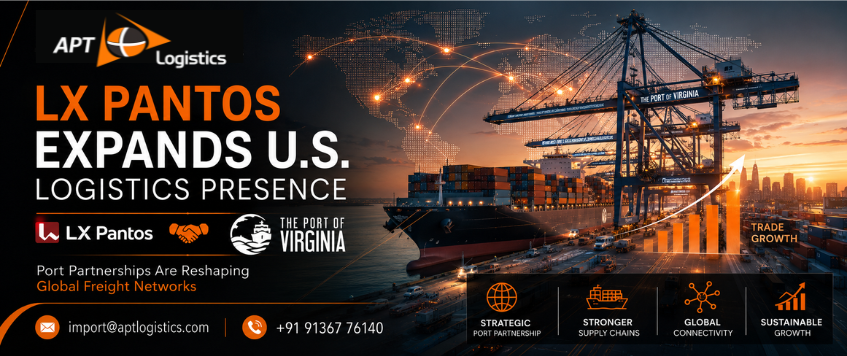
The new LX Pantos Port of Virginia partnership highlights how global freight forwarders are increasingly investing in infrastructure, port collaboration, and long-term supply chain expansion. As international trade networks become more integrated, strategic agreements between logistics companies and major ports are playing a larger role in shaping the future of global freight movement.
Global logistics companies are no longer competing only on freight rates and transit times. Increasingly, the real competitive advantage lies in infrastructure access, operational visibility, and long-term supply chain positioning.
Why This Partnership Matters
LX Pantos is already considered one of the world’s largest freight forwarding companies, moving an estimated 1.5+ million TEUs globally and generating approximately $5.8 billion in annual revenue.
Its latest move into Virginia suggests that major forwarders are actively investing in regions that can support future cargo growth, inland connectivity, and faster supply chain coordination.
The agreement reportedly focuses on several operational areas, including:
- Infrastructure development
- Operational coordination
- Data and visibility integration
- Workforce and logistics talent development
While these terms may sound corporate on the surface, they point toward something much larger happening across the logistics industry: freight networks are becoming increasingly integrated, digital, and infrastructure-driven.
The Port of Virginia’s Growing Importance 🚢
Over the last few years, the U.S. East Coast has become increasingly attractive for global cargo movement.
Ports like Virginia are benefiting from:
- Expanding container volumes
- Strong rail connectivity
- Access to major inland consumer markets
- Ongoing infrastructure investments
For freight forwarders, this creates an opportunity to build more resilient supply chain routes while reducing congestion pressure seen in other major gateways.
As global trade patterns continue evolving, East Coast logistics infrastructure is becoming strategically important not only for U.S. imports, but also for long-term global distribution planning.
The Bigger Industry Trend Behind the Headlines
This announcement also reflects a larger reality inside modern logistics:
Freight forwarding is no longer just about moving cargo from Point A to Point B.
Today’s major logistics players are investing heavily in:
- Port ecosystems
- Integrated technology
- Visibility platforms
- Carrier partnerships
- Regional distribution networks
- Infrastructure scalability
In many ways, logistics companies are beginning to operate more like long-term supply chain architects than traditional freight intermediaries.
That evolution is changing how importers and exporters select logistics partners.
What This Means for Shippers
For businesses moving international cargo, developments like this usually translate into several long-term advantages:
📦 Better cargo flow reliability
📈 Improved operational visibility
🚢 Stronger port coordination
⏳ Reduced risk of future bottlenecks
🌍 More stable global routing optionsAs freight markets become more complex and volatile, infrastructure-backed logistics networks are becoming increasingly valuable.
Shippers are now paying closer attention to whether their logistics partners have strong international connectivity and operational depth — not just competitive pricing.
APT Logistics Insight ⭐
One of the clearest trends in modern freight forwarding is the growing importance of strategic logistics partnerships.
Whether it involves ports, airlines, shipping lines, or inland transport networks, companies with stronger operational ecosystems are often better positioned to deliver consistent transit performance and long-term supply chain stability.
As global trade continues shifting toward integrated logistics planning, businesses are increasingly prioritizing freight partners that can offer visibility, flexibility, and scalable routing support across multiple regions.
The Future of Freight Forwarding Is Becoming More Collaborative
Announcements like this are likely to become more common across the logistics industry over the next few years.
Why?
Because supply chains are under pressure from:
- Geopolitical disruptions
- Port congestion risks
- Changing trade routes
- Rising customer expectations
- E-commerce growth
- Demand for faster inventory movement
In response, logistics providers are investing more aggressively in infrastructure partnerships and operational integration.
The companies that adapt fastest will likely shape the next phase of global freight movement.
How APT Logistics Supports Global Supply Chains
APT Logistics supports businesses with:
- International air and sea freight solutions
- Strategic route planning
- Customs clearance coordination
- Project cargo handling
- End-to-end freight management
- Real-time shipment visibility
We help businesses navigate evolving logistics markets with flexible, reliable, and cost-effective global shipping solutions.
Conclusion
Freight forwarding is becoming increasingly interconnected, infrastructure-focused, and technology-driven. For importers and exporters, that means choosing logistics partners with strong operational networks and long-term strategic capabilities will become more important than ever.
As supply chains continue evolving, the companies investing in collaboration, visibility, and infrastructure today are likely to define the future of global trade tomorrow.
Need Help? Chat with us!
Start a Conversation
Hi! Click one of our members below to chat on WhatsApp