-

12
Aug
India to Canada Shipping: Key Challenges | APT Logistics
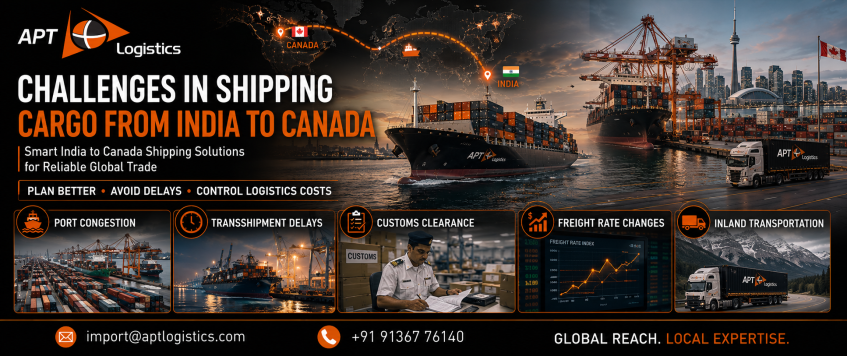
Challenges in Shipping Cargo from India to Canada
Shipping goods from India to Canada can open valuable international market opportunities, but the process involves several logistical challenges. India to Canada shipping requires careful planning across freight selection, customs documentation, port operations, transit schedules, and final-mile delivery. Understanding these challenges before booking cargo can help importers and exporters avoid unnecessary delays and additional costs.
Why India to Canada Shipping Requires Careful Planning
India and Canada are separated by a long international trade route, making shipment planning particularly important for businesses dealing with regular imports and exports.
Depending on the cargo, businesses may need to consider:
- Ocean freight or air freight.
- Direct or transshipment routing.
- Port congestion and vessel schedules.
- Canadian customs requirements.
- Inland transportation to the final destination.
- Seasonal demand and capacity constraints.
A well-planned logistics strategy can make a significant difference to both transit time and overall landed cost.
1. Long Transit Times
Ocean freight from India to Canada generally involves considerably longer transit times than air freight.
Transit time can be affected by:
- Port of origin.
- Canadian destination port.
- Transshipment requirements.
- Vessel schedules.
- Weather conditions.
- Port congestion.
Businesses should therefore avoid planning inventory based only on the estimated sailing time. A reasonable buffer should be included for potential operational delays.
2. Transshipment and Connecting Vessel Delays
Many India to Canada shipping routes may involve transshipment through an intermediate international hub.
A delay at the transshipment port can result in:
- Missed connecting vessels.
- Additional container dwell time.
- Revised arrival dates.
- Longer overall transit.
- Disruption to inventory planning.
Selecting an appropriate carrier and routing can help reduce these risks.
3. Canadian Customs Clearance
Customs clearance is a critical stage of the import process.
Incorrect or incomplete documentation may lead to:
- Customs queries.
- Cargo inspections.
- Clearance delays.
- Additional storage charges.
- Delayed delivery to the importer.
Importers should ensure that commercial invoices, packing lists, shipping documents, product information, and other required paperwork are accurate before cargo departure.
4. Documentation Errors
Small documentation discrepancies can create significant delays in international shipping.
Common issues include:
- Incorrect consignee information.
- Incorrect product descriptions.
- Weight or quantity discrepancies.
- Incorrect HS classification.
- Missing certificates.
- Incomplete shipping instructions.
Accurate documentation allows freight forwarders and customs professionals to process shipments more efficiently.
5. Port Congestion
Busy ports can experience congestion during periods of high cargo volumes, operational disruptions, or adverse weather.
For Canada-bound cargo, businesses should monitor conditions at the intended destination port and consider alternative routing where commercially practical.
Port congestion can affect:
- Vessel arrival.
- Container discharge.
- Container availability.
- Customs processing.
- Inland transportation.
6. Choosing Between Air Freight and Sea Freight
The correct transport mode depends on the shipment’s urgency, volume, value, and budget.
Air Freight
Air freight is suitable for:
- Urgent shipments.
- High-value products.
- Time-sensitive spare parts.
- Pharmaceuticals.
- Samples and small consignments.
Sea Freight
Sea freight is generally more suitable for:
- Large-volume shipments.
- FCL cargo.
- LCL consignments.
- Machinery.
- Consumer goods.
- Cost-sensitive shipments.
The cheapest option is not always the most economical when total logistics costs and delivery requirements are considered.
7. Seasonal Capacity Constraints
Freight capacity can become tighter during peak periods.
Businesses may experience:
- Higher freight rates.
- Limited vessel or flight space.
- Equipment shortages.
- Longer booking lead times.
- Increased risk of shipment rollovers.
Advance planning is particularly important for businesses with fixed delivery or seasonal sales deadlines.
8. Inland Transportation in Canada
Reaching the Canadian port is only one part of the shipment.
Cargo may still need to travel considerable distances to reach the final warehouse or distribution center.
The importer should consider:
- Port-to-warehouse trucking.
- Rail transportation where appropriate.
- Container availability.
- Delivery appointment requirements.
- Warehouse receiving schedules.
- Final-mile costs.
Considering the complete logistics chain helps businesses calculate their actual landed cost.
9. Cargo-Specific Requirements
Certain products require additional planning before shipping.
Examples include:
- Dangerous goods.
- Pharmaceuticals.
- Food products.
- Chemicals.
- Perishable cargo.
- Oversized machinery.
- Temperature-sensitive products.
Such shipments may require specialized packaging, documentation, approvals, equipment, or handling procedures.
10. Freight Rate Fluctuations
Ocean and air freight rates can change depending on market conditions, capacity, fuel costs, seasonal demand, and carrier decisions.
Businesses can manage rate volatility by:
- Requesting quotations early.
- Comparing multiple routing options.
- Planning regular shipments in advance.
- Understanding local and destination charges.
- Reviewing the quotation’s validity period.
How to Make India to Canada Shipping More Efficient
Businesses can reduce logistics risks by following a structured shipping process:
- Confirm the Incoterm before requesting freight rates.
- Select the appropriate transport mode.
- Compare direct and transshipment routing.
- Prepare documentation before cargo departure.
- Verify cargo weight and dimensions accurately.
- Book space early during peak periods.
- Plan Canadian customs clearance in advance.
- Arrange inland transportation before cargo arrival.
- Monitor the shipment throughout transit.
- Maintain contingency options for time-sensitive cargo.
How APT Logistics Can Help
APT Logistics provides end-to-end India to Canada shipping solutions for importers and exporters.
Our services include:
- Air Freight.
- Sea Freight – FCL & LCL.
- Customs Clearance.
- Export and Import Documentation.
- Port Handling.
- Inland Transportation.
- Cargo Tracking.
- Door-to-Door Delivery.
- Project Cargo and ODC Handling.
- Warehousing and Distribution Support.
Our team helps businesses evaluate routing, freight mode, transit requirements, and overall logistics costs before shipment booking.
APT Logistics Insight
Successful international shipping is not simply about finding the lowest freight rate. For India–Canada trade, businesses need to consider the complete journey—from the Indian origin point and international transportation to Canadian customs clearance and final delivery.
Early planning, accurate documentation, suitable routing, and proactive shipment monitoring can help importers and exporters reduce avoidable delays and control their overall logistics costs.
Conclusion
India to Canada shipping can involve long transit times, transshipment risks, customs procedures, port congestion, changing freight rates, and complex inland delivery requirements. Businesses that plan these factors in advance are better positioned to maintain reliable supply chains and meet customer commitments.
With the right freight forwarding partner, businesses can simplify international shipping through coordinated air and sea freight, customs clearance, transportation, and end-to-end logistics management.
FAQ
What is the best shipping method from India to Canada?
It depends on the cargo. Air freight is generally suitable for urgent and high-value shipments, while sea freight is more economical for larger and less time-sensitive cargo.
What can cause delays when shipping from India to Canada?
Common causes include transshipment delays, port congestion, documentation errors, customs inspections, vessel schedule changes, and inland transportation issues.
Can APT Logistics arrange FCL and LCL shipments from India to Canada?
Yes. APT Logistics provides both FCL and LCL sea freight solutions along with customs clearance, inland transportation, and door-to-door logistics.
Can APT Logistics handle urgent shipments to Canada?
Yes. For time-sensitive cargo, APT Logistics can evaluate air freight, priority services, alternative routings, and other solutions based on cargo requirements and available capacity.
Need Help? Chat with us!
Start a Conversation
Hi! Click one of our members below to chat on WhatsApp