-

07
May
DAP vs DDP | Key Differences in Shipping Terms Explained
DAP vs DDP | Complete Guide for Importers & Exporters
In international shipping, selecting the right Incoterm is important for managing cost, customs responsibility, and delivery expectations. Two commonly compared terms are DAP (Delivered At Place) and DDP (Delivered Duty Paid).
While both involve delivery to the buyer’s destination, there are major differences in customs clearance, duties, taxes, and overall responsibility. This guide explains DAP vs DDP in detail to help businesses choose the right option.
What is DAP?
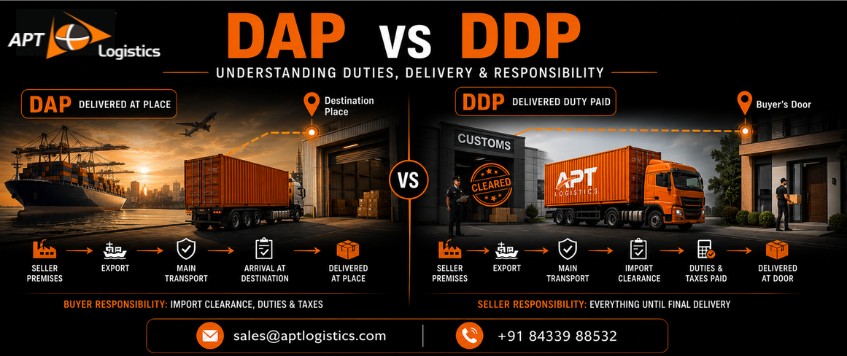
DAP (Delivered At Place) means the seller delivers goods to the agreed destination, ready for unloading. The seller handles transportation and export clearance, but the buyer is responsible for import customs clearance, duties, and taxes.
Seller Responsibilities Under DAP
- Packaging and cargo preparation
- Export customs clearance
- International transportation
- Delivery to destination point
Buyer Responsibilities Under DAP
- Import customs clearance
- Duties and taxes
- Unloading at destination
ALSO READ | DAP Explained
What is DDP?
DDP (Delivered Duty Paid) is one of the most comprehensive shipping terms. The seller handles nearly the entire logistics process, including import clearance and payment of duties and taxes.
Seller Responsibilities Under DDP
- Export and import customs clearance
- Freight and transportation
- Duties and taxes
- Final delivery
Buyer Responsibilities Under DDP
✔ Receive goods at destination
ALSO READ | DDP Explained
DAP vs DDP Comparison Table
Factor DAP DDP Full Form Delivered At Place Delivered Duty Paid Import Duties & Taxes Buyer pays Seller pays Import Clearance Buyer handles Seller handles Seller Responsibility High Maximum Buyer Responsibility Moderate Minimal Cost Transparency Moderate High Delivery Scope Destination delivery Door-to-door complete delivery
Key Differences Explained
1. Duties & Taxes 💰
This is the biggest difference.
- Under DAP → Buyer pays import duties and taxes
- Under DDP → Seller pays all import charges
This directly impacts total landed cost and pricing structure.
2. Customs Clearance 📄
In DAP:
👉 Buyer handles import customs procedures.
In DDP:
👉 Seller manages both export and import clearance.
DDP is more convenient for buyers unfamiliar with local import regulations.
3. Cost Structure
DAP generally has:
✔ Lower upfront pricing
✔ More control for buyerDDP usually includes:
✔ Higher quoted price
✔ Fewer hidden costs
4. Risk Transfer ⚠️
For both terms:
👉 Risk transfers when goods arrive at destination and are ready for unloading.
However, responsibility scope differs significantly.
When Should You Use DAP?
DAP is ideal when:
- Buyer has import experience
- Buyer wants control over duties and taxes
- Local customs handling is easier for buyer
- Cost optimization is important
When Should You Use DDP?
DDP works best when:
- Buyer wants hassle-free delivery
- Seller has strong logistics capability
- Door-to-door service is required
- Shipment is time-sensitive
Advantages of DAP
- Lower seller pricing
- Better control for buyer
- Flexibility in customs handling
Advantages of DDP
- Simplified shipping experience
- Complete cost visibility
- Reduced workload for buyer
Common Mistakes to Avoid
- Confusing destination delivery with customs responsibility
- Ignoring import tax implications
- Not calculating total landed cost
- Lack of clarity in delivery point
Understanding these details prevents delays and unexpected expenses.
How APT Logistics Helps
APT Logistics supports businesses with:
- DAP and DDP shipment planning
- Customs clearance support
- Duty and tax guidance
- End-to-end freight solutions
- Cost optimization strategies
We help businesses choose the most suitable shipping terms based on operational and financial needs.
Conclusion
Understanding DAP vs DDP is essential for efficient international shipping. While DAP gives buyers more control over import processes, DDP offers maximum convenience with complete door-to-door logistics.
With APT Logistics, businesses can simplify global shipping and make informed logistics decisions.
Need Help? Chat with us!
Start a Conversation
Hi! Click one of our members below to chat on WhatsApp