-

04
Jul
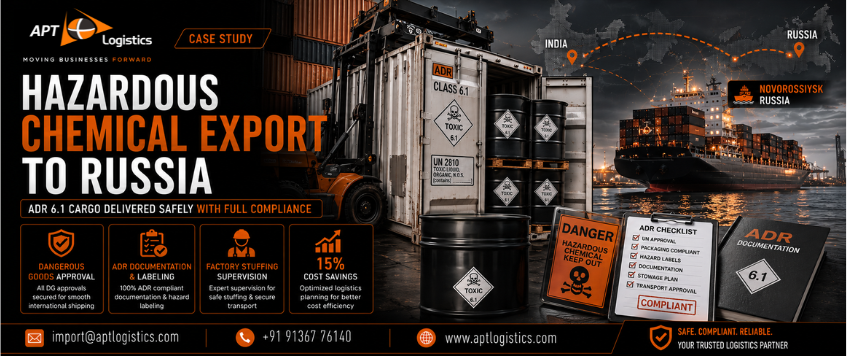
Hazardous Chemical Export to Russia | ADR 6.1 Cargo Case Study
Hazardous Chemical Export to Russia: How APT Logistics Ensured Safe and Compliant ADR 6.1 Cargo Shipping
Managing a hazardous chemical export Russia project requires specialized expertise, strict regulatory compliance, carrier approvals, and detailed documentation. Unlike standard cargo, dangerous goods shipments involve additional safety requirements, making logistics planning significantly more complex.
This case study highlights how APT Logistics successfully handled the export of Crotonaldehyde (ADR Class 6.1) from Ludhiana, India, to Novorossiysk, Russia, ensuring full compliance while reducing overall logistics costs.
Client Challenge
A chemical manufacturer based in Ludhiana needed to export Crotonaldehyde, a hazardous substance classified under ADR Class 6.1 (Toxic Substances).
The shipment involved multiple challenges:
- Dangerous goods carrier approvals
- Strict ADR compliance requirements
- Specialized labeling and documentation
- Limited carrier acceptance for DG cargo
- Risk of shipment delays due to regulatory restrictions
- Need for competitive freight rates despite hazardous cargo classification
The client required a logistics partner experienced in handling dangerous goods and international chemical exports.
Understanding ADR Class 6.1 Cargo
ADR Class 6.1 includes substances that can cause serious health risks through inhalation, ingestion, or skin contact.
Examples include:
- Toxic industrial chemicals
- Certain pesticides
- Chemical intermediates
- Hazardous manufacturing materials
Shipping ADR 6.1 cargo requires strict adherence to international dangerous goods regulations, proper packaging, documentation, and carrier approvals.
APT Logistics Solution
APT Logistics developed a comprehensive dangerous goods logistics plan to ensure safe transportation and regulatory compliance.
1. Dangerous Goods Carrier Approval
Obtaining carrier acceptance is often the most challenging aspect of DG cargo shipping.
Our team:
- Reviewed cargo classification
- Verified UN specifications
- Coordinated with approved shipping lines
- Secured dangerous goods acceptance
- Ensured compliance with carrier-specific requirements
This enabled smooth booking despite restrictions commonly associated with ADR cargo.
2. Specialized Documentation & Labeling 📄
Dangerous goods shipments require extensive documentation and precise labeling.
APT Logistics managed:
- Dangerous Goods Declarations
- Safety documentation
- Container markings
- Hazard labels
- Regulatory compliance paperwork
- Carrier submission requirements
Proper documentation minimized regulatory risks and prevented shipment delays.
3. Factory Stuffing Supervision 🚢
Cargo handling is critical when transporting hazardous chemicals.
APT Logistics arranged:
- Factory stuffing coordination
- Container inspections
- Cargo securing procedures
- Compliance verification
- Loading supervision
This ensured the cargo was packed according to dangerous goods transportation standards.
4. Customs Clearance Support
Our customs specialists coordinated:
- Export documentation review
- Regulatory compliance checks
- Customs clearance procedures
- DG-related approvals
- Port handling coordination
The result was smooth cargo processing without clearance issues.
5. Strategic Freight Negotiation
Dangerous goods shipments often attract premium freight rates.
Leveraging our carrier relationships, APT Logistics:
- Negotiated competitive freight rates
- Secured vessel space despite DG restrictions
- Minimized transportation costs
- Optimized routing to Novorossiysk
This delivered substantial savings for the client.
Project Result
The hazardous chemical shipment was executed successfully and delivered to Russia without operational issues.
Key Outcomes
- Full ADR 6.1 compliance achieved
- Dangerous goods approvals secured successfully
- On-time delivery to Novorossiysk, Russia
- No customs or carrier-related delays
- Safe cargo handling throughout transit
- Approximately 15% cost savings compared to the client’s previous logistics provider
The successful shipment reinforced the client’s confidence in APT Logistics’ dangerous goods expertise.
Why Dangerous Goods Logistics Requires Expertise
Hazardous cargo transportation involves risks that standard freight operations do not.
Key requirements include:
- Regulatory compliance
- Proper packaging standards
- Carrier approvals
- Specialized documentation
- Hazard communication
- Trained logistics professionals
Failure to meet these requirements can result in shipment rejection, penalties, delays, or safety incidents.
Why Russia Remains an Important Market for Chemical Exports
Russia continues to be a significant market for industrial chemicals, manufacturing inputs, and specialty products.
Benefits include:
- Large industrial base
- Strong manufacturing demand
- Energy and chemical sector requirements
- Growing trade opportunities
- Strategic access through major ports such as Novorossiysk
Efficient logistics support is essential for serving these markets successfully.
APT Logistics Insight ⭐
Dangerous goods logistics is not simply about moving cargo from one location to another. It requires careful planning, regulatory knowledge, and proactive coordination between shippers, carriers, customs authorities, and destination partners.
For chemical exporters, selecting an experienced freight forwarding partner can significantly reduce compliance risks while improving shipment reliability and cost efficiency.
How APT Logistics Supports Chemical Exporters
APT Logistics provides:
- Dangerous goods logistics solutions
- ADR cargo handling
- DG documentation support
- Containerized chemical exports
- Customs clearance services
- Carrier approval coordination
- End-to-end international freight management
Our experienced team ensures hazardous cargo moves safely, compliantly, and efficiently.
Conclusion
This successful hazardous chemical export Russia project demonstrates how expert dangerous goods management can help chemical manufacturers achieve safe, compliant, and cost-effective international shipping.
By securing DG approvals, managing ADR documentation, coordinating factory stuffing, and negotiating competitive freight rates, APT Logistics helped the client achieve a fully compliant shipment while reducing logistics costs by 15%.
For businesses involved in chemical exports, proper dangerous goods expertise can make the difference between delays and successful delivery.
FAQ (SEO Bonus)
What is ADR Class 6.1 cargo?
ADR Class 6.1 includes toxic substances that can pose health risks through inhalation, ingestion, or skin contact.
Can hazardous chemicals be shipped in containers?
Yes. Hazardous chemicals can be transported in containers provided they comply with international dangerous goods regulations and carrier requirements.
Why do dangerous goods require special approvals?
Dangerous goods present additional safety risks and therefore require carrier acceptance, regulatory compliance, and specialized documentation.
Does APT Logistics handle dangerous goods shipments?
Yes. APT Logistics provides comprehensive dangerous goods logistics solutions, including documentation, approvals, customs clearance, and international transportation.
Need Help? Chat with us!
Start a Conversation
Hi! Click one of our members below to chat on WhatsApp