-

18
Aug
Garment Export to USA Case Study | FCL Shipping Solutions | APT Logistics
Garment Export to USA: How APT Logistics Achieved 99% On-Time Delivery
For garment exporters supplying major retail chains, logistics performance is closely connected to business performance. Garment export to USA shipments often involve strict packaging requirements, labelling standards, scheduled delivery windows, and continuous coordination between exporters, freight forwarders, carriers, and overseas buyers.
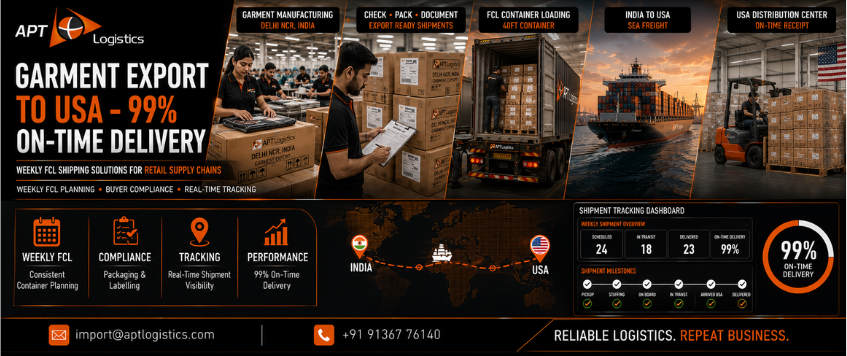
This case study highlights how APT Logistics helped a Delhi NCR-based garment exporter manage weekly FCL shipments to the USA, maintain buyer compliance, improve shipment visibility, and achieve a 99% on-time delivery record.
Client Challenge
A garment exporter based in the Delhi NCR region was supplying garments to a major US retail chain and required a dependable weekly shipping program.
The client faced several challenges:
- Weekly shipment schedules had to be maintained consistently.
- Buyer requirements for packaging and labelling were strict.
- Delivery timelines had to be closely monitored.
- Shipment status needed to remain visible throughout the journey.
- Any recurring delay could affect future retail orders.
The exporter needed a logistics partner capable of managing a high-frequency FCL shipping program rather than handling each shipment as an isolated booking.
Why Garment Exports to the USA Require Precise Logistics
Garment supply chains are particularly sensitive to timing.
A delay can affect:
- Retail inventory availability.
- Store replenishment.
- Promotional campaigns.
- Seasonal collections.
- Buyer confidence.
For retail-chain suppliers, consistent execution is often just as important as competitive freight pricing.
APT Logistics Solution
APT Logistics developed a structured weekly FCL shipping plan designed around the client’s production and buyer delivery requirements.
1. Weekly FCL Consolidation Plan 🚢
APT Logistics established a regular weekly shipping schedule for the exporter’s cargo.
The program focused on:
- Consistent container planning.
- Advance space booking.
- Cargo readiness monitoring.
- Factory pickup coordination.
- Timely container movement.
- Regular vessel scheduling.
This created a predictable logistics cycle for the exporter.
2. Buyer Compliance Management
Retail buyers often provide detailed requirements regarding how garments must be prepared for shipment.
APT Logistics coordinated the logistics process around the client’s requirements for:
- Packaging.
- Labelling.
- Carton identification.
- Shipment documentation.
- Container planning.
- Delivery timelines.
Maintaining consistency across weekly shipments helped minimize avoidable discrepancies.
3. Real-Time Shipment Tracking
APT Logistics provided shipment visibility throughout the transportation process.
The client received updates covering key milestones such as:
- Cargo pickup.
- Container stuffing.
- Port movement.
- Vessel departure.
- Transshipment, where applicable.
- Estimated arrival.
- Final delivery.
This allowed the exporter to proactively communicate with its overseas buyer.
4. Weekly Performance Reporting
APT Logistics introduced regular performance reporting to help the exporter evaluate its logistics operation.
The reporting focused on:
- On-time performance.
- Shipment milestones.
- Transit performance.
- Exceptions and delays.
- Delivery status.
This created greater accountability across the shipping process.
Project Result
The structured logistics program delivered measurable improvements.
Key Outcomes
- 99% on-time delivery record.
- Weekly FCL shipments maintained consistently.
- Buyer packaging and labelling requirements supported.
- Improved shipment visibility.
- Regular logistics performance reporting.
- Reduced risk of missed delivery commitments.
- Client secured repeat orders from the US retail buyer.
The Importance of On-Time Delivery in Garment Exports
For apparel exporters, meeting delivery commitments can directly influence future business.
Reliable logistics helps exporters:
- Maintain buyer confidence.
- Support seasonal retail launches.
- Reduce inventory disruptions.
- Improve replenishment planning.
- Strengthen long-term buyer relationships.
- Increase opportunities for repeat orders.
A dependable freight forwarding strategy can therefore become a competitive advantage for garment manufacturers.
How Weekly FCL Planning Improves Export Logistics
A regular FCL shipping program allows exporters to move from reactive booking to proactive logistics planning.
Key advantages include:
- Better carrier coordination.
- More predictable schedules.
- Improved cargo readiness planning.
- Reduced last-minute booking pressure.
- Better inventory planning.
- Consistent shipment visibility.
- Easier performance measurement.
APT Logistics Insight ⭐
For exporters supplying large retail chains, logistics should be treated as part of the customer service experience. A shipment that arrives late can create problems far beyond transportation costs.
By establishing a fixed shipping rhythm, monitoring cargo milestones, and measuring on-time performance, exporters can build a more predictable supply chain and strengthen relationships with international buyers.
How APT Logistics Supports Garment & Textile Exporters
APT Logistics provides end-to-end logistics solutions for textile and apparel exporters, including:
- FCL & LCL Sea Freight.
- Air Freight for urgent orders.
- Factory Pickup.
- Container Booking.
- Export Customs Clearance.
- Container Stuffing Coordination.
- Shipment Tracking.
- Documentation Support.
- Door-to-Door Delivery.
- Performance Monitoring.
Conclusion
This garment export to USA case study demonstrates how structured freight planning can improve reliability for exporters serving major retail buyers.
By establishing a weekly FCL shipping program, supporting buyer compliance, providing real-time shipment visibility, and introducing weekly performance reporting, APT Logistics helped the client achieve a 99% on-time delivery record and strengthen its relationship with the US retail market.
For garment exporters, reliable logistics is not simply about moving containers—it is about helping buyers receive the right products at the right time.
FAQ
What are the major logistics challenges in garment exports to the USA?
Common challenges include strict buyer requirements, packaging and labelling compliance, seasonal deadlines, vessel schedules, customs documentation, and delivery commitments.
Why is FCL suitable for regular garment exports?
FCL provides dedicated container capacity and can be particularly effective for exporters moving consistent, larger-volume shipments on a regular schedule.
How can exporters improve on-time delivery?
Advance booking, cargo readiness planning, accurate documentation, reliable carrier selection, shipment tracking, and proactive exception management can improve delivery reliability.
Does APT Logistics handle garment exports to the USA?
Yes. APT Logistics provides FCL, LCL, air freight, customs clearance, documentation, inland transportation, tracking, and door-to-door logistics solutions for garment and textile exporters.
Need Help? Chat with us!
Start a Conversation
Hi! Click one of our members below to chat on WhatsApp