-

23
Oct
Empty Container Return: Planning & Cost Control
How to Plan Empty Container Return Efficiently
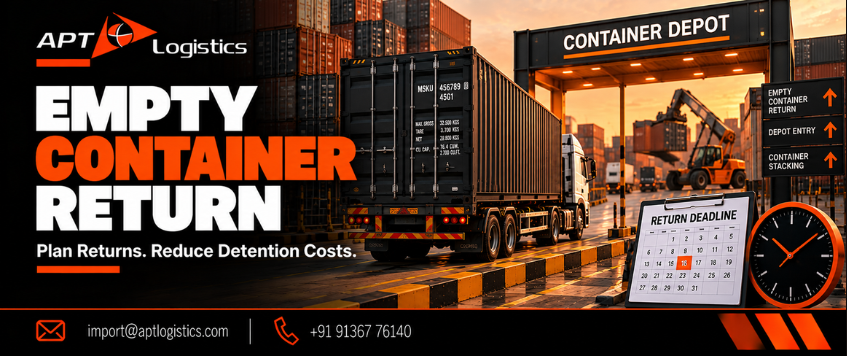
An empty container return is the process of returning an unloaded shipping container to the depot or location designated by the shipping line. For importers, this is a critical step in container management because delays can lead to detention charges, additional transport costs, and operational disruptions.
Efficient planning starts before the container reaches the warehouse. Importers, transporters, and freight forwarders need to coordinate delivery, unloading, depot availability, and the shipping line’s return instructions.
Why Is Empty Container Return Planning Important?
When a container is unloaded but not returned within the permitted free time, detention charges may apply. Delays can also arise when the designated depot changes, the depot is unable to accept the container, or the transport vehicle is unavailable.
A planned return process helps businesses:
-
Reduce the risk of detention charges.
-
Improve truck and container turnaround.
-
Avoid unnecessary trips to an incorrect or unavailable depot.
-
Maintain better visibility over import delivery schedules.
6 Steps to Plan Empty Container Return Efficiently
1. Confirm the Empty-Return Deadline
Check the shipping line’s applicable detention free time and confirm the last permitted return date. Do not assume that the free-time clock starts on the same date for every carrier or shipment.
2. Verify the Designated Return Depot
Before dispatching the truck, obtain the latest empty-return instructions from the shipping line or its authorised agent. Confirm the depot address, acceptance requirements, and operating hours.
3. Schedule Unloading in Advance
Coordinate warehouse availability, labor, equipment, and unloading slots before the container arrives. Delays at the consignee’s premises can reduce the time available for returning the empty unit.
4. Arrange Trucking and Depot Slots
Book transport based on the expected unloading completion time and the depot’s operating schedule. Where appointments or vehicle-entry requirements apply, confirm them before dispatch.
5. Monitor Changes and Exceptions
Depot allocations and acceptance instructions can change. Keep in contact with the transporter and shipping line, particularly when the planned return date is close to the free-time deadline.
6. Obtain Proof of Return
After the container is returned, retain the applicable interchange receipt, electronic return confirmation, or depot acknowledgment. This documentation can help resolve disputes about the actual return date.
Common Empty Container Return Mistakes
Avoid these operational errors to reduce unnecessary costs:
-
Returning the container to an outdated or incorrect depot.
-
Missing the shipping line’s empty-return deadline.
-
Dispatching a truck without confirming depot acceptance.
-
Failing to account for weekends, holidays, or restricted depot hours.
-
Not retaining proof of the completed return.
-
Assuming a depot refusal automatically extends free time.
If the designated depot cannot accept the container, notify the shipping line or its agent immediately, document the issue, and request revised instructions. A depot refusal does not automatically exempt the importer from detention charges.
How APT Logistics Helps Coordinate Empty Container Returns
At APT Logistics, we coordinate import transportation and container movement with attention to shipping line instructions and free-time deadlines. Our team works with transporters, consignees, and relevant agents to plan unloading, confirm return arrangements, and monitor the empty-container return process.
By coordinating these activities in advance, businesses can reduce avoidable delays, improve container turnaround, and manage the risk of additional detention costs.
Conclusion
An efficient empty container return process depends on timely unloading, confirmed depot instructions, reliable transportation, and accurate deadline tracking. Planning these activities together helps importers control costs and maintain smoother container operations.
-
Need Help? Chat with us!
Start a Conversation
Hi! Click one of our members below to chat on WhatsApp