-

25
Sep
CFS vs ICD: Key Differences in Container Logistics India
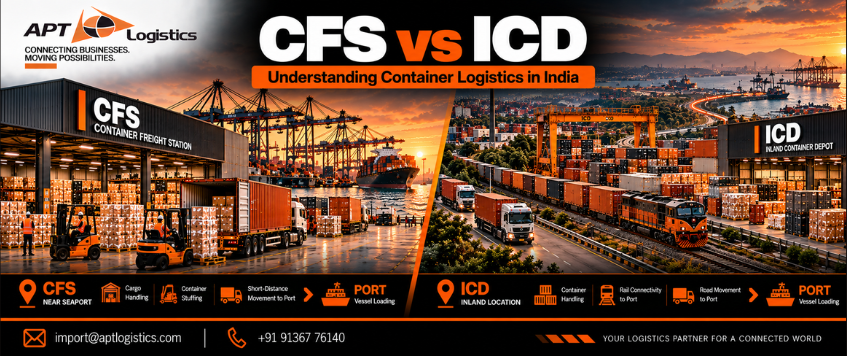
CFS vs ICD: Understanding the Difference in Container Logistics
Understanding CFS vs ICD can help importers and exporters choose the appropriate logistics facility based on their location, cargo, port and transportation requirements.
CFS and ICD facilities are important parts of India’s containerized logistics network. Although both handle cargo and containers, they serve different operational roles.
What Is a CFS?
A Container Freight Station (CFS) is a facility generally located close to a seaport and used for activities such as cargo handling, consolidation, deconsolidation, examination, container stuffing and related customs processes.
For an export shipment, a typical movement can be:
Exporter → CFS → Container Stuffing → Customs Process → Port → Vessel
CFS facilities are particularly useful for coordinating cargo before the container moves to the port terminal.
What Is an ICD?
An Inland Container Depot (ICD) is an inland container facility that connects locations away from the seaport with the international container shipping network.
It allows exporters and importers to handle containerized cargo closer to inland production or consumption centres.
A typical export movement may look like:
Factory → ICD → Rail/Road → Seaport → Vessel
An ICD can therefore function as an inland gateway for international trade.
CFS vs ICD: Key Differences
Factor CFS ICD Full form Container Freight Station Inland Container Depot Typical location Close to a seaport Inland, away from the seaport Primary role Cargo handling and container-related activities near the port Inland gateway connecting cargo to seaports Cargo handling Yes Yes Container stuffing/de-stuffing Yes Yes Customs-related processes Applicable processes may be carried out Applicable processes may be carried out Port connectivity Short-distance road movement to port Road and/or rail connectivity to port Best suited for Port-linked cargo operations Inland cargo movement and clearance When Is a CFS Used?
A CFS can be useful when cargo needs to be handled or consolidated close to the port.
Common activities include:
- Receiving export cargo
- Cargo consolidation
- Container stuffing
- De-stuffing import containers
- Cargo examination where required
- Documentation and customs coordination
- Moving containers to or from the port
For exporters located near major ports, a CFS can be an important part of the shipment process.
When Is an ICD Used?
An ICD can be useful when the exporter or importer is located far from a major seaport.
For example, an inland manufacturer can move cargo to an ICD by road, where the container can then continue toward the seaport by rail or road according to the available logistics arrangement.
This can reduce the need for businesses to coordinate every stage of the inland-to-port movement independently.
CFS vs ICD: Which One Should You Use?
There is no universal answer because the appropriate facility depends on the shipment.
Consider factors such as:
- Factory or warehouse location
- Nearest suitable port
- Cargo volume
- Container type
- Required transit time
- Rail availability
- Road transportation cost
- Customs requirements
- Vessel cut-off
- Final destination
For some shipments, a CFS near the port may be practical. For cargo originating in an inland location, an ICD may provide a more suitable connection to the port.
Example
An exporter located near Mumbai may move cargo by truck to a CFS near the port, where the cargo can be handled and prepared for port movement.
An exporter located in an inland industrial region may instead move a container to an ICD, from where it can be connected to a gateway port through the available rail or road network.
The right choice should therefore be based on the complete logistics route, rather than simply selecting the nearest facility.
How APT Logistics Helps
APT Logistics can coordinate CFS and ICD-based export and import movements, depending on the shipment’s origin, destination and operational requirements.
Our logistics planning can include:
- CFS/ICD coordination
- Container transportation
- FCL and LCL shipments
- Customs clearance coordination
- Container stuffing
- Port handling
- Rail and road connectivity
- International ocean freight
- Final delivery
Conclusion
Understanding CFS vs ICD is important when planning containerized cargo in India.
A CFS primarily supports cargo and container operations close to a seaport, while an ICD provides an inland connection between cargo origins or destinations and the international port network.
The right facility depends on location, cargo, cost, connectivity, customs requirements and delivery timelines.
APT Logistics helps businesses plan container movements through suitable CFS, ICD, port and inland transportation networks for efficient international trade.
Need Help? Chat with us!
Start a Conversation
Hi! Click one of our members below to chat on WhatsApp