-

23
Sep
CFS Services India: How Container Freight Stations Work
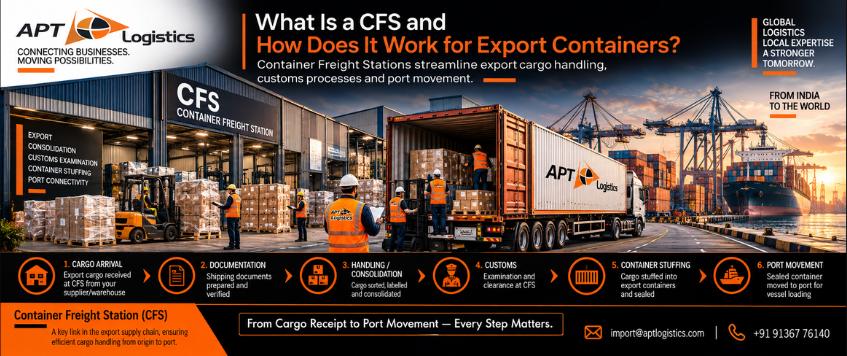
What Is a CFS and How Does It Work for Export Containers?
For exporters, understanding how CFS services India work can help improve cargo planning, documentation, container stuffing and coordination with customs and shipping lines.
A Container Freight Station (CFS) is an important part of the export logistics process, particularly for shipments moving through major Indian ports.
What Is a CFS?
A Container Freight Station is a designated facility where export and import cargo can be received, handled, consolidated, examined and prepared for movement between inland locations and the port.
For export shipments, a CFS can act as an important link between the exporter’s warehouse and the port terminal.
A typical movement can look like:
Exporter Warehouse → CFS → Container Stuffing → Customs Process → Port → Vessel
How Does a CFS Work for Export Containers?
1. Cargo Arrives at the CFS
The exporter’s cargo is transported to the designated CFS according to the shipment and container plan.
The CFS receives the cargo and records the relevant shipment details.
2. Cargo Verification and Handling
The cargo may be checked against the relevant documentation, including:
- Commercial invoice
- Packing list
- Shipping instructions
- Cargo details
- Container information
Proper coordination at this stage helps identify discrepancies before the cargo moves further.
3. Customs Examination
Where customs examination is required, the cargo can be made available for inspection at the CFS.
The required customs procedures depend on the shipment, cargo and applicable regulations.
4. Container Stuffing
Once the cargo is ready for stuffing, the goods are loaded into the export container.
Proper stuffing is important to ensure:
- Efficient use of container space
- Cargo stability
- Reduced movement during transit
- Appropriate weight distribution
- Safe transportation
For fragile or specialized cargo, additional securing and packing arrangements may be required.
5. Container Sealing and Documentation
After stuffing, the container is sealed according to the applicable process and the relevant details are recorded.
The documentation and customs formalities are coordinated before the container moves toward the port.
6. Movement to the Port
Once the export container is ready, it is transported from the CFS to the designated port terminal within the required cut-off schedule.
This stage is critical because missing the vessel cut-off can affect the planned sailing.
Why Are CFS Services Important for Exporters?
1. Better Cargo Consolidation
CFS facilities can handle cargo from multiple exporters and support consolidation where applicable.
This is particularly useful when cargo needs organized handling before container movement.
2. Customs Coordination
CFS facilities provide infrastructure for cargo examination and related customs processes, subject to applicable procedures.
3. Container Stuffing
Professional stuffing helps ensure cargo is arranged and secured appropriately before the container reaches the port.
4. Improved Port Coordination
CFS operations connect cargo handling with the subsequent movement of containers toward the port terminal.
This can simplify coordination between exporters, transporters, customs professionals and shipping lines.
CFS vs ICD: What Is the Difference?
Although both are important logistics facilities, their roles and locations can differ.
CFS ICD Usually located close to a major port Typically located inland Strongly associated with port-related cargo handling Connects inland cargo with seaports Used for cargo handling, consolidation and container activities Handles containers and cargo closer to inland production/consumption areas Supports port-linked export/import processes Provides an inland gateway to international trade The appropriate facility depends on the exporter’s location, cargo, port and transportation plan.
How APT Logistics Supports CFS-Based Exports
APT Logistics coordinates export shipments involving CFS handling, container stuffing, customs coordination, inland transportation and port movement.
Our team can help exporters plan the movement from their warehouse to the CFS and onward to the port while keeping documentation, cut-offs and transportation requirements aligned.
Conclusion
Understanding CFS services India is important for exporters moving containerized cargo through Indian ports.
From cargo receipt and customs examination to container stuffing, sealing and port movement, a CFS plays an important role in connecting the exporter’s cargo with the international shipping network.
With proper planning and coordination, exporters can manage CFS operations more efficiently and reduce avoidable delays before vessel departure.
APT Logistics provides integrated export logistics solutions covering CFS coordination, customs clearance, inland transportation, container handling and international freight forwarding.
Need Help? Chat with us!
Start a Conversation
Hi! Click one of our members below to chat on WhatsApp