-

05
Nov
Bonded Warehouse India: How It Works for Import Cargo
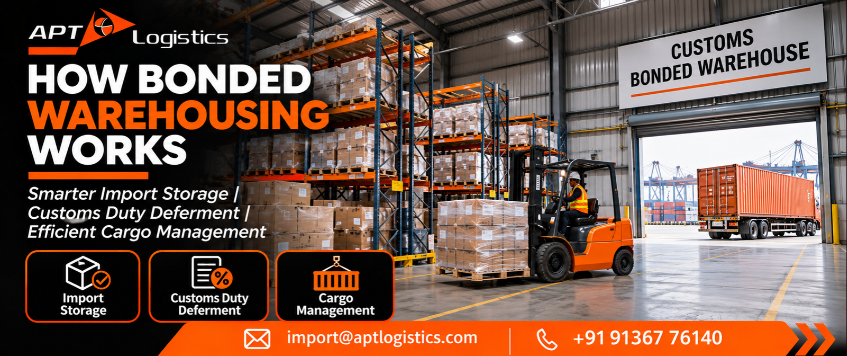
How Bonded Warehousing Works for Import Cargo in India
Importing goods into India involves several stages, including customs documentation, assessment, duty payment, cargo clearance, and transportation. However, importers do not always need to pay the applicable customs duty immediately after goods arrive in the country.
A bonded warehouse in India allows eligible imported goods to be stored under customs control without immediate payment of applicable customs duty, subject to the provisions of the Customs Act and prescribed procedures. This facility can help businesses manage inventory, plan cash flow, and coordinate cargo distribution more efficiently.
For importers handling large volumes, high-value goods, or shipments intended for staggered distribution, bonded warehousing can offer greater flexibility in import logistics.
1. What Is a Bonded Warehouse in India?
A bonded warehouse is a customs-authorised facility where imported goods can be stored without immediate payment of applicable import duty.
The goods remain under customs control until they are cleared for home consumption, transferred under an authorised procedure, or re-exported.
In India, bonded warehousing is governed primarily by the Customs Act, 1962, particularly the provisions relating to warehousing, along with applicable regulations and procedures.
Unlike a regular commercial warehouse, a customs bonded warehouse operates under specific customs permissions, record-keeping requirements, and compliance obligations.
2. How Does Bonded Warehousing Work for Import Cargo?
The bonded warehousing process involves several steps, from import documentation to final clearance.
Step 1: Import Cargo Arrives in India
Imported cargo arrives at an Indian seaport or airport. The importer or authorised customs broker coordinates the necessary import documentation and customs procedures.
Step 2: Filing the Bill of Entry for Warehousing
The importer files a Bill of Entry for warehousing under the applicable customs procedure.
Customs authorities assess the declaration and applicable requirements before permitting the goods to be warehoused.
Step 3: Customs Bond and Security Compliance
The importer must fulfil the applicable bond and security requirements under customs regulations.
Depending on the type of warehouse and applicable procedure, the required bond, security, and documentation may differ.
Step 4: Transportation to the Bonded Warehouse
Once customs permission and other required formalities are completed, the cargo is moved to the authorised bonded warehouse.
The movement must follow applicable customs procedures, including prescribed documentation and transit requirements.
Step 5: Storage Under Customs Control
The imported goods are stored in the bonded warehouse until the importer decides to clear them for domestic use or arrange another permitted disposition.
The warehouse operator maintains prescribed records and ensures compliance with customs control requirements.
Step 6: Ex-Bond Clearance
When the importer is ready to release the goods into the Indian domestic market, an Ex-Bond Bill of Entry is filed for home consumption.
The applicable customs duty and other charges are assessed and paid according to the relevant provisions before clearance.
3. Key Benefits of Bonded Warehousing for Importers
Using a bonded warehouse in India can provide several commercial and operational advantages.
Deferred Customs Duty Payment
One of the primary benefits is the ability to defer payment of applicable customs duty until goods are cleared from the warehouse for home consumption, subject to statutory requirements.
This can help importers manage working capital, particularly when goods are stored for a period before being sold or used.
Better Inventory Management
Importers can store cargo and release it in planned quantities according to business requirements, subject to customs procedures.
This can be useful for businesses managing seasonal demand, large consignments, or staggered distribution.
Improved Cash Flow Planning
Instead of paying the entire applicable customs duty at the initial import stage, eligible importers can plan duty payments based on the timing of ex-bond clearances.
This may improve cash-flow management, although warehousing, handling, compliance, and other charges must also be considered.
Flexibility for Re-Export
Where permitted under applicable customs provisions, warehoused goods may be re-exported without being cleared for home consumption. The applicable procedures and duty implications must be reviewed for each shipment.
Better Import Distribution Planning
Businesses can use bonded storage to coordinate inventory release based on customer demand, production schedules, and distribution requirements.
4. Bonded Warehouse vs Regular Warehouse
Understanding the difference between these two facilities is important before choosing a storage solution.
Parameter Bonded Warehouse Regular Warehouse - Customs status
Under customs control Generally cleared for domestic use 2. Import duty Deferred until applicable clearance Normally paid before domestic release 3. Storage purpose Storage of goods under customs bond Storage of cleared goods 4. Compliance Customs-specific procedures and records Standard commercial and regulatory requirements 5. Cargo release Subject to customs clearance and applicable procedures Based on commercial and warehouse release procedures 6. Typical use Imported cargo awaiting duty payment or permitted disposition Domestic inventory and distribution The right option depends on the nature of the cargo, expected storage period, duty exposure, and business requirements.
5. Important Documents Required for Bonded Warehousing
Documentation requirements vary depending on cargo type, customs procedure, and warehouse arrangements. Common documents and records include:
-
Commercial Invoice.
-
Packing List.
-
Bill of Lading or Air Waybill.
-
Bill of Entry for warehousing.
-
Importer Exporter Code (IEC), where applicable.
-
Customs bond and required security documents.
-
Import licences or regulatory certificates, where applicable.
-
Warehouse receipt and prescribed inventory records.
-
Ex-Bond Bill of Entry for clearance into the domestic market.
Accurate documentation is important to avoid delays during customs assessment, warehousing, and final cargo clearance.
6. Important Considerations Before Choosing a Bonded Warehouse
Bonded warehousing can offer flexibility, but importers should evaluate the complete cost and compliance requirements before making a decision.
Warehousing period: Imported goods can be stored only within the period permitted under the applicable customs provisions. Extensions, where allowed, must follow the prescribed process.
Interest liability: Delayed clearance beyond the applicable permitted period can attract interest or other consequences under customs law.
Storage and handling charges: Bonded storage, cargo handling, transportation, insurance, and other operational costs should be included in the financial calculation.
Cargo restrictions: Certain goods may require special permissions, storage conditions, licences, or additional regulatory compliance.
Customs compliance: Importers must ensure that warehousing, inventory management, movement, and clearance are carried out according to applicable customs requirements.
7. Who Should Consider Bonded Warehousing?
Bonded warehousing may be useful for:
-
Importers handling high-value machinery and industrial equipment.
-
Businesses importing large quantities of raw materials.
-
Companies distributing imported goods in phases.
-
Traders managing seasonal or fluctuating demand.
-
Importers considering permitted re-export of warehoused goods.
-
Businesses seeking better control over import duty payment timelines.
However, the financial benefit depends on the applicable duty structure, storage costs, warehousing period, and business model. Importers should evaluate the overall landed cost before choosing this arrangement.
8. How APT Logistics Supports Bonded Warehousing and Import Cargo
Managing bonded cargo requires coordination between customs authorities, transporters, warehouse operators, and importers.
APT Logistics supports importers through coordinated logistics and customs-related services, including:
-
Import customs clearance coordination.
-
Bonded warehouse movement and transportation coordination.
-
Import documentation support.
-
Inland transportation from ports and airports.
-
Cargo handling and warehousing coordination.
-
Ex-Bond clearance coordination and final cargo delivery.
With experience in air freight, sea freight, customs clearance, and inland transportation, APT Logistics helps businesses coordinate their import cargo movements and identify practical warehousing and distribution solutions.
For importers planning bonded storage in India, our team can assist in evaluating the logistics requirements and coordinating the movement of cargo from the port or airport to the designated warehouse.
Conclusion
A bonded warehouse in India provides importers with an option to store eligible imported goods under customs control while deferring applicable customs duty until the relevant clearance stage. It can support cash-flow planning, inventory management, and flexible distribution, provided all customs procedures and statutory requirements are followed.
Choosing the right warehouse, preparing accurate documentation, and coordinating transportation and customs formalities are essential for smooth operations.
APT Logistics supports importers with customs clearance coordination, bonded cargo transportation, warehousing coordination, and inland delivery solutions. Our objective is to simplify import logistics and help businesses manage their cargo efficiently from port or airport arrival to final delivery.
3. Frequently Asked Questions (FAQs)
Q1. What is a bonded warehouse in India?
A bonded warehouse is a customs-authorised facility where eligible imported goods can be stored under customs control without immediate payment of applicable customs duty, subject to the Customs Act and prescribed procedures.
Q2. Can importers defer customs duty payment using a bonded warehouse?
Yes. Eligible importers can defer applicable customs duty until the goods are cleared for home consumption through the ex-bond process, subject to statutory conditions.
Q3. How long can imported goods remain in a bonded warehouse in India?
The permitted warehousing period depends on the category of goods and applicable provisions of the Customs Act. Certain goods have different statutory periods, and extensions may be available subject to conditions. Importers should verify the applicable period for their cargo.
Q4. What is an Ex-Bond Bill of Entry?
An Ex-Bond Bill of Entry is filed when warehoused imported goods are cleared for home consumption. Applicable customs duty and other charges must be paid before release.
Q5. Can bonded goods be re-exported from India?
Yes. Warehoused goods may be re-exported under the applicable customs provisions and procedures without first being cleared for home consumption. The specific duty implications depend on the circumstances.
Q6. What is the difference between a bonded warehouse and a regular warehouse?
A bonded warehouse stores imported goods under customs control before applicable domestic clearance, while a regular warehouse generally stores goods that have already completed the necessary import clearance for domestic use.
Q7. How can APT Logistics help with bonded warehousing?
APT Logistics can support importers with customs clearance coordination, bonded cargo transportation, documentation support, warehouse coordination, and inland delivery arrangements.
Need Help? Chat with us!
Start a Conversation
Hi! Click one of our members below to chat on WhatsApp