-

14
Oct
Container Stuffing Process at CFS: Exporter Guide
What Is Container Stuffing at a CFS?
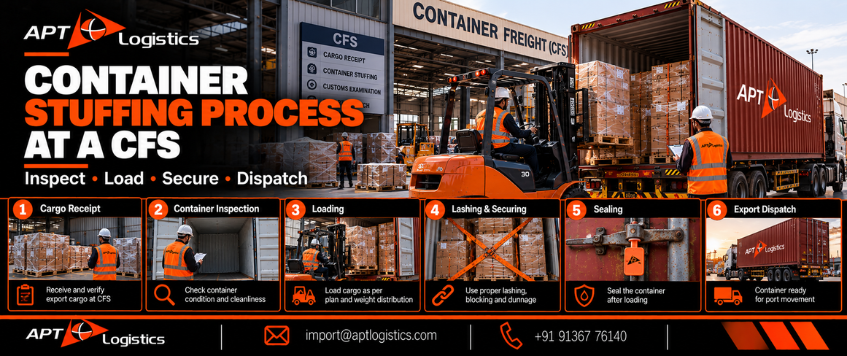
The container stuffing process at a Container Freight Station (CFS) involves loading export cargo into a shipping container before it is transported to the port for vessel loading.
A CFS provides facilities for cargo handling, inspection where applicable, consolidation, container stuffing and related logistics activities. Exporters may use a CFS when cargo needs to be consolidated, loaded under controlled operational conditions or processed according to port and customs requirements.
For exporters shipping from Indian gateways such as Nhava Sheva or Mundra, proper coordination between the exporter, freight forwarder, CFS, customs broker and shipping line is essential.
Step-by-Step Container Stuffing Process at a CFS
1. Cargo Arrives at the CFS
The process begins when cargo reaches the CFS by truck or another approved transport arrangement.
The CFS receives the shipment and checks the accompanying documents and cargo details against the applicable instructions. Package count, marks and visible cargo condition may be verified at this stage.
2. Cargo Is Checked and Prepared
Before stuffing, the cargo is identified and prepared for loading.
The team may verify:
-
Number of packages and shipping marks
-
Cargo description and packing condition
-
Gross weight and dimensions
-
Special handling or loading instructions
-
Compatibility with other cargo, where consolidation is involved
Any discrepancy should be reported and resolved before loading proceeds.
3. Container Is Inspected
The selected container is inspected to confirm that it is suitable for the shipment.
Checks generally cover the container floor, walls, doors, roof, cleanliness and visible damage. The container number should also be verified against the relevant release and booking details.
For sensitive or specialized cargo, additional suitability checks may be required.
4. Cargo Is Loaded Into the Container
The CFS loading team arranges cargo inside the container according to the loading plan.
Weight distribution, package stability, cargo compatibility and efficient space utilization are important considerations. Heavy packages must be positioned carefully to avoid concentrated floor loads or an unbalanced container.
For machinery or other heavy cargo, suitable lifting equipment and a specific loading plan may be necessary.
5. Cargo Is Secured
After loading, cargo is secured using suitable lashing, blocking, bracing or other restraint methods where required.
The purpose is to reduce cargo movement during inland transportation, terminal handling and the sea voyage.
Moisture protection and special packaging requirements should also be addressed based on the nature of the goods.
6. Container Is Sealed
Once stuffing is complete, the container doors are closed and the seal is applied according to the applicable procedure.
The container number and seal number are recorded for shipment tracking and documentation. Photographs of the loaded cargo, container closure and seal can provide a useful operational record.
7. Export Documentation Is Finalized
The exporter or its appointed logistics provider coordinates the necessary documentation, which may include:
-
Shipping Instructions
-
Packing List and Commercial Invoice
-
Container and seal details
-
Verified Gross Mass (VGM), where applicable
-
Customs documentation
-
Other documents required by the carrier or authorities
For packed containers subject to SOLAS requirements, VGM must be provided in accordance with the applicable rules before loading onto the vessel.
8. Container Moves to the Port
After the required CFS, customs and carrier formalities are completed, the stuffed container is transported to the designated port or terminal.
It then proceeds through the applicable gate-in and export procedures before vessel loading, subject to the shipping line’s cut-offs and port requirements.
Why Is Proper CFS Stuffing Important?
A well-managed container stuffing process can help exporters:
-
Reduce the risk of cargo damage during transit.
-
Improve container weight distribution and load stability.
-
Prevent discrepancies in package, container and seal details.
-
Maintain better control over cargo handling.
-
Meet applicable documentation and shipping deadlines.
-
Reduce avoidable operational delays and additional costs.
Poor loading practices can cause cargo movement, damaged packaging, weight discrepancies and delays in export processing.
CFS Stuffing for FCL vs LCL Shipments
The process depends on the shipment type.
FCL (Full Container Load): A container is generally allocated to one customer’s shipment, even if it is not completely filled.
LCL (Less than Container Load): Cargo from multiple customers is consolidated into a shared container. The CFS must coordinate cargo identification, compatibility, loading sequence and segregation so that individual shipments can be handled correctly at destination.
How APT Logistics Supports CFS Operations
At APT Logistics, we coordinate CFS stuffing requirements with exporters, transporters, CFS teams, customs brokers and shipping lines.
Our team focuses on cargo readiness, container suitability, loading instructions, documentation and timely movement to the port. For machinery and other specialized cargo, we also consider loading access, cargo weight and securing requirements before the operation is arranged.
Conclusion
The container stuffing process at a CFS involves receiving cargo, checking shipment details, inspecting the container, loading and securing cargo, recording seal information and coordinating export documentation before port movement.
Proper planning and communication at every stage can help exporters reduce errors, protect cargo and maintain smoother shipment operations.
APT Logistics — Reliable CFS Coordination and Export Freight Solutions from India to Global Markets.
Frequently Asked Questions
1. What is a CFS in export shipping?
A Container Freight Station is a logistics facility used for activities such as cargo receipt, consolidation, container stuffing and other approved cargo-handling operations.
2. How long does container stuffing at a CFS take?
The time depends on cargo volume, package type, equipment availability, inspection requirements and CFS workload. The CFS or appointed logistics provider should confirm the expected schedule for each shipment.
3. Is customs clearance required before container stuffing?
The sequence depends on the cargo, customs procedures and the facility’s operating requirements. Exporters should coordinate the stuffing schedule with their customs broker and CFS to ensure all required formalities are completed at the appropriate stage.
4. What is the difference between CFS stuffing and factory stuffing?
CFS stuffing takes place at a Container Freight Station, while factory stuffing takes place at the exporter’s premises or another approved stuffing location. The applicable customs supervision and procedural requirements may differ.
5. What happens after container stuffing?
The container is sealed, relevant details are recorded, applicable documentation and formalities are completed, and the container is moved to the port or terminal for export processing.
-
Need Help? Chat with us!
Start a Conversation
Hi! Click one of our members below to chat on WhatsApp