-

09
Sep
Remote Country Shipping Solutions | Logistics Challenges
Top Logistics Challenges When Shipping to Remote Countries
Shipping internationally is relatively straightforward when the destination has major ports, airports and established logistics networks. The situation can be very different when cargo is moving to an isolated island, landlocked market or remote region.
For businesses serving such destinations, remote country shipping solutions require careful planning, reliable local partners and flexible transportation strategies.
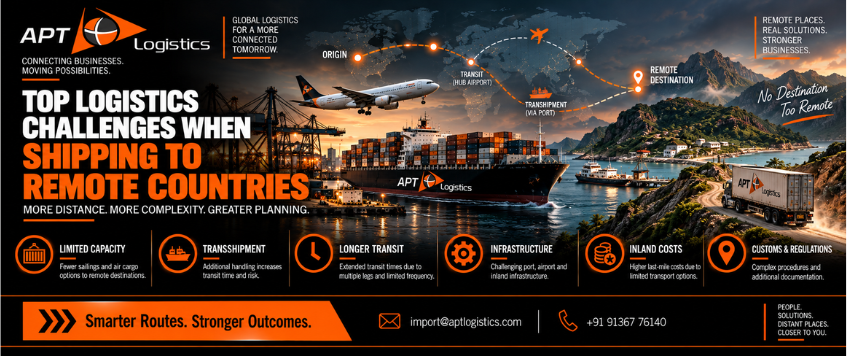
1. Limited Transportation Options
Remote destinations may have fewer direct flights, sailing schedules or trucking routes. Cargo may therefore require multiple connections before reaching the final destination.
Choosing the right combination of air, sea and inland transportation becomes critical.
2. Longer Transit Times
Additional transshipment points, limited sailing frequency and difficult inland routes can significantly extend delivery times.
A shipment that normally takes a few days may require considerably longer when the destination has limited logistics infrastructure.
3. Customs and Documentation
Remote markets may have different import regulations, documentation requirements and customs procedures.
Incorrect or incomplete paperwork can result in clearance delays, additional storage and unexpected costs.
4. Higher Transportation Costs
Lower shipment volumes and limited carrier competition can make remote destinations more expensive to serve.
Additional feeder services, transshipment, special handling and inland transportation can all contribute to the final freight cost.
5. Last-Mile Delivery Challenges
Reaching the country’s main airport or port does not always mean the shipment has reached its destination.
Remote locations may involve:
- Poor road infrastructure
- Limited trucking availability
- Difficult terrain
- Island or rural deliveries
- Limited warehousing facilities
Effective remote country shipping solutions must therefore account for the entire journey, not just the international leg.
6. Limited Shipment Visibility
Multiple carriers and transit points can make tracking more complicated. A shipment may move through several logistics providers before reaching its final destination.
A freight forwarder with strong shipment monitoring can provide better visibility and proactive updates.
How APT Logistics Manages Remote Shipments
APT Logistics develops transportation plans based on the destination, cargo characteristics, delivery deadline and available infrastructure.
Our approach can include:
- Selecting practical air or ocean routing.
- Coordinating transshipment and feeder connections.
- Managing customs documentation and clearance.
- Arranging inland transportation and last-mile delivery.
- Monitoring cargo throughout the journey.
- Providing customers with shipment updates and delivery coordination.
Conclusion
Remote destinations require more than simply booking freight. They demand route planning, documentation accuracy, carrier coordination and dependable last-mile execution.
With the right remote country shipping solutions, businesses can reach difficult markets while maintaining better control over transit time, costs and cargo visibility.
APT Logistics helps businesses plan and manage international shipments to challenging destinations with end-to-end freight forwarding and logistics support.
Need Help? Chat with us!
Start a Conversation
Hi! Click one of our members below to chat on WhatsApp