-

17
Aug
Best Practices to Avoid Container Short Shipment Issues | APT Logistics
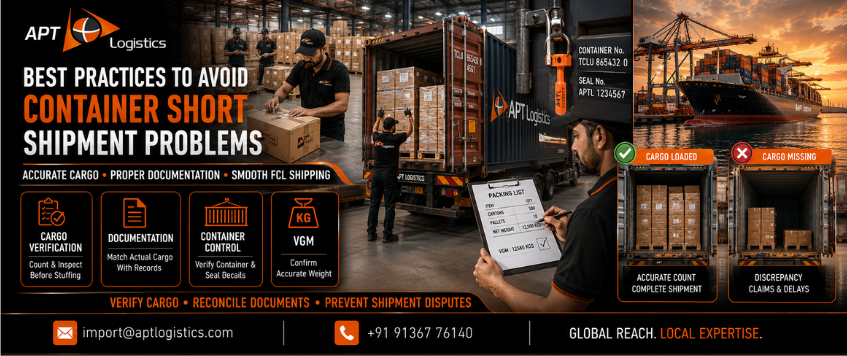
Best Practices to Avoid Container Short Shipment Problems
Container short shipment problems can create serious complications for exporters and importers. When the cargo loaded into a container does not match the quantity, weight, or documentation declared for the shipment, businesses may face customs queries, documentation discrepancies, cargo shortages, additional costs, and delivery delays.
A short shipment can happen for several reasons—from incomplete cargo loading and inaccurate packing lists to last-minute changes at the factory or port. Fortunately, most of these issues can be reduced through proper shipment planning, physical verification, documentation checks, and close coordination with the freight forwarder.
What Is a Container Short Shipment?
A container short shipment occurs when the cargo actually shipped is less than the quantity or cargo details originally declared or expected.
For example, an exporter may prepare documentation for 1,000 cartons, but only 950 cartons are physically loaded into the container.
This discrepancy can create problems between:
Commercial Documents → Customs Declaration → Bill of Lading → Physical Cargo
Keeping these records consistent is essential.
Common Causes of Container Short Shipment Problems
1. Incomplete Cargo at the Factory
Sometimes the complete cargo is not ready when the container arrives for stuffing.
This can happen because of:
- Production delays.
- Packaging delays.
- Quality inspection failures.
- Missing inventory.
- Last-minute order changes.
If the shipper does not update the shipment documentation accordingly, discrepancies can occur.
2. Incorrect Packing List
The packing list should accurately reflect the cargo actually loaded.
Common errors include:
- Incorrect carton quantity.
- Wrong package numbers.
- Incorrect gross weight.
- Incorrect net weight.
- Incorrect product descriptions.
- Incorrect dimensions.
Even a small discrepancy can create clearance or documentation issues.
3. Cargo Left Behind During Stuffing
During container stuffing, some packages may accidentally remain at the warehouse.
This is more likely when:
- Multiple SKUs are involved.
- Cargo is loaded manually.
- There are large numbers of packages.
- Factory teams are working under time pressure.
- Loading is not properly supervised.
4. Last-Minute Cargo Changes
Export shipments sometimes change after the booking has been confirmed.
For example:
- Buyer removes certain products.
- Production quantity changes.
- Damaged cartons are removed.
- Quality inspection rejects some cargo.
- Additional cargo becomes unavailable.
Any change should be reflected in the final shipping documents.
5. Incorrect Container Loading Plan
Poor cargo planning can cause available container space to be used inefficiently.
This can lead to:
- Cargo being left behind.
- Improper weight distribution.
- Additional handling.
- Delayed stuffing.
- Last-minute changes to the shipment.
A proper loading plan should be prepared before the container reaches the factory.
6. Weight Discrepancies
Weight differences between declared and actual cargo can also cause problems.
The exporter should verify:
- Individual package weights.
- Total cargo weight.
- Container gross weight.
- Verified Gross Mass (VGM).
Accurate weight information is particularly important for safe vessel loading and compliance.
7. Documentation Not Updated After Loading
One common mistake is preparing documents before the final cargo quantity is confirmed.
If the actual loaded quantity changes, documents should be reviewed and updated where required.
Important documents may include:
- Commercial Invoice.
- Packing List.
- Shipping Bill.
- Bill of Lading instructions.
- VGM declaration.
- Certificate of Origin.
- Other product-specific documents.
Best Practices to Prevent Container Short Shipment Problems
1. Confirm Cargo Availability Before Booking
Before confirming the final shipment quantity, verify that the cargo is:
- Manufactured.
- Packed.
- Quality checked.
- Available for loading.
- Ready within the required timeline.
This reduces last-minute quantity changes.
2. Conduct a Pre-Stuffing Verification
Before stuffing begins, compare the physical cargo against the planned packing list.
Check:
- Number of cartons.
- Number of pallets.
- Product descriptions.
- SKU numbers.
- Weight.
- Dimensions.
3. Supervise Container Stuffing
Proper stuffing supervision helps identify discrepancies before the container leaves the factory.
The team should verify:
- Every package is loaded.
- Cargo is counted.
- Cargo is properly secured.
- Weight distribution is appropriate.
- Container doors are sealed after loading.
4. Reconcile Documents After Stuffing
Don’t assume the original packing list is automatically correct.
After loading, compare:
Actual Loaded Cargo vs Final Packing List
If there is a difference, update the relevant documentation before customs or carrier submission where applicable.
5. Verify Container Seal Details
The container seal number should be recorded accurately after stuffing.
Check:
- Seal number.
- Container number.
- Stuffing date.
- Loading location.
- Container condition.
These details should remain consistent across relevant shipping records.
6. Verify VGM
The Verified Gross Mass should be properly established and submitted according to applicable requirements.
Incorrect weight information can cause:
- Loading complications.
- Documentation discrepancies.
- Safety concerns.
- Potential shipment delays.
7. Use Photographic Evidence
For important or high-value shipments, photographs during stuffing can provide useful operational evidence.
Photographs may document:
- Cargo before loading.
- Cargo inside the container.
- Container number.
- Seal application.
- Final loaded condition.
This can be particularly useful when investigating later discrepancies.
What Happens If a Short Shipment Is Discovered?
The response depends on when the discrepancy is identified.
Before Customs Filing
The quantity and documentation can generally be reviewed and corrected before proceeding.
After Customs Filing
The exporter may need to coordinate with the customs broker or relevant authorities to determine the appropriate amendment or corrective procedure.
After Vessel Departure
The situation becomes more complicated and may involve:
- Carrier documentation.
- Customs records.
- Buyer communication.
- Commercial invoice adjustments.
- Potential claims.
The earlier the discrepancy is identified, the easier it is generally to resolve.
Why Short Shipment Problems Can Be Expensive
A quantity discrepancy can have consequences beyond the missing cargo itself.
Businesses may face:
- Customs queries.
- Documentation amendments.
- Additional handling charges.
- Shipment delays.
- Buyer disputes.
- Production interruptions.
- Inventory shortages.
- Additional transportation costs.
- Claims and commercial disputes.
For regular exporters, repeated short shipment issues can also damage customer confidence.
How Freight Forwarders Can Help
An experienced freight forwarder can help exporters establish a shipment-control process covering:
- Booking confirmation.
- Cargo readiness.
- Stuffing coordination.
- Documentation verification.
- Container and seal verification.
- VGM coordination.
- Customs documentation.
- Carrier submission.
- Shipment tracking.
- Final delivery coordination.
APT Logistics Insight ⭐
The simplest way to prevent container short shipment problems is to treat the physical cargo and shipping documents as one process rather than separate activities.
The final quantity should be confirmed at stuffing, documentation should be reconciled afterward, and container and seal details should be recorded accurately. A few minutes of verification at the origin can prevent days of documentation disputes later.
How APT Logistics Supports FCL Shipments
APT Logistics provides end-to-end FCL logistics solutions, including:
- Container Booking.
- Factory Pickup.
- Container Stuffing Coordination.
- Export Documentation.
- Customs Clearance.
- VGM Coordination.
- Container Tracking.
- Port Handling.
- Bill of Lading Coordination.
- Door-to-Door Delivery.
Our operations team helps exporters maintain better control over cargo, documentation, and shipment milestones.
Conclusion
Container short shipment problems are often preventable when businesses implement proper cargo verification and documentation controls.
Confirming cargo availability, conducting pre-stuffing checks, supervising loading, reconciling the final packing list, and verifying container and seal details can significantly reduce the risk of discrepancies.
For exporters handling regular FCL shipments, working with an experienced freight forwarding partner like APT Logistics can add another layer of operational control and help keep cargo movement smooth from factory to final destination.
FAQ
What is a container short shipment?
A container short shipment occurs when the quantity of cargo actually loaded or shipped is lower than the quantity originally declared or expected.
What causes container short shipment problems?
Common causes include incomplete cargo, incorrect packing lists, cargo left behind during stuffing, last-minute quantity changes, and documentation errors.
How can exporters prevent short shipments?
Exporters should verify cargo before stuffing, supervise loading, reconcile documents after stuffing, and accurately record container, seal, and weight information.
Can short shipment issues cause customs delays?
Yes. Differences between physical cargo and declared documentation can result in queries, amendments, inspections, or other clearance complications.
Need Help? Chat with us!
Start a Conversation
Hi! Click one of our members below to chat on WhatsApp