-

29
Sep
Switch Bill of Lading: Meaning, Uses & Process | APT Logistics
What Is a Switch Bill of Lading?
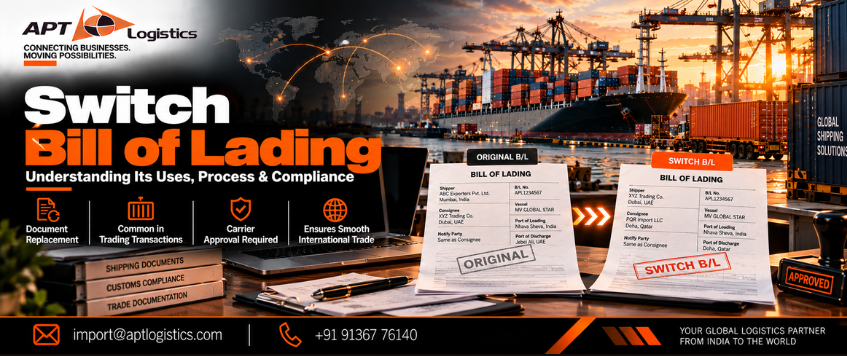
A switch bill of lading is a replacement Bill of Lading issued by the carrier, NVOCC or authorized party after the original Bill of Lading has been issued, subject to applicable procedures and approvals.
It is commonly associated with trading companies, triangular shipments and intermediary transactions, where the commercial parties involved may require certain details on the transport document to reflect the actual commercial transaction.
A switch B/L does not mean that the cargo itself is being changed. It refers to the replacement of the transport document.
When Is a Switch Bill of Lading Used?
A switch bill of lading may be requested in situations where the commercial structure of a shipment changes or where an intermediary is involved.
Common examples include:
1. Third-Country Trading
A trading company may purchase goods from one country and sell them to a customer in another country without wanting the end buyer to see the original supplier’s commercial details.
For example, goods may physically move from China to India, while a trading company in another country is involved in the commercial transaction.
2. Triangular Shipments
Switch B/L arrangements can arise when the seller, buyer and actual cargo origin are located in different countries.
The transport document may need to reflect the appropriate commercial parties while maintaining consistency with the actual cargo movement.
3. Commercial Confidentiality
In some legitimate trading arrangements, an intermediary may seek to keep supplier or manufacturer information confidential from its customer.
A switch B/L may be considered as part of the documentation arrangement, subject to carrier approval and applicable laws.
What Information Can Be Changed?
The exact permissible changes depend on the carrier, NVOCC, jurisdiction and circumstances. Commonly requested amendments can include certain:
- Shipper details
- Consignee details
- Notify party
- Description of goods, where legally and factually permissible
- Commercial references
However, not every field can or should be changed.
Critical shipment facts such as cargo identity, quantity, weight, container information, vessel details and shipment dates must remain accurate where required. A carrier may refuse a requested switch if it would create a false or misleading document.
Important Compliance Considerations
A switch bill of lading should never be used to conceal illegal activity, falsify cargo information, evade customs requirements or misrepresent the origin or nature of goods.
Before requesting a switch B/L, the parties should verify:
- Carrier or NVOCC approval.
- Applicable customs and regulatory requirements.
- Consistency between shipping documents.
- Accuracy of cargo particulars.
- Documentary requirements at origin and destination.
- Whether the requested changes are legally permissible.
Improper issuance of a switch B/L can create significant customs, contractual, insurance and compliance risks.
How APT Logistics Handles Switch B/L Requirements
At APT Logistics, we understand that international trading structures can involve multiple commercial parties and documentation requirements.
Our team coordinates with the relevant carrier or NVOCC and reviews the requested changes before proceeding. We focus on ensuring that the documentation remains consistent with the shipment, commercial transaction and applicable requirements.
For exporters, importers and trading companies, proper documentation control is essential because the Bill of Lading is a key transport and commercial document.
Conclusion
A switch bill of lading is a replacement transport document that may be used in legitimate international trading and intermediary shipment structures. It can help align certain document details with an approved commercial transaction, but it must be handled carefully.
Before requesting a switch B/L, businesses should confirm carrier approval, legal requirements and the accuracy of all shipment information.
APT Logistics — Supporting Reliable International Shipping & Documentation from India to Global Markets.
FAQs
What is a switch bill of lading?
A switch bill of lading is a replacement B/L issued after the original B/L, subject to carrier or authorized-party approval and applicable legal requirements.
Why is a switch B/L used?
It may be used for legitimate trading arrangements such as triangular shipments, third-country transactions or certain confidentiality requirements.
Can all details on a Bill of Lading be changed?
No. Permitted changes depend on the carrier, applicable law and circumstances. Shipment information must not be falsified or made misleading.
Is a switch Bill of Lading legal?
A switch B/L can be used in legitimate circumstances, but the process must comply with carrier procedures, customs requirements and applicable laws. Unauthorized or misleading changes can create serious risks.
Need Help? Chat with us!
Start a Conversation
Hi! Click one of our members below to chat on WhatsApp