-

03
Jul
Air Freight vs Sea Freight: Which Shipping Method Should You Choose? | APT Logistics
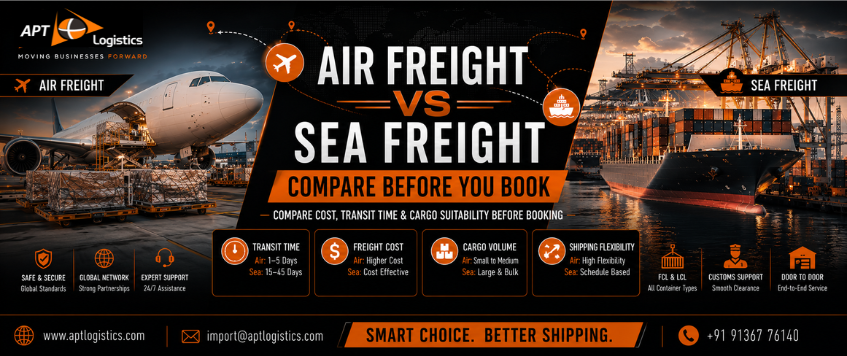
Air Freight vs Sea Freight: Compare Before You Book
Choosing between air freight vs sea freight is one of the most important decisions businesses make when planning international shipments. The right choice can significantly impact transportation costs, delivery timelines, inventory management, and customer satisfaction.
While air freight offers speed and reliability, sea freight provides cost advantages for larger shipments. Understanding the strengths and limitations of each mode helps importers and exporters make smarter logistics decisions.
In this guide, we’ll compare air freight and sea freight across key factors including cost, transit time, cargo suitability, and supply chain requirements.
What Is Air Freight?
Air freight refers to the transportation of cargo by commercial or cargo aircraft.
It is commonly used for:
- Urgent shipments
- High-value products
- Perishable goods
- Pharmaceuticals
- Electronics
- Time-sensitive deliveries
Air freight is the fastest international shipping method available.
What Is Sea Freight?
Sea freight involves transporting cargo through container vessels or breakbulk ships.
It is commonly used for:
- Large-volume cargo
- Industrial machinery
- Manufacturing goods
- Retail inventory
- Project cargo
- Heavy equipment
Sea freight is the most cost-effective option for bulk shipments.
Air Freight vs Sea Freight: Key Comparison
Factor Air Freight Sea Freight Transit Time 1-7 Days 15-60 Days Cost Higher Lower Cargo Capacity Limited Very High Reliability High Moderate Best For Urgent cargo Large shipments Environmental Impact Higher Lower Inventory Costs Lower Higher Customs Processing Faster Standard
1. Transit Time Comparison
When speed is critical, air freight is the clear winner.
Air Freight
Typical transit times:
- India to Europe: 2-5 days
- India to USA: 3-6 days
- India to Middle East: 1-3 days
Sea Freight
Typical transit times:
- India to Europe: 25-40 days
- India to USA: 30-50 days
- India to Middle East: 10-20 days
Winner: Air Freight
If delivery speed is your primary concern, air freight offers significantly shorter transit times.
2. Cost Comparison
Cost is often the deciding factor when comparing air freight vs sea freight.
Air Freight
Pricing is generally based on:
- Chargeable weight
- Dimensions
- Destination
- Airline capacity
Air freight can cost several times more than ocean freight.
Sea Freight
Pricing is generally based on:
- Container size
- Cargo volume (CBM)
- Shipping route
- Port charges
Sea freight offers substantial savings for larger shipments.
Winner: Sea Freight
For cost efficiency, sea freight remains the preferred choice for most non-urgent cargo.
3. Cargo Volume and Weight
Air Freight
Best suited for:
- Small shipments
- Lightweight cargo
- High-value goods
- Premium products
Sea Freight
Ideal for:
- Heavy cargo
- Bulk shipments
- Large equipment
- Full container loads
- Project cargo
Winner: Sea Freight
When shipping large or heavy cargo, sea freight offers far greater capacity and cost advantages.
4. Cargo Security
Air Freight
Benefits include:
- Shorter handling cycles
- Reduced transit time
- Enhanced airport security
- Lower risk of damage
Sea Freight
Although secure, cargo spends longer periods in transit and may undergo multiple handling stages.
Winner: Air Freight
For valuable or sensitive products, air freight generally provides greater security.
5. Supply Chain Flexibility
Air freight provides greater flexibility when:
- Responding to urgent orders
- Managing inventory shortages
- Supporting product launches
- Handling seasonal demand spikes
Sea freight is better suited for planned and predictable supply chains.
Winner: Air Freight
For flexibility and responsiveness, air cargo provides significant advantages.
6. Environmental Impact
Sustainability is becoming increasingly important in logistics planning.
Air Freight
- Higher carbon emissions
- Greater fuel consumption
- Larger environmental footprint
Sea Freight
- Lower emissions per unit
- Greater fuel efficiency
- Better sustainability performance
Winner: Sea Freight
Ocean freight remains the more environmentally efficient transportation mode.
When Should You Choose Air Freight?
Air freight is recommended when:
- Delivery deadlines are critical
- Cargo value is high
- Inventory shortages exist
- Products are perishable
- Transit speed is essential
- Shipment volumes are relatively small
When Should You Choose Sea Freight?
Sea freight is recommended when:
- Cost reduction is a priority
- Cargo volumes are large
- Transit time is flexible
- Heavy equipment is being shipped
- Inventory planning allows longer lead times
- Sustainability goals are important
Hybrid Shipping Strategy: The Best of Both Worlds
Many businesses combine air and sea freight to optimize supply chain performance.
Examples include:
- Initial inventory shipped by air
- Replenishment inventory shipped by sea
- Urgent orders moved by air
- Regular stock moved by ocean freight
This strategy balances cost and service requirements.
APT Logistics Insight ⭐
Many businesses focus solely on freight cost when selecting a transportation mode. However, the true comparison should include inventory carrying costs, market demand, production schedules, and customer expectations.
A cheaper shipping option may ultimately cost more if delays result in stock shortages or lost sales. The most effective logistics strategy considers total supply chain costs rather than freight charges alone.
How APT Logistics Can Help
APT Logistics offers:
- Air freight services worldwide
- Sea freight solutions (FCL & LCL)
- Customs clearance support
- Cargo consolidation services
- Project cargo handling
- Supply chain planning assistance
- Door-to-door logistics solutions
Our logistics experts help businesses choose the most efficient transportation mode based on cargo requirements and budget objectives.
Conclusion
The choice between air freight vs sea freight depends on your shipment priorities. Air freight delivers unmatched speed and flexibility, while sea freight offers significant cost advantages and higher cargo capacity.
By understanding the differences between the two modes, businesses can make informed logistics decisions that support growth, improve customer service, and optimize supply chain performance.
With APT Logistics, businesses gain access to both air and sea freight solutions tailored to their specific shipping requirements.
FAQ
Is air freight always more expensive than sea freight?
Yes, in most cases air freight costs significantly more than sea freight, particularly for larger shipments.
Which is faster, air freight or sea freight?
Air freight is considerably faster, often delivering shipments within days instead of weeks.
What cargo is best suited for sea freight?
Heavy machinery, industrial equipment, retail inventory, and bulk shipments are ideal for sea freight.
Can businesses use both air and sea freight?
Yes. Many companies use a combination of both modes to balance speed and cost.
Need Help? Chat with us!
Start a Conversation
Hi! Click one of our members below to chat on WhatsApp