-

10
Sep
Global Supply Chain Disruptions: Impact on International Shipping
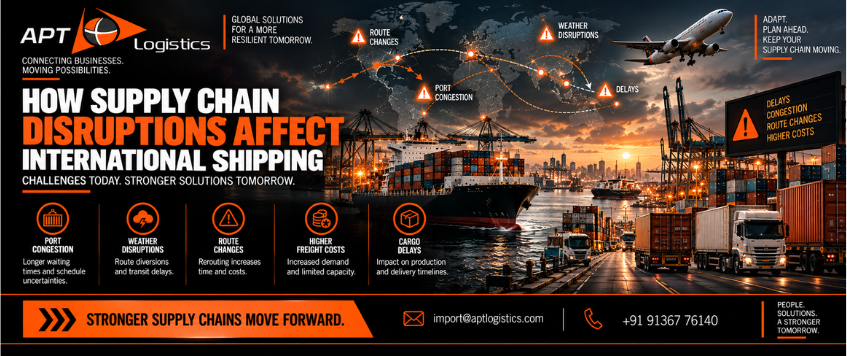
How Supply Chain Disruptions Affect International Shipping
Global supply chain disruptions can increase freight costs, extend transit times and make shipment planning more difficult for importers and exporters.
International shipping depends on a complex network of ports, vessels, airlines, warehouses, customs authorities and inland transport providers. When one part of this network is disrupted, the effects can quickly spread across multiple countries and trade routes.
1. Longer Transit Times
Port congestion, vessel schedule changes, equipment shortages and route diversions can delay cargo movement.
When vessels or aircraft operate behind schedule, the delay can also affect connecting services and final delivery appointments.
2. Higher Freight Rates
Disruptions can reduce available transportation capacity while demand remains unchanged or increases.
This can lead to higher:
- Ocean freight rates
- Air freight rates
- Trucking costs
- Peak-season or emergency surcharges
Businesses may therefore pay more to secure available capacity.
3. Equipment Shortages
International trade relies heavily on the availability of containers and other transport equipment.
When containers become concentrated at particular ports or regions, exporters in other locations may struggle to obtain the required equipment, resulting in booking delays and additional costs.
4. Port Congestion
Congestion can affect vessels, terminals, customs operations and inland transportation simultaneously.
Cargo may spend longer at the port, while limited truck or rail availability can create additional delays after discharge.
5. Inventory Planning Becomes Difficult
Unpredictable transit times make it harder for businesses to maintain the right inventory levels.
Importers may need to increase safety stock to protect production and sales from unexpected shipping delays.
6. Route Changes and Transshipment
When a normal trade lane becomes unreliable, carriers may introduce alternative routes or additional transshipment points.
Although these alternatives can keep cargo moving, they may also increase transit time and handling requirements.
How Businesses Can Manage Supply Chain Disruptions
Companies cannot prevent every disruption, but they can reduce its impact through better planning.
Practical Measures
- Use multiple routing options instead of depending on a single trade lane.
- Book freight early when capacity is expected to tighten.
- Maintain realistic inventory buffers for critical products.
- Track shipments proactively and identify delays early.
- Work with experienced freight forwarders who can arrange alternative transportation when required.
How APT Logistics Supports Businesses
APT Logistics helps importers and exporters manage changing international freight conditions through route planning, carrier coordination, shipment tracking and alternative logistics solutions.
When a disruption affects the original plan, our team can evaluate available routing and transportation options based on cost, capacity and delivery requirements.
Conclusion
Global supply chain disruptions can affect almost every part of international shipping—from freight rates and vessel schedules to inventory planning and final delivery.
For businesses involved in international trade, proactive planning and reliable logistics coordination are essential to maintaining supply chain continuity.
APT Logistics provides end-to-end freight forwarding support to help businesses navigate changing global logistics conditions with greater visibility and control.
Need Help? Chat with us!
Start a Conversation
Hi! Click one of our members below to chat on WhatsApp