-

07
Aug
How Middle East Transshipment Hubs Affect Shipping Routes | APT Logistics
How Middle East Transshipment Hubs Affect Shipping Routes
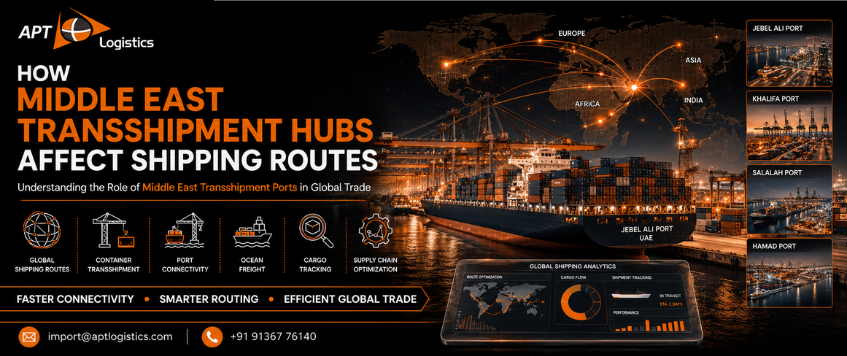
The Middle East transshipment ports have become some of the world’s most influential logistics hubs, connecting Asia, Europe, Africa, and the Americas. Every year, millions of containers pass through these ports before reaching their final destinations, making them an essential part of global supply chains.
Whether you’re importing raw materials, exporting finished goods, or managing international trade, understanding how Middle East transshipment hubs influence shipping routes can help businesses improve planning, reduce risks, and optimize freight costs.
What Is a Transshipment Hub?
A transshipment hub is a port where cargo is unloaded from one vessel and transferred to another before continuing to its final destination.
Instead of operating direct services between every country, shipping lines consolidate cargo through strategic hubs to improve network efficiency.
Benefits include:
- Greater global connectivity.
- More sailing options.
- Improved vessel utilization.
- Lower transportation costs.
- Wider destination coverage.
Why the Middle East Is a Global Logistics Hub
The Middle East sits at one of the world’s busiest maritime crossroads.
Its strategic location connects:
- Asia
- Europe
- Africa
- North America
- South America
Major East–West shipping routes pass through the region, making it ideal for large-scale transshipment operations.
Major Middle East Transshipment Ports
Port of Jebel Ali – UAE
The Middle East’s largest container port and one of the world’s busiest logistics hubs.
Key advantages:
- Extensive global shipping connections.
- Large container handling capacity.
- Advanced logistics infrastructure.
- Free Zone connectivity.
- Excellent feeder services.
Khalifa Port – Abu Dhabi, UAE
A modern deep-water port with advanced automation and excellent regional connectivity.
Suitable for:
- Container shipping.
- Industrial cargo.
- Project logistics.
- Regional distribution.
Port of Salalah – Oman
Strategically positioned near major East-West shipping lanes.
Known for:
- Fast vessel turnaround.
- Efficient transshipment.
- Strong connectivity between Asia, Europe, and Africa.
- High operational efficiency.
Hamad Port – Qatar
One of the Gulf region’s newest and most advanced ports.
Handles:
- Containerized cargo.
- General cargo.
- Food imports.
- Industrial shipments.
King Abdulaziz Port – Dammam, Saudi Arabia
An important logistics gateway serving Saudi Arabia’s eastern region and Gulf trade.
How Middle East Transshipment Ports Affect Shipping Routes
1. Improve Global Connectivity
Shipping lines use Middle East hubs to connect hundreds of international ports through feeder services.
Instead of direct sailings to every destination, containers are efficiently redistributed through these ports.
2. Reduce Overall Shipping Costs
Consolidating cargo at major transshipment hubs enables shipping lines to:
- Maximize vessel capacity.
- Reduce operating costs.
- Optimize sailing schedules.
- Offer competitive freight rates.
3. Expand Destination Coverage
Many smaller ports cannot support direct services from Asia or Europe.
Transshipment allows cargo to reach:
- East Africa.
- Gulf countries.
- Mediterranean ports.
- South Asia.
- Smaller regional ports.
4. Support Faster Regional Distribution
Middle East hubs provide excellent feeder vessel networks that distribute cargo quickly across neighboring countries.
This is especially beneficial for:
- GCC markets.
- East Africa.
- Red Sea destinations.
- Indian Ocean trade.
5. Increase Supply Chain Flexibility
Shipping lines can reroute cargo through different transshipment hubs when required.
Alternative routing helps businesses manage:
- Port congestion.
- Weather disruptions.
- Capacity shortages.
- Geopolitical challenges.
Challenges of Transshipment
Although highly efficient, transshipment may occasionally introduce challenges.
These include:
- Port congestion.
- Missed vessel connections.
- Schedule changes.
- Customs inspections.
- Equipment shortages.
- Weather disruptions.
Choosing reliable shipping services minimizes these risks.
Recent Changes Affecting Middle East Shipping
Global shipping patterns have evolved due to several developments, including:
- Red Sea security concerns.
- Changes in Suez Canal traffic.
- Vessel rerouting around the Cape of Good Hope.
- Growing investment in Gulf port infrastructure.
- Increased use of regional transshipment hubs.
As shipping networks continue to adapt, Middle East ports remain central to maintaining international trade flows.
How Businesses Benefit from Middle East Transshipment Ports
Companies shipping internationally gain several advantages:
- Better global connectivity.
- Competitive freight rates.
- Flexible sailing schedules.
- Access to more international destinations.
- Improved supply chain efficiency.
- Reliable regional distribution.
APT Logistics Insight ⭐
Many importers and exporters focus only on the origin and destination ports. However, the choice of transshipment hub can significantly influence transit time, freight costs, schedule reliability, and overall supply chain performance. Working with an experienced freight forwarder helps businesses select the most efficient routing based on current market conditions and carrier networks.
How APT Logistics Supports Global Ocean Freight
APT Logistics offers comprehensive international shipping solutions, including:
- FCL & LCL Shipping
- Air Freight Services
- Ocean Freight Management
- Customs Clearance
- Cargo Tracking
- Alternative Routing Solutions
- Project Cargo
- Breakbulk & ODC Logistics
- Door-to-Door Delivery
- Supply Chain Consulting
Our experienced logistics professionals continuously monitor shipping conditions to help customers optimize transit times, minimize disruptions, and reduce freight costs.
Conclusion
The Middle East transshipment ports play a vital role in today’s global shipping network by connecting major international trade lanes, improving cargo connectivity, and supporting efficient freight movement across continents.
Understanding how these logistics hubs influence shipping routes enables businesses to make better transportation decisions, reduce supply chain risks, and improve delivery performance. With APT Logistics as your logistics partner, you gain access to expert routing strategies, global carrier networks, and end-to-end freight solutions designed for efficient international trade.
FAQ
What is a transshipment port?
A transshipment port is an intermediate port where cargo is transferred from one vessel to another before reaching its final destination.
Which are the major Middle East transshipment ports?
Major hubs include Jebel Ali (UAE), Khalifa Port (UAE), Port of Salalah (Oman), Hamad Port (Qatar), and King Abdulaziz Port (Saudi Arabia).
Why are Middle East ports important for global shipping?
Their strategic location connects Asia, Europe, Africa, and the Americas, making them key distribution hubs for international container shipping.
Does APT Logistics manage shipments through Middle East transshipment hubs?
Yes. APT Logistics provides complete ocean freight solutions, including route planning, carrier selection, customs support, cargo tracking, and end-to-end logistics management.
Need Help? Chat with us!
Start a Conversation
Hi! Click one of our members below to chat on WhatsApp