-

12
Mar
Global Supply Chain Risks from Middle East Conflict | APT Logistics
Global Supply Chain Risks Rising Amid Geopolitical Conflict
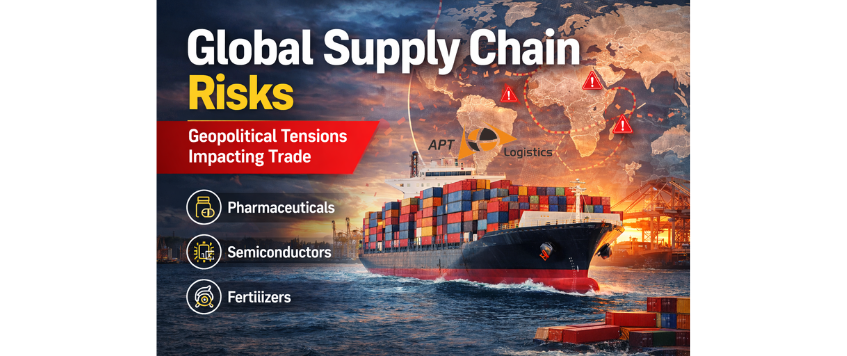
Global trade networks are facing increasing pressure as geopolitical tensions begin to disrupt the movement of critical goods. These disruptions are creating global supply chain risks that affect industries, manufacturers, and international logistics providers.
Several essential commodities and industrial products are already experiencing shipment delays due to instability in key shipping regions.
Critical Products Affected
The current logistics disruptions are impacting the transportation of several important products across international trade routes.
Some of the most affected sectors include:
Pharmaceuticals from India
India is one of the world’s largest suppliers of generic medicines. Shipping disruptions could slow down deliveries to markets in Europe, Africa, and the Middle East.Semiconductors from Asia
Semiconductors are essential for electronics, automotive manufacturing, and industrial equipment. Any delay in these shipments can affect global production lines.Fertilizers and Petrochemicals from the Middle East
The Middle East supplies a large share of fertilizers and petrochemical products used in agriculture and manufacturing. Disruptions in this region could impact global food production and industrial supply chains.
Possible Global Economic Impact
If geopolitical tensions continue to escalate, the impact on logistics and trade could expand significantly.
Potential effects include:
- Increased food prices due to fertilizer supply disruption
- Slower manufacturing output due to semiconductor shortages
- Higher transportation and freight costs
- Reduced container availability across major trade lanes
These developments highlight the growing global supply chain risks facing international trade.
The Role of Logistics Providers During Disruptions
During periods of supply chain instability, logistics providers play a critical role in helping businesses maintain cargo movement.
Freight forwarders must focus on:
- Flexible routing options
- alternative transport modes
- cargo consolidation strategies
- real-time shipment monitoring
These measures help reduce delays and maintain supply chain efficiency.
How APT Logistics Supports Global Supply Chains
In times of uncertainty, businesses need logistics partners who can respond quickly to changing global conditions.
APT Logistics continuously monitors international trade developments and shipping disruptions to ensure efficient cargo movement for clients.
APT Logistics offers:
- flexible multimodal transport solutions
- alternative routing strategies
- global freight coordination
- real-time shipment tracking
By adapting logistics strategies, APT Logistics helps businesses minimize supply chain risks and maintain reliable international trade operations.
Need Help? Chat with us!
Start a Conversation
Hi! Click one of our members below to chat on WhatsApp