-

26
Jun
Monitor Fuel Surcharge Trends: A Guide to Reducing Freight Costs | APT Logistics
Monitor Fuel Surcharge Trends: Why Every Importer & Exporter Should Pay Attention
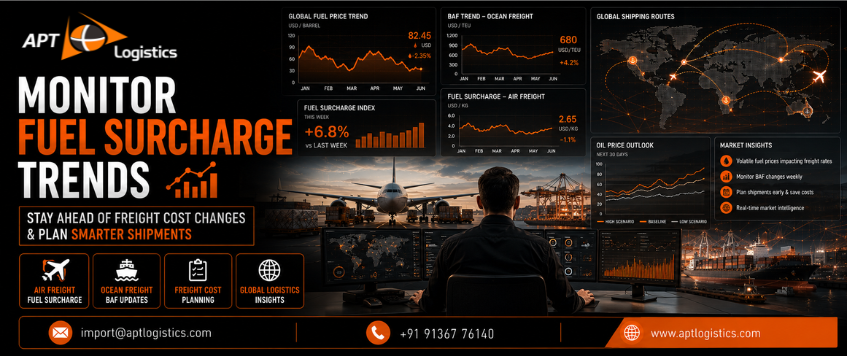
Businesses that monitor fuel surcharge trends are better equipped to manage freight costs, negotiate competitive shipping rates, and avoid unexpected logistics expenses. Fuel surcharges are one of the most dynamic components of transportation pricing, often changing in response to global oil prices, geopolitical events, carrier operating costs, and market demand.
Whether shipping by air or sea, understanding fuel surcharge trends enables businesses to make informed logistics decisions and protect their supply chain budgets.
What Is a Fuel Surcharge?
A fuel surcharge is an additional fee charged by airlines, shipping lines, or transport providers to offset fluctuations in fuel prices.
Unlike base freight rates, fuel surcharges can change frequently depending on:
- Crude oil prices
- Marine fuel (bunker fuel) costs
- Aviation fuel prices
- Market demand
- Global supply chain conditions
These charges are applied separately from the standard transportation cost.
Types of Fuel Surcharges
Air Freight Fuel Surcharge
Airlines apply fuel surcharges based on aviation fuel costs.
These charges typically vary depending on:
- Airline policies
- Origin and destination
- Cargo weight
- Market fuel prices
Air freight fuel surcharges may be revised monthly or even more frequently during periods of market volatility.
Ocean Freight Fuel Surcharge (BAF)
Shipping lines generally apply a Bunker Adjustment Factor (BAF) to compensate for changes in marine fuel prices.
BAF may vary according to:
- Trade lane
- Vessel operating costs
- Regional fuel prices
- Carrier-specific pricing models
Ocean carriers periodically revise BAF to reflect changes in bunker fuel costs.
Why Fuel Surcharge Trends Matter
Monitoring fuel surcharge movements helps businesses avoid unexpected freight cost increases.
Key benefits include:
- Better freight budgeting
- More accurate landed cost calculations
- Improved contract negotiations
- Smarter shipment scheduling
- Enhanced supply chain planning
Understanding surcharge trends enables businesses to make proactive logistics decisions instead of reacting to sudden price changes.
Factors That Influence Fuel Surcharges
Several global events can impact fuel surcharge levels.
Crude Oil Prices
Higher oil prices generally increase transportation fuel costs.
Geopolitical Events
Conflicts, sanctions, or disruptions in oil-producing regions can rapidly influence fuel prices worldwide.
Supply Chain Disruptions
Port congestion, vessel rerouting, and airline network adjustments may increase operating costs.
Seasonal Demand
Peak shipping seasons often result in higher fuel consumption and additional carrier surcharges.
Environmental Regulations
New fuel standards and emissions regulations can affect operating expenses for shipping lines and airlines.
How Businesses Can Reduce the Impact of Fuel Surcharges
Although fuel surcharges cannot always be avoided, businesses can reduce their financial impact through strategic planning.
Book Shipments Early
Early bookings often provide access to more competitive freight rates before surcharge revisions take effect.
Consolidate Cargo
Combining multiple shipments into one consignment reduces the overall transportation cost per shipment.
Choose the Right Transport Mode
Evaluate whether air freight or sea freight offers the best balance between transit time and cost.
Review Carrier Contracts
Long-term agreements may provide greater pricing stability compared to spot market bookings.
Monitor Market Trends
Regularly reviewing airline and shipping line surcharge announcements helps businesses anticipate future freight costs.
Industries Most Affected
Fuel surcharge fluctuations have the greatest impact on:
- Pharmaceutical companies
- Automotive manufacturers
- Electronics exporters
- Retail and e-commerce businesses
- Industrial machinery suppliers
- Chemical manufacturers
- Food and perishable cargo exporters
Businesses shipping frequently or internationally benefit the most from active surcharge monitoring.
APT Logistics Insight ⭐
Many businesses focus primarily on base freight rates while overlooking fuel surcharges, which can significantly influence the final transportation cost. During periods of market volatility, fuel-related charges may change more frequently than the freight rate itself.
Companies that monitor fuel surcharge trends alongside freight rates are often better positioned to negotiate competitive pricing, optimize shipping schedules, and maintain more predictable logistics budgets.
How APT Logistics Helps Businesses Stay Ahead
APT Logistics supports importers and exporters with:
- Regular freight market updates
- Air and ocean freight solutions
- Fuel surcharge insights
- Competitive carrier options
- Shipment planning assistance
- Customs clearance support
- End-to-end logistics management
Our experienced logistics team helps businesses navigate changing market conditions while optimizing transportation costs.
Conclusion
Businesses that monitor fuel surcharge trends gain valuable insight into one of the most variable components of international shipping costs. By understanding what drives fuel surcharges and planning shipments accordingly, companies can improve budgeting, reduce unexpected expenses, and strengthen supply chain performance.
With APT Logistics, businesses receive reliable freight solutions, market intelligence, and proactive logistics support to help manage fuel-related transportation costs effectively.
FAQ
How often do fuel surcharges change?
Airlines and shipping lines typically review fuel surcharges monthly, although they may adjust them more frequently during periods of significant fuel price volatility.
What is BAF in ocean freight?
BAF (Bunker Adjustment Factor) is a surcharge applied by ocean carriers to recover fluctuations in marine fuel costs.
Can fuel surcharges be negotiated?
Depending on shipment volume, contract terms, and carrier agreements, businesses may be able to negotiate or stabilize fuel-related charges.
Why should importers monitor fuel surcharge trends?
Monitoring fuel surcharge trends helps businesses forecast logistics costs, plan shipments strategically, and avoid unexpected increases in freight expenses.
Need Help? Chat with us!
Start a Conversation
Hi! Click one of our members below to chat on WhatsApp