-

01
Sep
Inventory Planning Logistics: Managing Shipping Delays
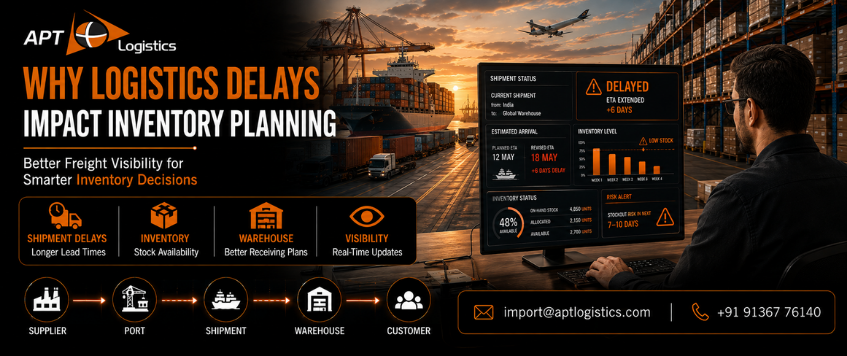
Why Logistics Delays Impact Inventory Planning
For businesses that depend on international shipments, logistics and inventory planning are closely connected. A delayed shipment can affect stock availability, production schedules, warehouse operations, and customer deliveries.
Effective inventory planning logistics helps businesses prepare for transportation uncertainties and maintain sufficient stock while avoiding unnecessary inventory buildup.
How Logistics Delays Affect Inventory
1. Stock Shortages
When shipments arrive later than expected, businesses may run out of stock before the next shipment arrives.
This can lead to:
- Missed customer orders.
- Production interruptions.
- Emergency purchases.
- Lost sales.
2. Higher Safety Stock Requirements
Businesses may need additional safety stock when transportation lead times become unpredictable.
However, excessive safety stock can increase:
- Warehousing costs.
- Working capital requirements.
- Inventory holding costs.
3. Production Delays
Manufacturers relying on imported raw materials or components can face production disruptions when shipments are delayed.
Even a small freight delay can affect an entire production schedule.
4. Warehouse Planning Problems
Unexpected arrival dates can make it difficult to plan warehouse space, labour, unloading, and inventory allocation.
A revised vessel or flight ETA may require warehouse teams to reschedule receiving operations.
Common Causes of Logistics Delays
Inventory planning can be affected by:
- Port congestion.
- Vessel schedule changes.
- Flight delays.
- Transshipment disruptions.
- Customs clearance issues.
- Weather conditions.
- Documentation errors.
- Equipment shortages.
- Inland transportation delays.
How Better Planning Reduces the Impact
Businesses can improve inventory planning logistics by:
- Building realistic transportation buffers.
- Monitoring shipment ETAs.
- Maintaining appropriate safety stock.
- Booking critical cargo early.
- Using reliable freight routes.
- Preparing customs documents in advance.
- Maintaining alternative transportation options.
- Communicating expected arrival changes with warehouse and procurement teams.
APT Logistics Insight ⭐
Inventory planning should not be separated from freight planning. When logistics teams and inventory teams share accurate shipment information, businesses can make better decisions about stock levels, warehouse capacity, purchasing, and customer commitments.
APT Logistics provides air and sea freight, shipment tracking, customs clearance, inland transportation, and door-to-door logistics solutions to help businesses improve supply-chain visibility.
Conclusion
Inventory planning logistics plays an important role in maintaining a reliable supply chain. Freight delays can create stock shortages, increase safety-stock requirements, disrupt production, and complicate warehouse planning.
By combining realistic inventory planning with proactive freight monitoring and reliable transportation solutions, businesses can reduce the operational impact of logistics delays.
FAQ
How do logistics delays affect inventory?
They can cause stock shortages, production interruptions, increased safety stock, warehouse planning issues, and delayed customer deliveries.
Why is safety stock important?
Safety stock provides a buffer against unexpected demand and supply-chain delays, although excessive stock can increase holding costs.
How can businesses improve inventory planning?
Businesses can monitor shipment ETAs, build realistic buffers, maintain appropriate safety stock, and coordinate inventory planning with freight schedules.
Can freight tracking help inventory planning?
Yes. Accurate shipment visibility helps businesses anticipate arrival dates and adjust purchasing, warehouse, and inventory decisions.
Need Help? Chat with us!
Start a Conversation
Hi! Click one of our members below to chat on WhatsApp