-

31
Aug
Geopolitical Impact on Shipping | Freight Costs & Delays
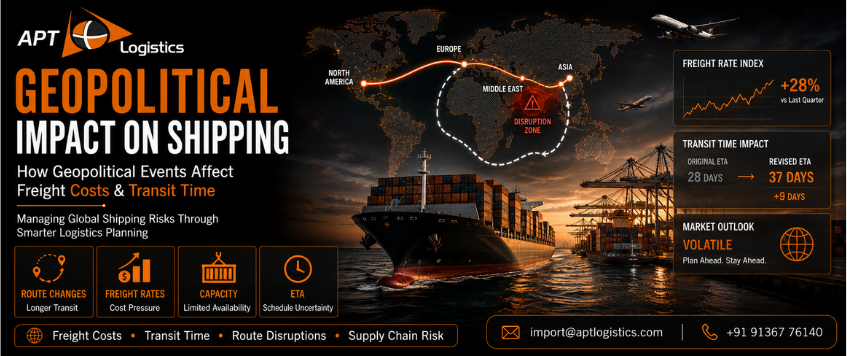
How Geopolitical Events Affect Freight Costs and Transit Time
The geopolitical impact on shipping can be significant for international businesses. Conflicts, regional tensions, sanctions, security concerns, and changes in trade policies can affect established transportation routes and create uncertainty across global supply chains.
These disruptions can influence freight rates, transit times, fuel costs, insurance premiums, vessel schedules, and cargo availability.
For importers and exporters, understanding these risks is essential for better shipment planning.
How Geopolitical Events Disrupt Shipping
1. Shipping Route Changes
Security concerns can force carriers to modify established routes or avoid certain areas.
Longer routes can result in:
- Increased sailing distance.
- Longer transit times.
- Higher fuel consumption.
- Additional operational costs.
2. Freight Rates Can Increase
When vessels or aircraft have to use alternative routes, transportation costs can rise.
Freight rates may be affected by:
- Additional fuel consumption.
- Limited vessel or aircraft capacity.
- Higher operational costs.
- Increased demand for alternative routes.
- Additional security-related expenses.
3. Transit Times Become Less Predictable
A shipment that normally follows a predictable schedule may experience changes when geopolitical conditions affect the route.
Potential consequences include:
- Longer sailing times.
- Missed transshipment connections.
- Revised ETAs.
- Vessel schedule changes.
- Additional port calls.
Impact on Air Freight
Geopolitical events can also affect air cargo.
Changes in airspace availability or security conditions may result in:
- Flight rerouting.
- Longer flying distances.
- Increased fuel consumption.
- Reduced flight capacity.
- Schedule changes.
For urgent shipments, these changes can have a direct impact on delivery commitments.
Impact on Ocean Freight
Ocean transportation can be particularly sensitive to disruptions affecting major maritime routes.
Businesses may experience:
- Vessel diversions.
- Longer transit times.
- Port congestion.
- Container imbalances.
- Higher freight rates.
- Revised ETAs.
Fuel Costs & Surcharges
Longer transportation routes can increase fuel consumption.
As a result, carriers may adjust fuel-related charges depending on their pricing structures and prevailing market conditions.
This can increase the total logistics cost for importers and exporters.
Insurance & Security Costs
Geopolitical risks can also influence cargo and vessel insurance requirements.
Depending on the circumstances, businesses may face:
- Higher insurance premiums.
- Additional security-related costs.
- Special routing requirements.
- Increased risk assessments.
These factors can contribute to higher overall transportation costs.
How Businesses Can Reduce the Impact
Businesses cannot control geopolitical developments, but they can improve their logistics resilience.
1. Plan Alternative Routes
Evaluate alternative ports, carriers, and transportation modes before disruptions occur.
2. Build Transit-Time Buffers
Avoid planning critical deliveries around the earliest possible ETA.
3. Monitor Carrier Updates
Regularly review vessel schedules, flight schedules, and routing changes.
4. Consider Multimodal Options
Depending on the shipment, combining air, sea, road, or rail transportation can provide greater flexibility.
5. Book Critical Cargo Earlier
Advance planning can provide more options when capacity becomes constrained.
APT Logistics Insight ⭐
The geopolitical impact on shipping is not limited to one country or one trade route. A disruption in a major maritime or aviation corridor can affect freight rates and transit times across multiple markets.
For time-sensitive cargo, businesses should consider route flexibility, transit buffers, alternative carriers, and multimodal solutions rather than relying on a single transportation plan.
Conclusion
Geopolitical events can create significant uncertainty for international logistics. Changes in shipping routes, airspace restrictions, fuel costs, capacity, security requirements, and port operations can increase freight costs and extend transit times.
By monitoring developments, planning alternative routes, and working with an experienced freight forwarding partner, businesses can better manage these disruptions and maintain supply-chain continuity.
APT Logistics provides air freight, sea freight, multimodal transportation, customs clearance, shipment tracking, and door-to-door logistics solutions to help businesses navigate changing international trade conditions.
FAQ
How do geopolitical events affect freight rates?
They can increase freight costs through route diversions, higher fuel consumption, reduced capacity, security costs, and increased demand for alternative services.
Can geopolitical events increase transit time?
Yes. Route changes, port disruptions, airspace restrictions, and transshipment changes can extend the expected transit time.
Does geopolitics affect both air and sea freight?
Yes. Air freight can be affected by airspace restrictions and rerouting, while ocean freight can be affected by maritime security risks, port disruptions, and vessel diversions.
How can businesses prepare for geopolitical shipping disruptions?
Businesses can maintain alternative routes, build transit buffers, monitor carrier updates, book critical cargo early, and consider multimodal transportation options.
Need Help? Chat with us!
Start a Conversation
Hi! Click one of our members below to chat on WhatsApp