-

13
Aug
Import Regulatory Approvals India: Avoid Import Delays | APT Logistics
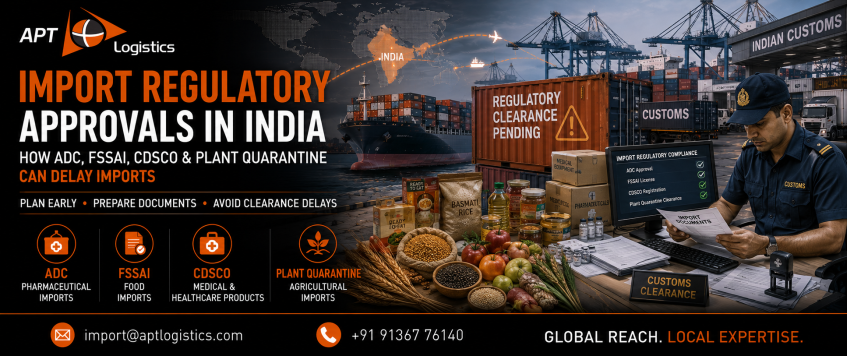
How ADC, FSSAI, CDSCO, and Plant Quarantine Requirements Delay Imports
Import regulatory approvals India requirements can have a major impact on cargo clearance timelines. For many importers, customs clearance is only one part of the process. Depending on the product, additional approvals, inspections, certificates, and clearances may be required from agencies such as ADC, FSSAI, CDSCO, and Plant Quarantine authorities.
If these requirements are not identified and prepared before the shipment arrives, cargo can remain at the port or airport while the importer completes the necessary formalities. This can result in storage charges, demurrage, missed production schedules, and additional logistics costs.
This guide explains how regulatory approvals affect imports into India and what businesses can do to reduce avoidable delays.
Why Regulatory Approvals Matter in Indian Imports
Different products are regulated by different government authorities.
Depending on the commodity, an importer may need:
- Customs clearance.
- Product-specific regulatory approval.
- Import licences or registrations.
- Laboratory testing.
- Inspection certificates.
- Health or safety documentation.
- Plant or animal quarantine clearance.
The exact requirements depend on the nature of the product, its intended use, applicable regulations, and the relevant authorities.
1. ADC Requirements for Pharmaceutical Imports
The Assistant Drug Controller (ADC) plays an important role in the regulatory clearance of certain imported drugs and pharmaceutical products.
Pharmaceutical imports may require additional documentation and regulatory compliance before they can be released.
Potential requirements can include:
- Product and manufacturer details.
- Import-related licences or permissions.
- Supporting technical documentation.
- Regulatory declarations.
- Inspection or examination where applicable.
If these requirements are not addressed before arrival, the shipment may remain pending clearance.
How APT Logistics Helps
APT Logistics can coordinate with importers, customs professionals, and relevant regulatory stakeholders to ensure required documentation is reviewed and submitted as applicable to the shipment.
2. FSSAI Requirements for Food Imports
Food and food-related products entering India may be subject to requirements administered by the Food Safety and Standards Authority of India (FSSAI).
Depending on the product, import clearance may involve:
- Importer documentation.
- Food product information.
- Labelling compliance.
- Sampling and testing.
- Examination by authorities.
- Clearance through the applicable food import process.
Any discrepancy in product information, labelling, or documentation can potentially delay release.
Commonly Affected Cargo
Examples may include:
- Processed food.
- Beverages.
- Edible ingredients.
- Food additives.
- Packaged food products.
- Nutritional or specialty food products.
3. CDSCO Requirements for Medical Products
Medical devices, pharmaceuticals, cosmetics, and other regulated products may fall under the regulatory framework administered by the Central Drugs Standard Control Organisation (CDSCO).
Depending on the product, importers may need appropriate registrations, licences, permissions, or supporting documentation.
Potentially affected products include:
- Medical devices.
- Drugs and pharmaceuticals.
- Certain cosmetics.
- Diagnostic products.
- Other regulated healthcare products.
Importers should establish the applicable requirements before dispatch rather than waiting until the shipment reaches the Indian port or airport.
4. Plant Quarantine Requirements
Agricultural and plant-related imports can require inspection and compliance with Plant Quarantine requirements.
Potentially affected cargo includes:
- Seeds.
- Plants.
- Fruits and vegetables.
- Grains.
- Agricultural commodities.
- Plant-based materials.
Depending on the commodity and origin, documentation such as a phytosanitary certificate and other prescribed requirements may apply.
Inspection, treatment, or quarantine procedures can extend the cargo clearance timeline if requirements are not properly planned.
How Regulatory Approvals Cause Import Delays
1. Missing Documentation
A shipment may arrive before the importer has completed the required regulatory paperwork.
This creates a gap between:
Cargo Arrival → Regulatory Compliance → Customs Clearance → Cargo Release
The longer this process takes, the greater the risk of additional port or airport charges.
2. Incorrect Product Classification
The regulatory requirements can depend heavily on what the product actually is and how it is classified.
Incorrect descriptions or HS classification can create:
- Customs queries.
- Regulatory scrutiny.
- Documentation amendments.
- Additional examinations.
- Clearance delays.
3. Testing and Inspection
Some products may require sampling, testing, or physical inspection.
These processes can take additional time depending on:
- Product type.
- Authority requirements.
- Laboratory availability.
- Documentation completeness.
- Examination results.
4. Incorrect Labelling
Product labelling can be particularly important for regulated products.
Problems may include:
- Missing mandatory information.
- Incorrect product declarations.
- Inconsistent quantities.
- Differences between documents and physical cargo.
Such issues may need to be resolved before clearance.
The Hidden Cost of Regulatory Delays
Regulatory delays can create costs beyond the original freight quotation.
Potential additional expenses include:
- Demurrage.
- Detention.
- Port storage.
- Airport storage.
- Examination charges.
- Truck waiting charges.
- Additional documentation costs.
- Inventory shortages.
- Production interruptions.
- Missed customer deliveries.
For importers, the real cost of a delay can therefore be significantly higher than the regulatory fee itself.
How Importers Can Reduce Regulatory Delays
Businesses can improve import clearance efficiency by following a proactive approach.
1. Identify Requirements Before Shipment
Before cargo leaves the supplier’s country, determine whether the product requires:
- ADC-related clearance.
- FSSAI clearance.
- CDSCO compliance.
- Plant Quarantine clearance.
- Other product-specific approvals.
2. Prepare Documents in Advance
Keep relevant documentation ready before vessel or flight arrival.
Depending on the cargo, this may include:
- Commercial Invoice.
- Packing List.
- Bill of Lading or Air Waybill.
- Product specifications.
- Import licences.
- Certificates.
- Test reports.
- Phytosanitary documentation.
- Regulatory approvals.
3. Check Product Compliance Before Dispatch
Don’t wait for the cargo to reach India before identifying compliance problems.
A pre-shipment review can help identify:
- Missing approvals.
- Incorrect descriptions.
- Labelling issues.
- Documentation discrepancies.
- Product-specific restrictions.
4. Work with an Experienced Customs & Freight Partner
An experienced logistics provider can coordinate the different stages of the import process and identify potential clearance issues earlier.
This is especially important for:
- Pharmaceuticals.
- Medical devices.
- Food products.
- Agricultural commodities.
- Chemicals.
- Specialized industrial products.
APT Logistics Insight ⭐
One of the biggest import mistakes is treating customs clearance as a process that begins only after cargo arrives in India. For regulated products, clearance planning should begin before shipment departure.
Identifying the applicable regulatory authority, preparing documents, and checking product compliance in advance can significantly reduce the risk of cargo being held after arrival.
How APT Logistics Supports Importers
APT Logistics provides end-to-end import logistics solutions, including:
- Sea Freight – FCL & LCL.
- Air Freight.
- Customs Clearance.
- Import Documentation Support.
- Regulatory Coordination.
- Port and Airport Handling.
- Inland Transportation.
- Warehousing.
- Door-to-Door Delivery.
- Specialized Cargo Handling.
Our team works with importers to coordinate freight, customs, documentation, and delivery requirements for smoother cargo movement.
Conclusion
Import regulatory approvals India requirements can significantly affect cargo clearance timelines when they are not identified and planned in advance. ADC, FSSAI, CDSCO, Plant Quarantine, and other regulatory requirements may apply depending on the type of product being imported.
For businesses importing regulated goods, early compliance planning is essential. Preparing documentation before shipment arrival, verifying product requirements, and coordinating with experienced customs and logistics professionals can help reduce delays, unexpected charges, and supply chain disruptions.
With APT Logistics, importers can manage freight forwarding, customs clearance, documentation, transportation, and end-to-end logistics through a coordinated supply chain approach.
FAQ
What are import regulatory approvals in India?
They are product-specific permissions, registrations, inspections, certificates, or clearances required by Indian regulatory authorities in addition to standard customs procedures.
Which agencies can be involved in Indian imports?
Depending on the commodity, agencies can include FSSAI, CDSCO, ADC-related authorities, Plant Quarantine authorities, and other applicable government bodies.
Can regulatory approvals delay customs clearance?
Yes. Missing documents, inspections, testing, or unresolved compliance requirements can prevent cargo from being released.
When should importers check regulatory requirements?
Ideally, regulatory requirements should be checked before the shipment is dispatched so that approvals and documentation can be arranged in advance.
Can APT Logistics assist with regulated imports?
Yes. APT Logistics provides freight forwarding, customs clearance, documentation coordination, and logistics support for specialized and regulated cargo.
Need Help? Chat with us!
Start a Conversation
Hi! Click one of our members below to chat on WhatsApp