-

10
Aug
How to Prevent Air Cargo Rollovers and Flight Delays | APT Logistics
How to Prevent Air Cargo Rollovers and Flight Delays
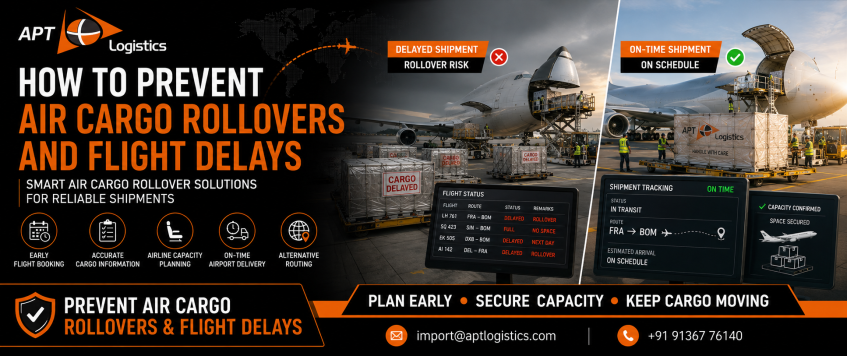
Air cargo rollover solutions are becoming increasingly important for businesses that depend on reliable and time-sensitive international shipments. When cargo is booked on a flight but cannot be loaded as planned, it may be rolled over to a later flight, creating delays, additional handling, missed delivery commitments, and unexpected costs.
For exporters and importers, preventing air cargo rollovers starts well before the shipment reaches the airport. Advance booking, accurate cargo information, proper documentation, airline selection, and proactive shipment monitoring can significantly improve the chances of securing the planned flight.
What Is an Air Cargo Rollover?
An air cargo rollover occurs when confirmed cargo is not loaded onto the originally planned flight and is moved to a later flight.
This can happen because of:
- Limited aircraft capacity.
- Overbooking.
- Weight restrictions.
- Aircraft operational changes.
- Last-minute priority cargo.
- Incorrect or late cargo information.
- Late cargo acceptance at the airport.
A rollover can turn a planned next-day delivery into a multi-day delay.
What Causes Air Cargo Rollovers?
Understanding the causes is the first step toward developing effective air cargo rollover solutions.
1. Limited Airline Capacity
During peak periods, airlines may receive more cargo bookings than available aircraft capacity.
This is particularly common for:
- High-demand international routes.
- Peak export seasons.
- Holiday periods.
- Major trade events.
- Capacity-constrained destinations.
2. Late Booking
Last-minute bookings leave fewer options for securing space on preferred flights.
Businesses may have to accept:
- Less convenient schedules.
- Connecting flights.
- Higher freight rates.
- Lower priority.
Early booking provides greater flexibility.
3. Incorrect Cargo Details
Incorrect information regarding weight, dimensions, number of pieces, or cargo type can create problems at the airport.
For example, a shipment declared as 200 kg may actually weigh 280 kg after final packing.
This can affect:
- Aircraft load planning.
- Available capacity.
- Freight charges.
- Acceptance by the airline.
4. Oversized or Heavy Cargo
Airlines have strict limitations on cargo dimensions and weight.
Heavy or oversized shipments may require:
- Special handling.
- Freighter aircraft.
- Additional approvals.
- Specific loading positions.
- Alternative flight options.
Proper planning is essential for such shipments.
5. Dangerous Goods Restrictions
DG cargo may require additional approvals and handling procedures.
Common requirements include:
- Dangerous Goods Declaration.
- Correct packaging.
- Proper labels and markings.
- Airline approval.
- Applicable handling procedures.
Incomplete DG documentation can prevent cargo from being accepted or loaded.
6. Late Cargo Delivery to the Airport
Even when airline space is confirmed, cargo must reach the terminal before the applicable cut-off time.
Late delivery can result in:
- Missed acceptance.
- Missed flight.
- Rebooking.
- Additional handling.
- Delivery delays.
7. Documentation Errors
Documentation discrepancies can also affect cargo acceptance.
Common issues include:
- Incorrect commercial invoice.
- Incorrect packing list.
- Missing shipping instructions.
- Incorrect HS code.
- Inconsistent weight or dimensions.
- Missing regulatory documents.
How to Prevent Air Cargo Rollovers
Businesses can adopt several practical air cargo rollover solutions to improve shipment reliability.
1. Book Air Freight Early
Whenever possible, secure space several days ahead of the planned departure.
For peak periods or capacity-sensitive destinations, even earlier planning may be necessary.
Benefits include:
- Better flight options.
- Higher probability of confirmed capacity.
- More time for documentation.
- Reduced last-minute rate pressure.
2. Provide Accurate Cargo Details
Always provide the airline or freight forwarder with accurate:
- Gross weight.
- Dimensions.
- Number of packages.
- Commodity description.
- Cargo type.
- Ready date.
Accurate information helps airlines plan capacity correctly.
3. Choose the Right Airline and Routing
The cheapest flight is not always the most reliable option.
Consider:
- Flight frequency.
- Aircraft type.
- Available cargo capacity.
- Number of connections.
- Transit time.
- Destination handling capability.
A reliable routing can be more valuable than a marginally lower freight rate.
4. Prepare Documentation Before Cargo Is Ready
Having documents prepared in advance allows your forwarder to process the shipment quickly.
Prepare:
- Commercial Invoice.
- Packing List.
- Shipping Instructions.
- Export documentation.
- Certificates, where required.
- DG documentation, where applicable.
5. Meet Airport Cut-Off Times
Cargo should reach the airport well before the airline’s acceptance deadline.
Your freight forwarder should coordinate:
- Pickup timing.
- Trucking.
- Cargo terminal delivery.
- Security screening.
- Airline acceptance.
6. Maintain Alternative Flight Options
For critical shipments, it is useful to identify backup options.
A contingency plan may include:
- Alternative airline.
- Alternative flight.
- Alternative routing.
- Nearby departure airport.
- Freighter option.
This can be particularly valuable for urgent cargo.
Air Cargo Rollover vs Flight Delay
These terms are related but not identical.
Flight Delay
The aircraft itself departs later than scheduled.
Cargo Rollover
The aircraft may operate as scheduled, but your cargo is not loaded and is moved to a later flight.
This distinction is important because cargo rollover can occur even when the airline’s flight schedule remains unchanged.
How Freight Forwarders Help Prevent Rollovers
An experienced freight forwarder can provide valuable support by:
- Monitoring airline capacity.
- Booking space in advance.
- Selecting reliable routings.
- Checking cargo dimensions.
- Coordinating airport delivery.
- Verifying documentation.
- Monitoring flight status.
- Arranging alternative options when necessary.
APT Logistics Insight ⭐
An air freight booking is not simply about getting a rate and receiving a booking confirmation. Reliable air cargo movement requires coordination between the shipper, airline, airport terminal, customs authorities, trucking provider, and freight forwarder.
The earlier these elements are coordinated, the lower the risk of cargo rollover.
How APT Logistics Supports Reliable Air Freight
APT Logistics provides comprehensive air freight solutions designed to minimize delays and improve shipment reliability.
Our services include:
- Air Freight Booking
- Airline Capacity Planning
- Priority Air Cargo
- Airport-to-Airport Freight
- Door-to-Door Air Freight
- DG Cargo Handling
- Customs Clearance
- Cargo Tracking
- Alternative Routing
- Time-Critical Shipment Management
For urgent and capacity-sensitive cargo, our team evaluates available routing and carrier options to identify the most practical solution.
Conclusion
Preventing air cargo rollovers requires more than booking space. Accurate cargo information, early reservations, proper documentation, timely airport delivery, and careful airline selection are essential for maintaining reliable shipment schedules.
By implementing effective air cargo rollover solutions, businesses can reduce flight-related disruptions, improve delivery predictability, and avoid unnecessary rebooking and handling costs.
APT Logistics helps importers and exporters plan air freight shipments with proactive booking, carrier coordination, customs support, and end-to-end shipment management.
FAQ
What is an air cargo rollover?
An air cargo rollover occurs when booked cargo is not loaded onto its planned flight and is transferred to a later flight.
What is the most common reason for air cargo rollovers?
Limited airline capacity is one of the major causes, particularly during peak shipping periods.
How can I reduce the risk of cargo rollover?
Book early, provide accurate cargo details, prepare documentation in advance, meet airport cut-off times, and work with an experienced freight forwarder.
Can APT Logistics provide alternative flights if cargo is rolled over?
Yes. Depending on the route and available capacity, APT Logistics can evaluate alternative airlines, flights, and routings to minimize delays.
Need Help? Chat with us!
Start a Conversation
Hi! Click one of our members below to chat on WhatsApp