-

30
Jun
APT Logistics July 2026 Freight Market Outlook | Air & Ocean Freight Trends
APT Logistics July 2026 Freight Market Outlook
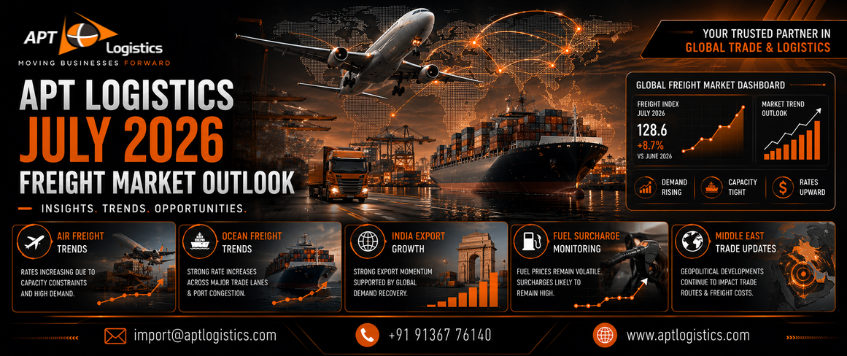
The July 2026 freight market outlook indicates continued upward pressure across both air and ocean freight sectors. Capacity constraints, strong export demand from India, rising fuel-related costs, and ongoing geopolitical uncertainty are shaping transportation markets worldwide.
As businesses prepare for the second half of 2026, understanding current freight trends has become essential for effective supply chain planning. This monthly market update from APT Logistics highlights key developments affecting global trade and provides practical insights for importers and exporters.
Executive Summary
Segment Trend Outlook Air Freight Increasing Firm to higher due to capacity constraints Ocean Freight Increasing Strong upward pressure, especially Europe & US lanes Middle East Trade Volatile Subject to geopolitical developments India Exports Strong Demand Space expected to tighten through July
Air Freight Market Outlook: Capacity Remains Tight
Air freight markets continue to experience strong demand across key international trade lanes.
Several factors are contributing to the current market environment:
- Increased export activity from Asia
- Limited airline cargo capacity
- Strong pharmaceutical and electronics demand
- Higher e-commerce volumes
- Ongoing route adjustments in certain regions
As a result, many airlines are maintaining firm rate levels, particularly on Europe, North America, and Middle East sectors.
What Shippers Should Expect
- Higher spot market rates
- Reduced availability on short-notice bookings
- Increased competition for premium space
- Longer lead times during peak periods
Businesses with urgent shipments are advised to secure bookings well in advance.
Ocean Freight Market Outlook: Upward Momentum Continues
Ocean freight rates remain under upward pressure entering July.
Demand remains strong across multiple trade lanes, particularly:
- Asia to Europe
- Asia to North America
- India to Europe
- India to Mediterranean destinations
Several carriers continue to implement rate restoration programs and capacity management measures.
Key Drivers
- Strong global trade volumes
- Equipment imbalances in selected regions
- Continued demand recovery
- Rising operational costs
- Bunker fuel fluctuations
Importers and exporters should anticipate potential freight increases throughout July.
India Export Market Remains Strong
Indian exports continue to show resilience despite market volatility.
Industries contributing to demand include:
- Pharmaceuticals
- Engineering goods
- Automotive components
- Chemicals
- Textiles
- Agricultural products
The continued growth in export activity is creating additional pressure on both airline and ocean carrier capacity.
Outlook for Exporters
Businesses exporting from India should expect:
- Earlier booking requirements
- Higher demand for container space
- Tight air cargo allocations
- Increased competition during peak weeks
Advance planning will be critical to maintaining shipment schedules.
Middle East Trade Outlook: Volatility Remains a Key Risk
The Middle East logistics market continues to face uncertainty due to ongoing geopolitical developments.
Potential impacts include:
- Air route adjustments
- Flight cancellations or diversions
- Ocean carrier rerouting
- Transit delays
- Increased operational costs
Although supply chains remain operational, businesses trading with or through the region should remain flexible and closely monitor developments.
Fuel Surcharge Trends
Fuel-related transportation costs remain an important factor in freight pricing.
Areas being closely watched include:
- Aviation fuel prices
- Marine bunker fuel costs
- Carrier surcharge programs
- Emergency operating cost recoveries
Changes in fuel markets may continue to influence both air and ocean freight rates throughout the quarter.
What Importers Should Do Now
To minimize risk and control transportation costs, importers should:
- Book cargo space earlier than usual
- Review inventory forecasts
- Diversify carrier options
- Monitor freight market developments
- Evaluate alternative routing solutions
- Build additional lead time into supply chain planning
Proactive planning can help reduce exposure to rate increases and capacity shortages.
What Exporters Should Do Now
Exporters should consider:
- Confirming production schedules earlier
- Securing freight allocations in advance
- Reviewing Incoterms and shipping responsibilities
- Monitoring destination market conditions
- Planning around holiday periods and peak demand
- Working closely with freight forwarding partners
These strategies can help maintain service reliability despite changing market conditions.
APT Logistics Insight ⭐
The freight market entering July 2026 is not being driven by a single event. Instead, it reflects the combined impact of strong global demand, constrained transportation capacity, rising operating costs, and geopolitical uncertainty.
Businesses that rely on last-minute bookings may face higher transportation costs and reduced service options. Organizations that actively monitor market trends and plan shipments earlier are likely to maintain greater supply chain stability and cost control.
Outlook for August 2026
Current indicators suggest:
- Air freight rates are likely to remain firm.
- Ocean freight rates may continue experiencing upward pressure.
- India export demand is expected to stay strong.
- Fuel surcharge volatility could influence transportation costs.
- Middle East developments will remain a key market variable.
The overall freight market outlook remains cautiously bullish with continued focus on capacity management and supply chain resilience.
Conclusion
The July 2026 freight market outlook highlights a market characterized by strong demand, tightening capacity, rising freight costs, and geopolitical uncertainty. Businesses that plan ahead, secure capacity early, and maintain visibility into market developments will be better positioned to manage logistics costs and avoid disruptions.
APT Logistics continues to monitor global freight trends and supports customers with strategic shipping solutions, market intelligence, and reliable end-to-end logistics services.
FAQ
Are air freight rates increasing in July 2026?
Yes. Capacity constraints and strong cargo demand are contributing to firm-to-higher air freight rates across major trade lanes.
Why are ocean freight rates rising?
Strong demand, carrier capacity management, and operational cost pressures are contributing to upward movement in ocean freight pricing.
Is India export demand still strong?
Yes. Export activity remains robust across pharmaceuticals, engineering goods, automotive products, chemicals, and textiles.
How should businesses prepare for freight market volatility?
Advance booking, flexible routing strategies, inventory planning, and close monitoring of market developments can help mitigate risks.
Need Help? Chat with us!
Start a Conversation
Hi! Click one of our members below to chat on WhatsApp