-

25
May
How to Choose a Freight Forwarder | Complete Logistics Guide
How to Choose a Freight Forwarder | Complete Logistics Guide
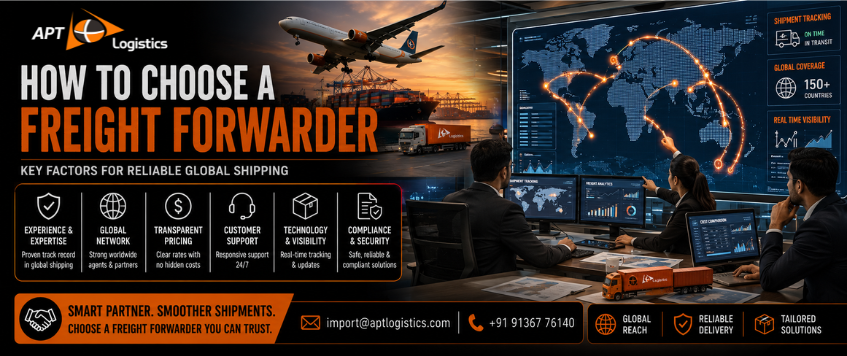
This guide explains how to choose freight forwarder services that align with your business requirements and supply chain goals.
Choosing the right logistics partner is one of the most important decisions for businesses involved in international trade. A reliable freight forwarder can improve transit efficiency, reduce shipping costs, simplify customs procedures, and ensure smooth cargo movement worldwide.
What Does a Freight Forwarder Do?
A freight forwarder manages the movement of cargo from origin to destination by coordinating:
✔ Air and sea freight
✔ Customs clearance
✔ Documentation
✔ Warehousing
✔ Inland transportation
✔ Cargo trackingFreight forwarders act as logistics coordinators, helping businesses simplify international shipping operations.
Why Choosing the Right Freight Forwarder Matters
An experienced logistics partner helps businesses:
✔ Reduce shipment delays
✔ Optimize freight costs
✔ Improve shipment visibility
✔ Ensure customs compliance
✔ Handle cargo safelyThe wrong freight partner can result in:
🚫 Delays
🚫 Hidden charges
🚫 Poor communication
🚫 Cargo damage
🚫 Customs complications
Key Factors to Consider When Choosing a Freight Forwarder
1. Industry Experience 🌍
Experience is one of the most important factors.
A freight forwarder with strong industry expertise understands:
- International shipping regulations
- Carrier networks
- Customs procedures
- Cargo handling requirements
Businesses should evaluate experience in:
✔ Air freight
✔ Sea freight
✔ Project cargo
✔ Perishable logistics
✔ Dangerous goods handling
2. Global Network & Coverage
A strong international network improves shipping efficiency.
Check whether the freight forwarder has:
✔ Overseas agents and partners
✔ Access to major ports and airports
✔ Carrier relationships worldwide
✔ Destination handling supportGlobal connectivity helps reduce operational challenges.
3. Customs Clearance Expertise 📄
Customs delays can significantly impact transit timelines.
A good freight forwarder should provide:
✔ Export and import clearance support
✔ HS code guidance
✔ Documentation verification
✔ Compliance managementEfficient customs handling reduces cargo hold risks.
4. Transparent Pricing 💰
Freight pricing should be clear and transparent.
Businesses should evaluate:
✔ Freight charges
✔ Local handling fees
✔ Customs-related costs
✔ Hidden surcharge policiesLow freight rates may sometimes include hidden destination charges.
5. Cargo Tracking & Communication 📡
Real-time shipment visibility is essential for supply chain planning.
A professional freight forwarder should offer:
✔ Shipment tracking updates
✔ Operational visibility
✔ Proactive communication
✔ Dedicated customer supportReliable communication improves logistics coordination.
6. Service Range 🚢✈️
Choose a freight forwarder that offers multiple logistics solutions.
Important services include:
✔ Air freight
✔ Sea freight
✔ FCL & LCL shipping
✔ Door-to-door delivery
✔ Warehousing
✔ Project cargo handlingA full-service provider simplifies logistics management.
7. Specialized Cargo Handling
Some shipments require advanced expertise.
Examples include:
⚠️ ODC cargo
⚠️ Perishable products
⚠️ Pharmaceuticals
⚠️ Hazardous goodsEnsure the freight forwarder has experience handling your cargo type.
8. Reputation & Reliability ⭐
Check:
✔ Client reviews
✔ Industry reputation
✔ Case studies
✔ Operational consistencyA trusted logistics partner provides long-term supply chain stability.
9. Technology & Digital Support
Modern logistics operations rely heavily on technology.
Look for features such as:
✔ Digital tracking systems
✔ Automated updates
✔ Online documentation support
✔ Shipment visibility dashboardsTechnology improves operational efficiency.
10. Problem-Solving Capability
International shipping often involves unexpected challenges.
A good freight forwarder should be able to handle:
✔ Shipment delays
✔ Port congestion
✔ Carrier schedule changes
✔ Customs issues
✔ Emergency cargo handlingOperational flexibility is critical in global trade.
Questions to Ask Before Selecting a Freight Forwarder
Businesses should ask:
- Do they handle shipments to my target market?
- Can they support customs clearance?
- Do they provide cargo insurance guidance?
- What tracking systems are available?
- Are there hidden local charges?
These questions help evaluate service quality and reliability.
Why Businesses Choose APT Logistics
APT Logistics provides:
✔ Global air and sea freight solutions
✔ Customs clearance expertise
✔ Competitive freight pricing
✔ Real-time cargo tracking
✔ Project cargo and ODC handling
✔ End-to-end logistics supportWe help businesses optimize supply chain performance and reduce shipping complexity.
Benefits of Working with the Right Freight Forwarder
A reliable logistics partner helps businesses:
✔ Improve transit reliability
✔ Reduce operational risks
✔ Control shipping costs
✔ Enhance customer satisfaction
✔ Simplify global trade operationsThe right freight forwarder becomes a strategic supply chain partner.
Conclusion
Understanding how to choose freight forwarder services is essential for efficient international shipping and supply chain success. Businesses should evaluate experience, customs expertise, pricing transparency, global connectivity, and operational reliability before selecting a logistics partner.
With APT Logistics, businesses gain trusted freight forwarding solutions designed for smooth, cost-effective, and globally connected cargo movement.
Need Help? Chat with us!
Start a Conversation
Hi! Click one of our members below to chat on WhatsApp