-

14
May
Exporter Guide for Sellers | International Shipping & Logistics Explained
Exporter Guide for Sellers | APT Logistics
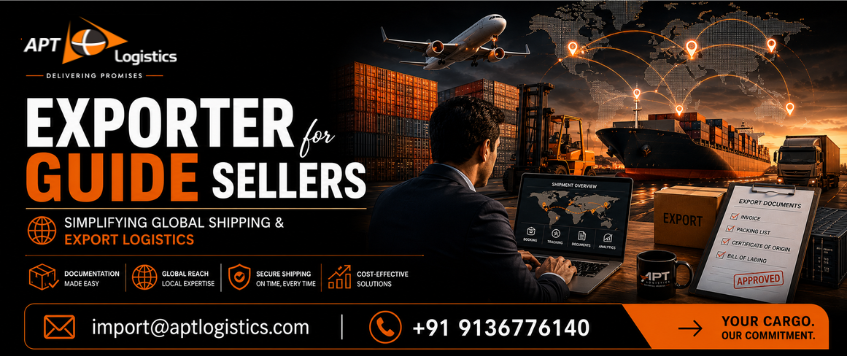
Exporting products to international markets creates major growth opportunities for businesses. However, successful exporting requires more than just finding overseas buyers. Sellers must understand shipping terms, export documentation, customs procedures, and logistics planning to ensure smooth cargo movement.
This exporter guide for sellers explains the key steps involved in international shipping and how exporters can reduce delays, costs, and operational risks.
Understanding the Export Process
The export process involves multiple stages, including:
- Buyer coordination
- Cargo preparation
- Shipping documentation
- Export customs clearance
- Freight transportation
- Delivery coordination
Each step impacts shipment timelines, compliance, and overall logistics efficiency.
Step 1: Confirm Buyer Requirements
Before shipping goods, exporters should clearly understand:
- Product specifications
- Packaging requirements
- Shipping timelines
- Destination country regulations
- Agreed shipping terms (Incoterms)
Clear communication reduces disputes and delays later in the process.
Step 2: Select the Right Incoterm
Shipping terms define cost responsibility, risk transfer, and logistics obligations.
Commonly used options include:
Incoterm Seller Responsibility EXW Low FOB Moderate CIF High DAP High DDP Very High Choosing the right term affects pricing, customs handling, and delivery responsibility.
Step 3: Prepare Export Documentation 📄
Proper documentation is critical for successful exports.
Key documents include:
- Commercial Invoice
- Packing List
- Bill of Lading / Airway Bill
- Certificate of Origin
- Export License (if required)
- Insurance Certificate
Errors in paperwork can result in customs delays or cargo holds.
Step 4: Plan Freight Transportation 🚢✈️🚛
Exporters must choose the best transport mode based on cargo type, urgency, and cost.
Air Freight
✔ Fast transit
✔ Suitable for urgent or high-value cargoSea Freight
✔ Cost-effective for bulk shipments
✔ Ideal for large cargo volumesRoad & Rail
✔ Useful for regional and inland movement
Step 5: Manage Export Customs Clearance
Export customs clearance is one of the most important stages in the shipping process.
Exporters must ensure:
- Correct HS code classification
- Compliance with export regulations
- Accurate cargo declaration
- Timely submission of documents
Poor customs planning can lead to delays and penalties.
Step 6: Understand Export Pricing 💰
Many exporters focus only on product pricing without evaluating logistics costs.
Important cost components include:
- Inland transportation
- Port handling charges
- Freight cost
- Insurance
- Documentation fees
Understanding total export cost helps sellers price products competitively.
Step 7: Arrange Cargo Insurance 🛡️
⚠️International shipments may face risks such as:
- Damage
- Theft
- Weather disruptions
- Delays
Cargo insurance helps protect exporters against financial loss during transit.
Common Export Mistakes Sellers Should Avoid🚫
- Choosing incorrect Incoterms
- Incomplete documentation
- Ignoring destination country regulations
- Poor packaging standards
- Underestimating freight costs
Proper planning improves shipment reliability and customer satisfaction.
How APT Logistics Helps Exporters
APT Logistics supports sellers with:
- Export documentation support
- Air and sea freight solutions
- Customs clearance coordination
- Freight planning and cost optimization
- Real-time shipment tracking
- Door-to-door logistics services
We help exporters streamline shipping operations and improve supply chain performance.
Why Logistics Planning Matters for Exporters
Efficient logistics management helps exporters:
- Reduce transit delays
- Improve customer experience
- Control freight costs
- Ensure regulatory compliance
- Increase supply chain visibility
A reliable freight forwarder becomes a key partner in global business growth.
Conclusion
This exporter guide for sellers highlights the key steps businesses must understand for successful international shipping. From documentation and customs clearance to freight planning and Incoterms, every stage impacts export efficiency.
With APT Logistics, exporters gain reliable logistics support for smooth, cost-effective, and globally compliant cargo movement.
Need Help? Chat with us!
Start a Conversation
Hi! Click one of our members below to chat on WhatsApp