-

24
Mar
DDU vs DDP Shipping Services in India | APT Logistics Guide
DDU and DDP Shipping Services in India
In international trade, shipping terms define who is responsible for transportation costs, customs duties, and delivery of goods. Two commonly used delivery terms are DDU (Delivered Duty Unpaid) and DDP (Delivered Duty Paid). Understanding DDU and DDP service in India helps businesses manage shipping responsibilities, costs, and customs procedures effectively.
These incoterms are often used for cross-border shipments where the seller arranges transportation to the buyer’s location.
What is DDU (Delivered Duty Unpaid)?
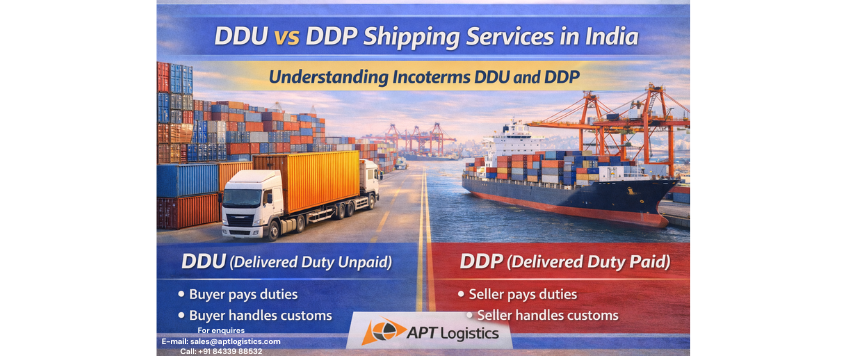
Under DDU shipping terms, the seller is responsible for delivering the goods to the buyer’s destination country but does not pay import duties or taxes.
The buyer is responsible for:
- Import customs clearance
- Paying import duties and taxes
- Completing required import documentation
This shipping term is often used when buyers prefer to handle customs procedures in their own country.
Logistics providers like APT Logistics support DDU shipments by arranging international transportation, coordinating with customs brokers, and ensuring cargo reaches the destination port smoothly.
What is DDP (Delivered Duty Paid)?
DDP shipping is one of the most comprehensive delivery terms in international logistics. Under DDP, the seller takes full responsibility for delivering goods to the buyer’s doorstep.
The seller handles:
- Export customs clearance
- International freight transportation
- Import customs clearance
- Payment of duties and taxes
- Final delivery to the buyer
This option is often preferred by buyers who want a hassle-free shipping experience.
With APT Logistics, businesses can arrange complete DDP shipping services in India, ensuring cargo moves smoothly from origin to destination without complications.
Key Differences Between DDU and DDP
Feature DDU DDP Import Duties Buyer pays Seller pays Customs Clearance Buyer handles Seller handles Delivery Responsibility Seller delivers to destination Seller delivers to buyer location Risk Transfer After arrival at destination At final delivery Choosing between these shipping terms depends on the level of control and responsibility the buyer or seller prefers.
Role of Logistics Companies in DDU and DDP Shipments
Managing international shipments involves several steps such as documentation, freight booking, customs coordination, and last-mile delivery.
Freight forwarding companies like APT Logistics simplify DDU and DDP service in India by providing:
- International air and sea freight booking
- Export and import documentation support
- Customs clearance coordination
- Duty and tax management for DDP shipments
- Final delivery to the consignee
Their expertise ensures shipments move efficiently across global supply chains.
When Should Businesses Choose DDU?
DDU shipping is suitable when:
- Buyers prefer handling import customs clearance themselves
- Buyers want control over import duties and taxes
- Importers have established local customs brokers
When DDP is the Better Option
DDP shipping works best when:
- Buyers want a door-to-door shipping solution
- Sellers manage the entire shipping process
- Import procedures are handled by experienced logistics partners
Many businesses choose DDP because it simplifies international shipping and reduces operational complexity.
Conclusion
Understanding DDU and DDP service in India is important for businesses engaged in global trade. Each shipping term defines different responsibilities for transportation, customs clearance, and duty payments.
By working with experienced logistics providers like APT Logistics, companies can ensure smooth international shipments while choosing the shipping term that best fits their business needs.
Need Help? Chat with us!
Start a Conversation
Hi! Click one of our members below to chat on WhatsApp