-

20
Feb
The Future of Last-Mile: Strengthening Inland Rail Connectivity for APT Logistics.
In the competitive landscape of global trade, efficiency isn’t just a goal—it’s a survival requirement. For businesses moving goods across vast distances, the intersection of Inland Rail Hubs and DAP (Delivered at Place) operations represents a massive opportunity to slash lead times and reduce overhead.At APT Logistics, we are seeing a strategic shift: the most resilient supply chains are those that treat inland rail terminals not just as transit points, but as the nerve centers of their delivery strategy.
Why Inland Rail is the Backbone of Modern DAP
The DAP Incoterm places the responsibility on the seller to deliver goods to a specific destination, ready for unloading. Traditionally, this meant long, expensive truck hauls from coastal ports. However, the rise of sophisticated inland rail hubs has changed the math.
-
Cost Efficiency: Rail is significantly more cost-effective for long-haul movements compared to road freight.
-
Reduced Carbon Footprint: Moving freight by rail is up to 16 times more fuel-efficient than road transport, helping partners meet ESG (Environmental, Social, and Governance) targets.
-
Decongestion: By bypassing port-side traffic and utilizing Inland Container Depots (ICDs), DAP shipments avoid the “bottleneck” delays common at major maritime gateways.
4 Strategies to Strengthen DAP Operations
To truly leverage inland rail, logistics operations must evolve beyond “simple transport.” Here is how APT Logistics recommends strengthening these operations:
1. Integrated Last-Mile Connectivity
The “Rail-to-Door” link is where most DAP shipments succeed or fail. Strengthening this requires prearranged local drayage services at the rail hub. By having a fleet ready for the moment the train is grounded, we eliminate “dwell time,” the hidden killer of logistics budgets.
2. Digital Visibility & Real-Time Tracking
Under DAP, the seller bears the risk until the goods arrive at the destination. We utilize advanced tracking systems to provide:
-
Automated ETAs: Predicting arrival at the rail hub to schedule labor for unloading.
-
Exception Management: Identifying weather or rail-line disruptions early to reroute or update the buyer proactively.
3. Strategic Hub Selection
Not all rail hubs are created equal. Strengthening operations means choosing hubs with:
-
High Axle Load Capacity: Enabling heavier payloads per container.
-
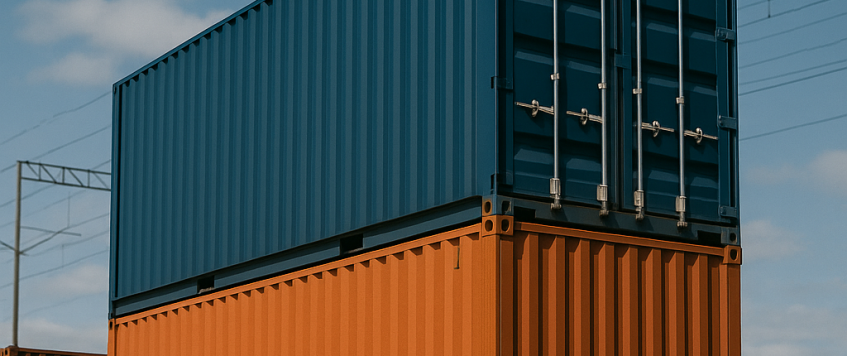
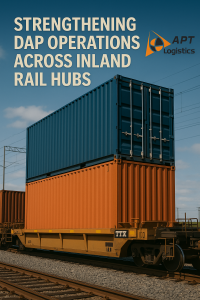
Double-Stacking Capabilities: Maximizing volume and reducing the cost per unit for our clients.
4. Precision Documentation & Customs Pre-Clearance
The biggest delay at an inland hub is often paperwork. By ensuring all customs documentation is filed and cleared while the cargo is still in transit on the rail, the transition from railhead to the final DAP destination becomes a “fluid move” rather than a stop-and-start process.
The APT Logistics Advantage
At APT Logistics, we don’t just move boxes; we engineer flow. By optimizing the synergy between rail infrastructure and DAP responsibilities, we provide our clients with a “no-surprises” experience, lower costs, predictable timelines, and absolute transparency.
“Logistics shouldn’t be a source of stress; it should be your competitive advantage.”
Is your supply chain ready for the rail revolution? Contact APT Logistics today to see how we can optimize your inland DAP operations and drive efficiency across your network.
-
 In the competitive landscape of global trade, efficiency isn’t just a goal—it’s a survival requirement. For businesses moving goods across vast distances, the intersection of Inland Rail Hubs and DAP (Delivered at Place) operations represents a massive opportunity to slash lead times and reduce overhead.
Need Help? Chat with us!
Start a Conversation
Hi! Click one of our members below to chat on WhatsApp