-

12
Mar
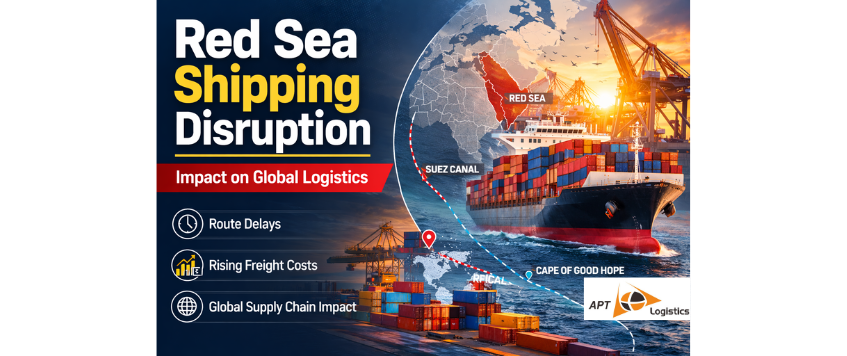
Red Sea Shipping Disruption Impact on Global Logistics | APT Logistics
Red Sea Shipping Disruption Affecting Global Trade
The ongoing Red Sea shipping disruption is continuing to affect global trade routes and logistics networks. The Red Sea–Suez Canal corridor is one of the most important maritime trade lanes connecting Asia, Europe, and the Middle East.
Due to rising security concerns and attacks on commercial vessels, many shipping lines have temporarily avoided this route.
As a result, the Red Sea shipping disruption is forcing global carriers to rethink shipping strategies and adjust vessel routes.
Why the Red Sea Route Is Important
The Red Sea and the Suez Canal form one of the busiest maritime corridors in the world. Nearly 12–15% of global trade moves through this route each year.
This corridor is essential for:
- Asia–Europe container trade
- Energy shipments between the Middle East and Europe
- Manufacturing supply chains between Asia and Western markets
Any instability in this region can quickly impact global freight movement.
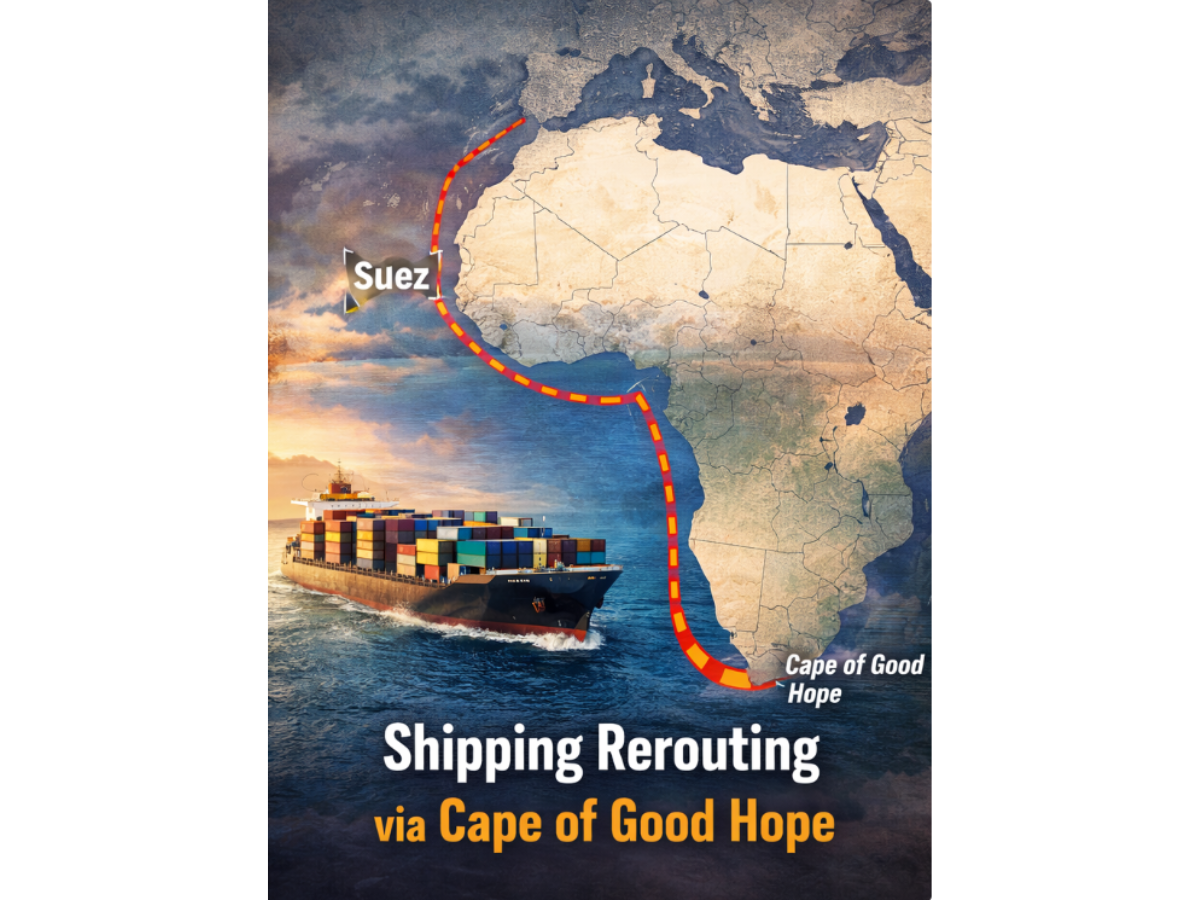
Ships Rerouting via Cape of Good Hope
Shipping lines rerouting vessels around the Cape of Good Hope due to instability in the Red Sea trade corridor.
Because of security risks, many carriers are avoiding the Red Sea and instead routing vessels around the Cape of Good Hope at the southern tip of Africa.
This alternative route is significantly longer and increases shipping time.
Typical impacts include:
- Transit times increasing by 10–14 days
- Additional fuel consumption for vessels
- Higher operational costs for shipping companies
This rerouting has created significant pressure on global shipping capacity.
Freight Rates Rising Across Trade Lanes
The Red Sea shipping disruption is also influencing freight rates across multiple global trade lanes.
Some of the immediate consequences include:
- Increased container freight rates
- Higher bunker fuel costs
- Reduced shipping capacity
- Schedule delays for cargo shipments
These factors are affecting industries that rely heavily on international supply chains.
Impact on India’s Export and Import Trade
For countries like India, the Red Sea route is extremely important for exports to Europe and North America.
Industries potentially affected include:
- pharmaceuticals
- textiles
- engineering goods
- automotive components
Longer transit routes may result in delays and higher logistics costs for exporters.
How APT Logistics Helps Businesses Navigate Disruptions
During major global logistics disruptions, businesses rely on experienced freight partners to manage supply chain risks.
APT Logistics closely monitors global shipping conditions and offers flexible logistics solutions to keep cargo moving efficiently.
Our services include:
- Alternative shipping route planning
- Multimodal logistics solutions
- Real-time shipment tracking
- Strategic freight cost optimization
APT Logistics helps businesses maintain stable supply chains even during global shipping disruptions.
Need Help? Chat with us!
Start a Conversation
Hi! Click one of our members below to chat on WhatsApp